
By upgrading to a smart water heater and adding proper insulation, you can cut your energy bills substantially and enjoy reliable hot water on demand. Smart heaters monitor your usage, adjust heating schedules, and can be controlled remotely, while insulation keeps heat in longer, reducing workload on the heater. Combining these upgrades maximizes efficiency and saves money over time. Keep exploring to discover how these improvements work together to benefit your home and wallet.
Key Takeaways
- Proper insulation enhances smart water heater efficiency by minimizing heat loss and maintaining water temperature longer.
- Combining smart heaters with insulation reduces energy consumption and lowers utility bills.
- Insulation protects pipes from freezing and ensures consistent hot water supply with smart controls.
- Smart water heaters can optimize insulation benefits through remote monitoring and scheduling.
- The synergy of smart technology and insulation supports eco-friendly, cost-effective home heating solutions.

Are you looking for ways to reduce your energy bills and improve your home’s efficiency? Upgrading to a smart water heater can be an excellent step toward achieving both goals. These modern appliances are designed to optimize your hot water usage, adjusting their operation based on your habits and preferences. By doing so, they help cut down unnecessary energy consumption, which directly impacts your monthly bills. When considering a smart water heater, one of your main concerns will likely be the installation costs. Thankfully, these costs are often offset by the long-term savings you’ll see on your energy bills. While the initial investment might seem high, many models are energy-efficient, meaning they use less power than traditional water heaters. Plus, some utility companies offer rebates or incentives for installing energy-efficient appliances, further lowering the upfront expense.
Once installed, smart water heaters actively monitor your water usage and adjust their heating schedules accordingly. This guarantees you always have hot water when needed without wasting energy heating water that sits idle in the tank. Many models can be controlled remotely via smartphone apps, giving you the ability to customize settings, set timers, or turn the heater off when you’re away. This level of control maximizes energy efficiency and prevents unnecessary energy expenditure. Additionally, smart water heaters often feature leak detection and diagnostic tools, making maintenance easier and preventing costly repairs down the line. Incorporating smart technology into your water heating system can lead to significant energy savings and improved convenience.
Smart water heaters offer remote control, leak detection, and adaptive scheduling for efficient, hassle-free hot water management.
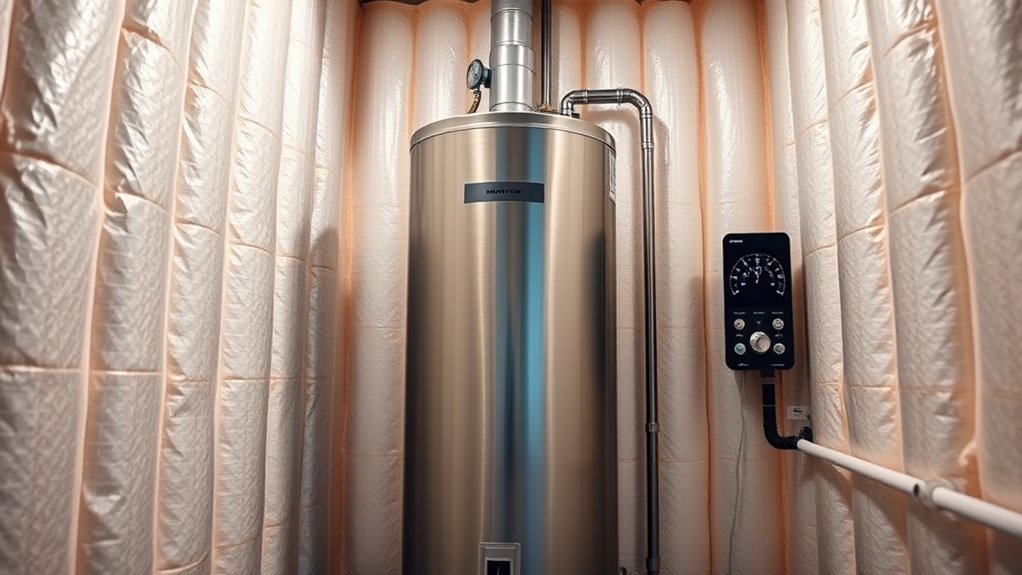
In conjunction with a smart water heater, proper insulation can notably boost your home’s energy efficiency. Insulating your water heater and pipes minimizes heat loss, helping your water stay hot longer and reducing the workload on your heater. This means your water heater doesn’t have to work as hard to maintain the desired temperature, further decreasing energy consumption. The cost of insulating your water heater and pipes is relatively low compared to the savings it provides over time, making it a smart investment. Proper insulation also protects your pipes from freezing during cold months, avoiding potential damage and costly repairs.
Combining a smart water heater with effective insulation creates a synergistic effect, maximizing your home’s overall energy efficiency. You’ll notice lower utility bills, more reliable hot water, and a smaller carbon footprint. While the upfront costs for both upgrades can seem formidable, they pay off through long-term savings and increased comfort. As you plan your home improvements, keep in mind that investing in energy-efficient appliances and proper insulation not only benefits your wallet but also contributes to a more sustainable environment.
Frequently Asked Questions
How Do Smart Water Heaters Save Energy Compared to Traditional Models?
Smart water heaters save energy by adjusting their heating schedules based on your usage patterns, reducing unnecessary energy consumption. They can detect when you need hot water and turn off during low-demand times, which helps lower your overall energy use. This efficiency leads to significant cost savings over time. By optimizing energy consumption, smart water heaters make your home more energy-efficient and save you money on utility bills.
What Insulation Materials Are Most Effective for Water Heater Tanks?
You should consider foam insulation or a fiberglass wrap for water heater tanks. Foam insulation offers excellent thermal resistance and seals tightly around the tank, reducing heat loss efficiently. Fiberglass wrap is affordable and easy to install, providing good insulation. Both materials help keep water hot longer, saving energy. Choose foam insulation for maximum efficiency, but if you want a budget-friendly option, fiberglass wrap works well too.
Can Insulation Help Extend the Lifespan of a Smart Water Heater?
Yes, insulation can help extend your smart water heater’s lifespan. By improving insulation durability, you reduce heat loss, which lessens the strain on your heater’s components. This means less frequent water heater maintenance and fewer repairs over time. Proper insulation keeps your water heater running efficiently, preventing overheating and corrosion. Ultimately, investing in quality insulation supports your heater’s longevity and keeps it functioning ideally for years to come.
Are There Specific Brands Known for Superior Insulation in Water Heaters?
You’ll find that brands like Rheem and Stiebel Eltron are known for superior insulation in water heaters, thanks to their strong brand reputation and focus on insulation durability. These companies prioritize quality, ensuring their tanks keep heat in longer and reduce energy costs. When choosing a water heater, look for models with thick, high-quality insulation materials, which can offer better performance and extend the lifespan of your unit.
How Often Should the Insulation Around a Water Heater Be Replaced or Upgraded?
You should switch out your insulation if it’s worn, damaged, or no longer effective—usually every 3 to 5 years. Regular insulation maintenance guarantees peak efficiency and energy savings. Stick to a consistent replacement schedule, especially if you notice increased energy bills or noticeable wear. Proper upkeep preserves your water heater’s performance, preventing heat loss, and prolongs its lifespan, making your home more comfortable and cost-effective.
Conclusion
By blending smart water heaters with superb insulation, you boost your home’s efficiency effortlessly. This dynamic duo delivers decreased costs, diligent durability, and delightful comfort. Don’t delay—dive into detail, drive down expenses, and design a smarter, more sustainable space. Remember, small steps spark significant savings. So, seal, switch, and save—your smart water solution is just a smart decision away!