To practice sustainable water conservation, start by installing rainwater harvesting systems with gutters and storage tanks to collect natural rain. Use drip irrigation to deliver water directly to plants, reducing runoff and evaporation. Fix leaks promptly and mulch your garden to retain soil moisture. Water early in the morning or late evening to minimize waste. Adopting these simple habits can save water and lower bills—continue exploring how you can make a bigger impact.
Key Takeaways
- Install rainwater harvesting systems with gutters and storage tanks to collect and reuse natural water sources.
- Use drip irrigation and timers to deliver water efficiently directly to plant roots, minimizing waste.
- Fix leaks promptly and avoid overwatering to prevent unnecessary water loss and promote conservation.
- Mulch around plants to retain soil moisture, reducing the need for frequent watering.
- Water during early morning or late evening to decrease evaporation and maximize water efficiency.
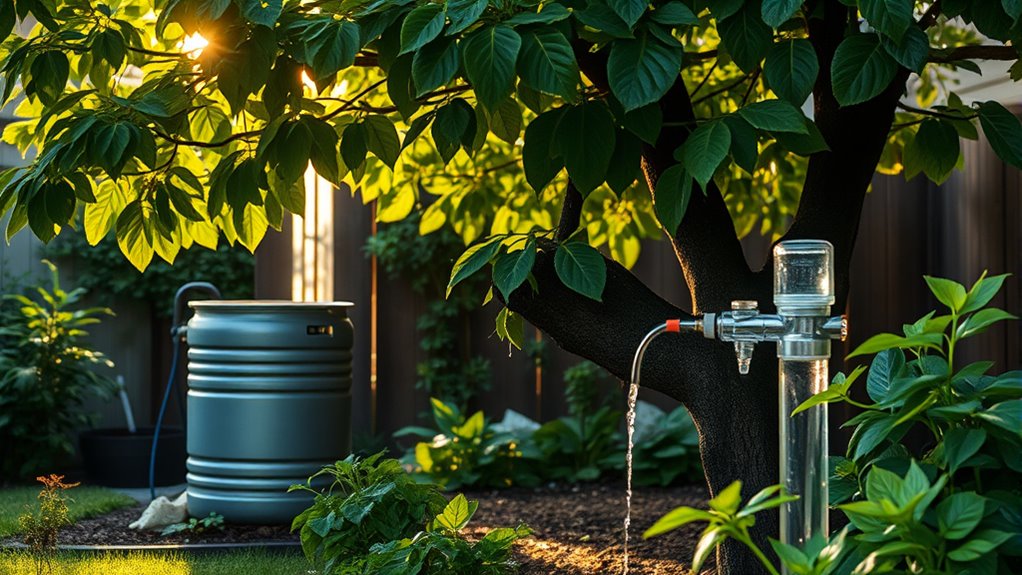
Are you looking for simple ways to save water and reduce your utility bills? One effective method you might not have considered is rainwater harvesting. This technique allows you to collect and store rainwater from rooftops or other surfaces, turning a natural resource into a sustainable water supply for your household or garden. By installing a rainwater harvesting system, you can decrease your dependence on municipal water sources, especially during dry months. It’s an eco-friendly choice that helps reduce runoff, prevent erosion, and lower your water bills over time. You can use the stored rainwater for watering plants, cleaning, or even flushing toilets, making your home more sustainable and cost-efficient.
Pairing rainwater harvesting with efficient watering practices, like drip irrigation, amplifies water savings considerably. Drip irrigation delivers water directly to the roots of your plants through a network of tubes and emitters. This targeted approach minimizes water wastage, unlike traditional sprinklers that often lose water through evaporation or runoff. When you use drip irrigation, you ensure your plants get the right amount of water without overdoing it, which promotes healthier growth and conserves resources. Combining this system with collected rainwater means you’re using natural, free water sources effectively and reducing reliance on treated municipal water.
Implementing these techniques is straightforward. First, set up a rainwater collection system—install gutters and downspouts leading into storage tanks. Make sure your tanks are covered to prevent mosquito breeding and contamination. Next, connect your tanks to a drip irrigation system for your garden or landscape. You can automate the process with timers to ensure your plants get consistent watering without manual effort. This setup not only conserves water but also saves you time and effort in maintaining your garden.
Beyond installations, adopting mindful habits can further conserve water. Fix leaks promptly to prevent waste, and avoid overwatering your plants. Use mulch around your garden beds to retain soil moisture, reducing the need for frequent watering. When watering, do so early in the morning or late in the evening to minimize evaporation. Collecting rainwater and using drip irrigation are proactive steps that make a lasting difference. They help you lower your water bills, promote healthier plants, and contribute to environmental conservation. Additionally, exploring water conservation philosophies rooted in different cultures can inspire innovative ways to enhance your efforts.
Ultimately, integrating rainwater harvesting and drip irrigation into your routine transforms your approach to water use. It’s about making smarter choices that benefit your wallet and the planet. With a little effort upfront, you’ll enjoy a more sustainable, efficient way to keep your home and garden thriving while doing your part to conserve water.
Frequently Asked Questions
How Can I Measure My Household Water Footprint Accurately?
To measure your household water footprint accurately, start with a water footprint assessment, tracking your daily water use across activities like showering, laundry, and dishwashing. Use equipment efficiency measurement tools, such as flow meters, to monitor water flow from taps and appliances. Keep detailed records of water consumption, compare it with average benchmarks, and identify areas for improvement. This approach helps you understand your impact and adopt effective conservation strategies.
Are There Specific Plants That Require Less Water in Landscaping?
Imagine a garden where every drop of water counts. You’ll want xeriscaping plants and drought-tolerant flora that thrive with minimal watering. These plants, like succulents and native grasses, are your best allies in conserving water while keeping your landscape vibrant. They’re designed to survive dry spells, making your garden resilient and eco-friendly. Embracing these plants helps you create a beautiful, sustainable outdoor space that respects water resources.
What Are the Best Water-Saving Appliances for a Home?
You should consider installing water-efficient appliances like low flow fixtures in your home. These fixtures, such as showerheads and faucets, reduce water use without sacrificing performance. Additionally, opt for appliances like low flow toilets and high-efficiency washing machines to save significant amounts of water daily. By choosing these water-saving options, you’ll not only conserve water but also lower your utility bills and support sustainability efforts.
How Does Water Conservation Impact Local Ecosystems?
You might think your water use doesn’t affect local ecosystems, but it really does. When you conserve water, you support aquatic biodiversity by reducing pollution and habitat disruption. Plus, saving water helps guarantee groundwater recharge, maintaining healthy water levels for plants and animals. Your efforts protect these essential ecosystems, preserving the natural balance and ensuring future generations can enjoy clean, thriving environments. Every drop counts toward a healthier, more sustainable community.
Can Rainwater Harvesting Significantly Reduce Municipal Water Use?
Yes, rainwater harvesting can considerably reduce municipal water use. By collecting rainwater, you harness rainwater benefits that ease demand on local water supplies. This practice helps you save money and contributes to municipal savings by decreasing reliance on treated tap water. Installing rainwater harvesting systems is a simple way to promote sustainable water use, especially during dry seasons, supporting both your community and the environment.
Conclusion
By making small adjustments, you can effortlessly become a gentle steward of our precious water resources. Think of it as giving your daily routine a caring touch, helping to preserve nature’s delicate balance. Every mindful choice, from quick showers to fixing leaks, adds a splash of kindness to our planet. Together, these simple acts create a ripple effect, ensuring clean water flows for future generations. Embrace these habits and make conservation a natural part of your life.