
Induction cooking wins on efficiency because it heats cookware directly using electromagnetic fields, which reduces energy loss and saves time. The cooktop stays relatively cool, lowering safety concerns, while you get precise temperature control to prevent waste. Fast heating and quick temperature adjustments help you cook more efficiently. Proper use and maintenance boost performance even further. Keep going to discover more ways induction makes cooking both safe and energy-smart.
Open a free Amazon Business account
Business pricing, bulk buying and tax-exempt orders.
As an affiliate, we earn on qualifying purchases.
Key Takeaways
- Electromagnetic transfer heats cookware directly, minimizing energy loss and reducing cooking times.
- Precise temperature control prevents overheating, optimizing energy use and ingredient preservation.
- Rapid response to adjustments enhances cooking efficiency and reduces overall energy consumption.
- Safety features like auto shut-off and pan detection ensure energy is used only when needed.
- Proper maintenance and compatible cookware maximize performance and energy savings.
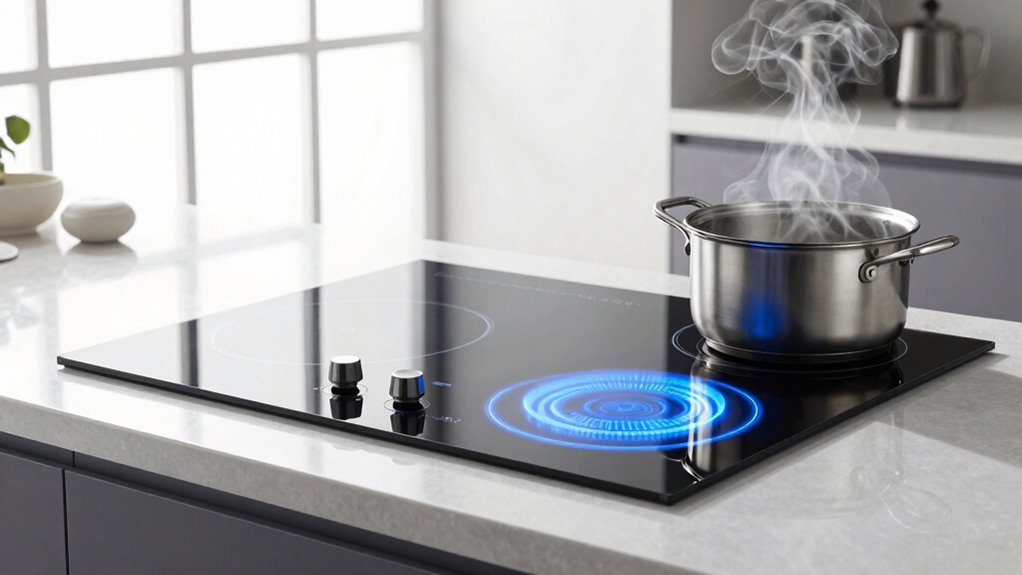
Induction cooking is renowned for its efficiency, making it a popular choice for many kitchens. You’ll notice that it heats up quickly, reducing the time you spend waiting for water to boil or food to cook. This rapid response stems from the way induction stoves generate heat directly in the cookware through electromagnetic fields. Because heat is transferred directly to the pot or pan, there’s minimal energy loss, making induction cooking more energy-saving than traditional gas or electric stoves. Not only does this save you time, but it also helps lower your utility bills over time.
Induction cooking heats quickly and efficiently by transferring energy directly into cookware, saving time and lowering utility bills.
When you’re using induction, safety considerations become especially important. The cooktop itself stays relatively cool because it only heats the cookware, which reduces the risk of burns. However, you should still exercise caution because the surface can get hot from residual heat or if you’re cooking with thick-bottomed pots that retain heat longer. It’s wise to keep an eye on the cooktop and avoid touching it during or immediately after cooking. Many induction units come with safety features like auto shut-off or pan detection, which turn the stove off if no cookware is present or if overheating occurs. These features not only protect you but also help conserve energy, reinforcing the efficiency benefits of induction.
Your cooking techniques also play a role in maximizing the efficiency of induction cooking. For example, using flat-bottomed, compatible cookware ensures ideal contact with the surface, allowing heat to transfer quickly and evenly. Covering pots and pans traps heat, speeding up cooking times further and reducing energy use. Because induction responds instantly to temperature adjustments, you can fine-tune your heat settings with precision, avoiding the energy waste associated with overheating or prolonged cooking. This responsiveness helps you cook more effectively, preventing overcooking and saving ingredients. Additionally, choosing energy-efficient cookware can further optimize your cooking process and energy consumption.
In addition, since induction stoves heat only the cookware, you won’t waste energy heating the surrounding air or the stove surface. This targeted heating means you can cook faster and more efficiently, especially when preparing multiple dishes or complex recipes. Developing good cooking techniques like preheating your cookware briefly before adding ingredients and using appropriate sizes of pots and pans can further enhance efficiency. Proper maintenance of your induction stove, including keeping the surface clean and ensuring the sensors are unobstructed, also contributes to optimal performance and energy conservation. Regularly checking the cookware for proper fit and compatibility can improve energy efficiency, making your entire cooking experience more economical. Additionally, understanding and leveraging energy-saving features like auto shut-off can contribute significantly to reducing energy consumption. These habits help ensure that you’re utilizing the stove’s efficiency to its fullest, making your cooking process both quicker and more economical. Overall, induction cooking combines speed, safety, and precision, making it a standout choice for anyone looking to cook efficiently in today’s kitchen.
induction cooktop with auto shut-off
As an affiliate, we earn on qualifying purchases.
As an affiliate, we earn on qualifying purchases.
Frequently Asked Questions
How Does Induction Cooking Compare to Gas in Energy Savings?
Induction cooking uses less energy than gas because it directly heats cookware, reducing energy consumption and waste. You’ll notice faster heating times and more precise control, which saves you time and power. Plus, induction’s lower emissions mean a smaller environmental impact. By switching to induction, you cut down on energy use, help the environment, and enjoy efficient, quick cooking compared to traditional gas stoves.
Are There Safety Concerns Unique to Induction Cooktops?
They say safety first, and with induction cooktops, that’s true. You don’t need to worry about open flames, but you should be cautious of electrical safety, ensuring proper grounding and avoiding spills on controls. Electromagnetic interference can affect nearby electronics, so keep sensitive devices away. While generally safe, some individuals with medical implants should consult their doctors before using induction cooktops, as the magnetic fields might pose risks.
Can Induction Cooktops Be Used With All Cookware Types?
Induction cooktops require specific cookware compatibility, mainly due to magnetic properties. You can’t use just any pots and pans; they must be ferromagnetic, meaning they’re attracted to magnets. To check, see if a magnet sticks to your cookware. If it does, it’s compatible. If not, it won’t work efficiently or safely on an induction cooktop. So, always verify the magnetic properties before using your cookware.
What Is the Typical Lifespan of an Induction Stove?
An induction stove typically lasts 8 to 10 years, depending on usage and maintenance. Your focus on energy conservation and durability factors plays a role; high-quality models with proper care tend to last longer. Regular cleaning, avoiding overloading, and using compatible cookware help maintain its performance. Investing in a reputable brand can also guarantee better durability, making your induction stove a reliable kitchen appliance for years to come.
Do Induction Cooktops Require Special Maintenance or Cleaning?
You don’t need special maintenance routines for your induction cooktop, but regular cleaning is crucial. Use a soft cloth and mild cleaner to wipe down the surface after each use, avoiding abrasive materials that could scratch. For cleaning tips, quickly remove spills before they harden, and avoid harsh chemicals. Keeping your cooktop clean and well-maintained guarantees maximum performance and a longer lifespan, making cooking more efficient and enjoyable.
Conclusion
You might think all cooking methods are equal in efficiency, but induction cooking proves otherwise. Its rapid heating and precise control aren’t just convenient—they save energy and time, making it the smarter choice. Scientific studies confirm that induction uses up to 50% less energy than traditional methods, debunking the myth that all cooktops are the same. So, if you want to cook quickly and save energy, induction truly is the most efficient option out there.
NFL season / tailgating Picks
team gear
As an affiliate, we earn on qualifying purchases.