

To make bedroom transfers safer, use sturdy poles and rails to provide stable support and prevent falls. Adjust furniture and equipment to proper heights, and secure transfer aids like belts or poles before moving your patient. Communicate clearly and encourage participation to boost confidence. Practice proper body mechanics, keep surfaces stable, and move slowly. Mastering these techniques with the right tools will help keep everyone safe—discover more tips to improve your transfer safety.
Key Takeaways
- Use bed rails and transfer poles to provide stable support during patient movement.
- Adjust the bed to waist height and lock wheels before initiating transfer.
- Communicate clearly and encourage patient participation to reduce anxiety and improve safety.
- Apply proper body mechanics—bend hips and knees, keep back straight, and avoid twisting.
- Secure transfer belts snugly around the patient for added grip and stability during transfers.
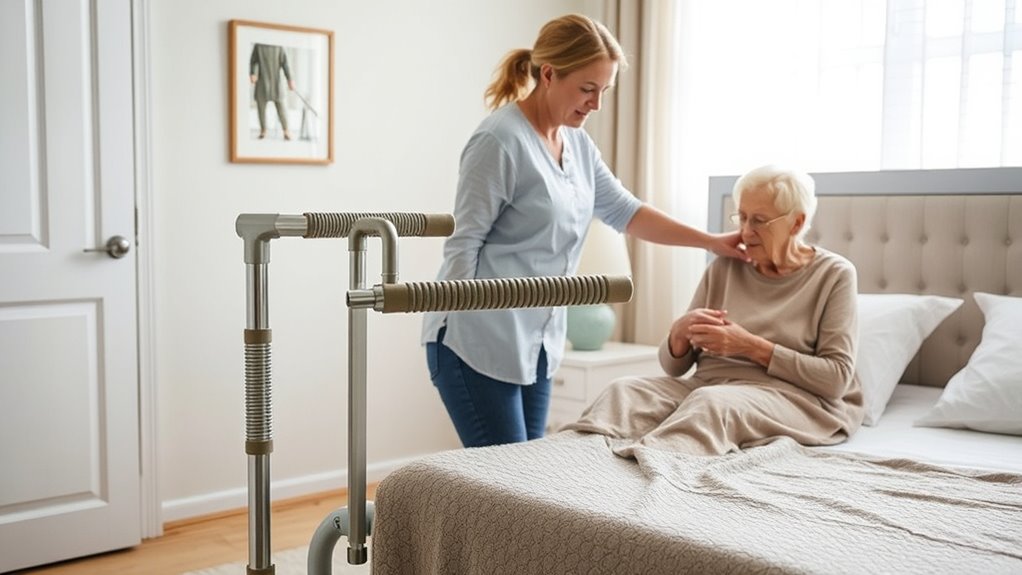
Moving patients safely between beds is a critical part of caregiving, and recent innovations are making these transfers much safer for both patients and caregivers. Proper techniques, along with the right equipment, can reduce the risk of injuries and make the process smoother. Understanding how to use poles, rails, and specific transfer techniques is essential to guarantee safety and comfort.
Safe patient transfers rely on proper techniques and equipment like poles and rails.
First, familiarize yourself with the different types of transfer aids available. Bed rails and transfer poles are designed to give patients something sturdy to hold onto during transfers. Rails can be installed on either side of the bed, providing support when moving a patient from lying to sitting or sitting to standing. Transfer poles, often portable, are secured to the bed frame or mattress, giving patients a stable grip point. Using these aids correctly can prevent falls and give patients a sense of security during transfers.
When preparing for a transfer, communicate clearly with the patient. Explain what you’re about to do and encourage them to participate as much as possible. This not only empowers the patient but also helps them feel more in control, reducing anxiety. Ensure the bed is at a comfortable height—usually at waist level—so you can maintain good body mechanics and avoid strain. Lock the wheels on the bed to prevent any movement during the transfer.
Position yourself close to the patient, with your feet shoulder-width apart to maintain balance. Use proper body mechanics: bend at your hips and knees, keep your back straight, and avoid twisting. Lock the patient’s strong arm if possible, and help them to sit up slowly, encouraging them to move gradually to avoid dizziness. Once seated, have the patient stand with your support, guiding them through the movement. Use the poles or rails to provide extra stability, and don’t rush the process. Moving slowly and deliberately minimizes the risk of falls.
If you’re using a transfer belt, secure it snugly around the patient’s waist, ensuring it’s not too tight. This belt provides a secure grip point for you to support the patient during standing and walking. When assisting the patient onto another surface, like a wheelchair or another bed, make sure that surface is stable and at a similar height to prevent abrupt or difficult transfers. Always keep your hands on the transfer aid or the patient’s body—never leave them unsupported.
Practicing these techniques regularly helps build confidence and assure safety for both you and your patient. Combining the correct use of poles, rails, and proper transfer methods creates a safer environment, reduces the risk of injury, and promotes dignity during these vulnerable moments. Remember, patience and clear communication are key to successful, safe transfers every time. Additionally, using transfer aids correctly can significantly improve safety and ease during patient movement.
Frequently Asked Questions
What Are the Best Materials for Bedroom Transfer Poles?
You should choose transfer poles made from sturdy, non-slip materials like stainless steel or aluminum for durability and safety. These materials provide strong support and resist corrosion, ensuring reliability over time. Look for poles with textured or rubberized grips to prevent slipping during use. Avoid fragile or slippery materials like plastic or smooth metal, as they can compromise stability and increase the risk of accidents during transfers.
How Do I Choose the Right Height for Transfer Rails?
You should choose the right height for transfer rails so they’re comfortable and safe to use. Position the rail so that it’s level with your wrist when your arms are relaxed at your sides. This allows you to grip easily without stretching or bending too much. If possible, have a professional help you measure and install the rail to ensure it’s at the ideal height for your needs.
Are There Specific Techniques for Transfer Training?
Yes, there are specific techniques for transfer training that can boost your safety and confidence. You should focus on maintaining good body mechanics by keeping your feet firmly planted, using your legs to power the move, and avoiding twisting your torso. Practice slow, controlled movements, and always plan your transfer in advance. Using proper grips and ensuring your environment is clear of obstacles also helps prevent falls and injuries during training.
Can Bedroom Transfer Equipment Be Used by Multiple Users?
Yes, bedroom transfer equipment can often be used by multiple users, but you should always check the manufacturer’s guidelines and guarantee proper hygiene. It’s important to clean equipment thoroughly between users to prevent infections. Adjustments might be necessary for different users’ heights and needs, so always follow safety protocols. If you’re unsure, consulting a healthcare professional or therapist helps ensure safe, effective use for everyone involved.
What Maintenance Is Required for Safety Equipment?
You should regularly inspect your safety equipment for wear, loose parts, or damage. Clean rails and poles to prevent dirt buildup, and tighten any loose bolts or screws. Check for rust or corrosion, especially in humid environments. Replace worn or damaged parts immediately. Keep a maintenance log to track inspections and repairs. By staying proactive, you guarantee your equipment remains safe and reliable for every transfer.
Conclusion
So, next time you think bedroom transfers are just routine, remember that a simple pole, rail, or technique can turn a risky move into a safe one. Ironically, the very tools designed to keep you secure are often overlooked. Don’t wait for a fall to realize safety matters—embrace these simple solutions now. After all, it’s far more comfortable to stay confident than to face an avoidable accident. Stay safe, and transfer smart!