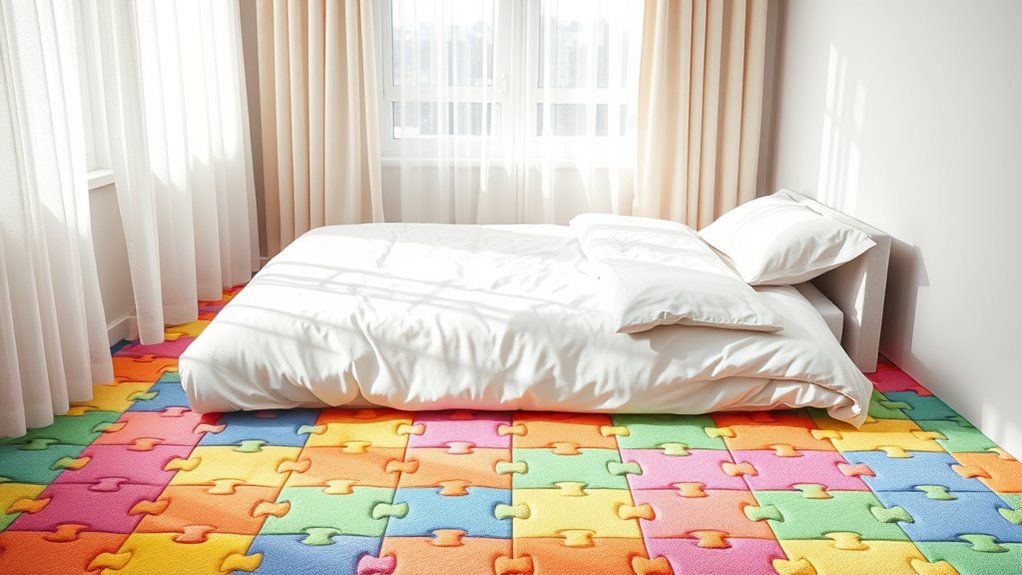

To set up a no-fall zone around your bed, start by clearing clutter, cords, and furniture to create open, obstacle-free pathways. Install sturdy bed rails and non-slip mats to add extra protection. Use soft nightlights or motion-activated lamps to improve visibility at night, and adjust your bed height for easier access. Regularly check the area for hazards and maintain a tidy space. Keep these tips in mind to make a safer environment—more helpful details await if you continue exploring.
Key Takeaways
- Clear clutter and furniture near the bed to create a safe, obstacle-free pathway.
- Install sturdy bed rails and add non-slip mats to prevent falls during movement.
- Improve lighting with nightlights or motion-activated lamps to enhance visibility at night.
- Adjust bed height and use supports like step stools for easy, safe access.
- Maintain a tidy, well-organized space and encourage slow, cautious movements when getting in or out.

Creating a no-fall zone around the bed can substantially reduce the risk of injuries, especially for seniors or individuals with mobility challenges. You want to make sure that getting in and out of bed is as safe as possible, so start by clearing the area around the bed of clutter. Remove any loose rugs, cords, or furniture that could cause tripping. The goal is to create a spacious, obstacle-free zone that encourages safe movement. You might also consider rearranging furniture to give yourself plenty of room to move comfortably without feeling confined or at risk of bumping into sharp edges.
Next, think about installing protective features that help prevent falls. Bed rails can be an essential addition, providing support when you’re getting in or out of bed. Choose rails that are sturdy, easy to grip, and appropriate for your height and mobility level. If you’re concerned about falling out of bed during sleep, bed rails can act as a physical barrier. Additionally, consider adding a non-slip mat or rubberized padding on the floor next to the bed. This provides extra grip, especially if your flooring is slippery or if you tend to slide when moving.
Lighting plays a pivotal role in fall prevention. Install soft, accessible lighting around the bed area, such as nightlights or motion-activated lamps. This illumination helps you see clearly when moving at night, reducing the chance of missteps. Keep the lighting within easy reach so you can turn it on without getting out of bed. You should also think about placing a flashlight or a portable light source nearby in case of emergencies.
To further enhance safety, evaluate the height of your bed. If it’s too high or too low, getting in and out can be tricky. Consider a bed that suits your height, or use a sturdy step stool for easier access. Make sure the mattress is firm and supportive, which can help prevent falls caused by instability. If you use mobility aids like walkers or canes, position them within easy reach of the bed, so you don’t have to stretch or search for them in the dark.
Finally, establish a routine that encourages safe movement. Always move slowly when getting in or out of bed, and avoid rushing. If you have assistance, make sure it’s readily available. Regularly check the no-fall zone for hazards or changes, and keep it well-maintained. Creating and maintaining a safe environment around your bed isn’t just about equipment—it’s about thoughtful planning and consistent care to keep you or your loved one safe every day. Additionally, choosing a dog name that is calm and well-trained can help provide companionship and reassurance, contributing to overall safety and comfort.
Frequently Asked Questions
What Materials Are Safest for No-Fall Zone Padding?
You should use soft, impact-absorbing materials like foam padding or rubber mats for no-fall zone padding. These materials cushion falls effectively and are safe for continuous contact. Avoid sharp or hard surfaces that could cause injuries. Make sure the padding is thick enough to absorb impact and covers the area completely. Regularly check for wear and tear, replacing it as needed to maintain safety around the bed.
How Often Should the No-Fall Zone Be Inspected?
You should inspect the no-fall zone at least once a week to guarantee it remains secure and effective. Check for any signs of wear, tears, or displacement in the padding and fastenings. Regular inspections help you identify potential hazards early, maintaining safety for the person using the bed. If you notice damage or looseness, repair or replace the padding promptly to keep the zone reliable and effective.
Can Pets Be Affected by the No-Fall Zone Setup?
Sure, pets can be affected by a no-fall zone setup, but don’t worry—they’re probably more interested in knocking over the carefully placed cushions than respecting the boundaries. You might need to train your furry friends to stay clear, or at least supervise them so they don’t accidentally trigger alarms or cause chaos. After all, your pet’s curiosity is unstoppable, even with the best safety measures in place.
Are There Any Legal Regulations for Fall Prevention Zones?
Yes, there are legal regulations for fall prevention zones, especially in healthcare settings. You need to adhere to local, state, and federal safety standards, such as OSHA guidelines, which require safe patient environments. These rules often mandate proper signage, padding, and clear pathways to prevent falls. Always check specific regulations in your jurisdiction or facility to ensure you meet all legal requirements for fall prevention zones.
How Do I Customize a No-Fall Zone for Different Bed Heights?
Like designing a tailor-made suit, customizing a no-fall zone depends on your bed’s height. Measure the distance from the floor to the top of the mattress, then add extra space for safety—usually 12 to 18 inches. Use adjustable barriers or bed rails that match this height, ensuring they’re secure yet easy to remove. This way, you create a personalized zone that adapts to your bed’s specific height and your safety needs.
Conclusion
By establishing a no-fall zone around your bed, you create a safer, more secure sleeping environment. With strategic placement of cushions, rails, or clear pathways, you minimize risks and promote peace of mind. Isn’t it comforting to know that you’ve taken proactive steps to prevent falls? Imagine slipping into bed each night, knowing everything around you is designed to keep you safe. Taking these simple measures can make all the difference in your nightly comfort and safety.