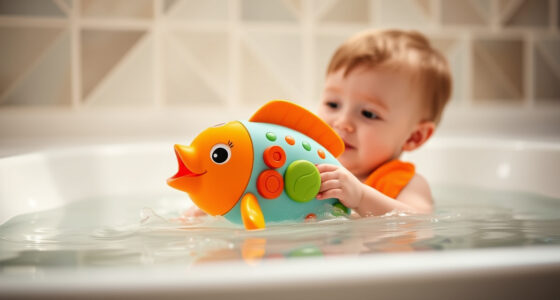
This guide helps parents and caregivers choose safe educational toys for toddlers, roughly ages 1 to 3, and set them up for useful, enjoyable play. You will identify what your child is ready to explore, compare toy features, check safety and age guidance, and observe how the toy works in play. No teaching experience is needed. Plan on 30-60 minutes to review options and prepare a small play area; a toddler’s play session may last 5-20 minutes, depending on interest and energy.

Turn the school run and nap time into listening time
- Thousands of audiobooks, podcasts and originals
- Listen on your phone, tablet or Echo — also offline
- Cancel anytime

LeapFrog Learning Friends 100 Words Book
- ✔ Brand: LeapFrog
- ✔ Age range: 18 months–4 years
- ✔ Word count: More than 100

Airbition Talking Flash Cards for Toddlers, 224 Words, Blue
- ✔ Brand: Airbition
- ✔ Word count: 224
- ✔ Age range: 1–5 years

LeapFrog 2-in-1 LeapTop Touch Learning Laptop
- ✔ Brand: LeapFrog
- ✔ Model: 80-600900
- ✔ Age range: 2–5 years
Difficulty: Beginner | Time: 30-60 minutes to choose and set up toys; play sessions can last 5-20 minutes
What You’ll Need
Tools & Materials:
- A few minutes to observe your toddler playing
- A clear, supervised play area
- A short list of your child’s interests or skills you want to support
- Toy packaging or product information, including age and safety guidance
Knowledge:
- Basic awareness of your toddler’s age, interests, and current abilities
- Willingness to supervise play and check toys regularly
Educational play does not require a toy labeled “educational.” Everyday objects and pretend play can support learning, too, when the materials are safe for the child’s age and play is supervised. Follow the toy maker’s age guidance and any local product-safety advice. Avoid small parts for children under 3 because they can pose a choking risk.
LeapFrog Learning Friends 100 Words Book
The Learning Friends 100 Words Book is our best overall pick because it makes early vocabulary practice easy to start: toddlers touch a picture and hear a word, a fact, or a sound effect. Its more than 100 words span familiar themes such as animals, food, colors, activities, and opposites, which gives caregivers several ways to connect play with everyday things. Compared with Airbition’s stack of individual cards, the book keeps the learning material together on pages; compared with the LeapTop, it keeps the focus more squarely on words and pictures.English and Spanish audio give this book a useful distinction for families who want to hear vocabulary in both languages. The light-up star and two learning songs add variety without changing the central picture-and-word interaction. At 18 months to 4 years, its stated age range begins earlier than the LeapTop’s, making it the most straightforward fit here for younger toddlers. The tradeoff is that this is a single-player toy, and regular use calls for two AA batteries; the included batteries are intended for demonstration, so new ones are recommended. Choose it for simple, repeatable vocabulary exploration, but skip it if you want rechargeable power or play designed for siblings together.
Pros:
- Introduces more than 100 words across varied, toddler-familiar topics
- Offers English and Spanish audio
- Touch-activated pictures play words, facts, and sound effects
- Light-up star and two songs add variety to vocabulary play
Cons:
- Requires two AA batteries, with new batteries recommended for regular use
- Designed for one player
Best for: Families looking for an interactive first vocabulary toy for a toddler, especially those who value English and Spanish audio.
Not ideal for: Households seeking a rechargeable toy, shared multiplayer activities, or a wider mix of games beyond words, sounds, and songs.
Bottom line: We recommend this book for the most balanced toddler vocabulary experience, especially when bilingual audio and easy picture-based play matter.
“We recommend this book for the most balanced toddler vocabulary experience, especially when bilingual audio and easy picture-based play matter.”
Airbition Talking Flash Cards for Toddlers, 224 Words, Blue
For toddlers who like sorting, pointing, and repeating, Airbition Talking Flash Cards turn vocabulary practice into a small card-by-card activity. The set lists 224 illustrated words across animals, vehicles, food, fruits, and vegetables, with a reader that speaks the word and plays animal sounds. A repeat button lets a child hear an item again, and five volume levels help caregivers adapt audio to the room. Its rechargeable reader is a practical distinction from both LeapFrog toys, which require AA batteries.The format also makes Airbition the most structured of the three: a child inserts each card into the reader rather than touching a page or shifting between built-in activities. Compared with the Learning Friends book, it offers a larger stated word set but lacks the book’s listed English-Spanish switching and keeps the child moving through separate cards. Compared with the LeapTop, it stays focused on illustrated vocabulary instead of adding games, music, and messages. This can suit children who enjoy repetition, though inserting cards one at a time may feel fussy for some toddlers and can require adult help. Battery life is listed as up to four hours per charge, so it needs recharging after use. Pick it for screen-free, repeatable word practice; skip it if you prefer a self-contained book or longer-running power between charges.
Pros:
- 224 illustrated cards cover everyday categories
- Reader speaks words and includes animal sounds
- Rechargeable reader offers up to four hours per charge
- Five volume levels and a repeat button support adjustable listening
Cons:
- Cards must be inserted into the reader one at a time
- Battery life is limited to up to four hours per charge
Best for: Caregivers seeking a screen-free vocabulary activity with many illustrated cards, repeatable audio, and rechargeable power.
Not ideal for: Toddlers who are frustrated by handling and inserting individual cards, or families who want bilingual audio or a book-like format.
Bottom line: We’d choose Airbition for families who want a large, rechargeable set for guided vocabulary repetition and are comfortable with its card-by-card pace.
“We’d choose Airbition for families who want a large, rechargeable set for guided vocabulary repetition and are comfortable with its card-by-card pace.”
LeapFrog 2-in-1 LeapTop Touch Learning Laptop
The LeapTop Touch is the better fit when a toddler is drawn to buttons, pretend devices, and changing activities. Its swiveling touch screen converts between tablet and keyboard modes, and five learning modes cover ABCs, numbers, games, music, and messages. A parent customization feature can spell a child’s name, giving the toy a personal hook. Compared with the Learning Friends book, this model offers more kinds of interaction but is less concentrated on picture-led vocabulary. Compared with Airbition, it avoids managing a separate deck of cards, while trading card repetition for a broader set of built-in activities.The handle supports carrying it from room to room, and the stated 2–5 age range positions it for older toddlers than the book’s 18-month starting age. That age distinction matters: families shopping for a younger toddler may find the book’s simpler touch-and-listen format a more natural match. The LeapTop’s drawbacks are practical and developmental. It requires three AA batteries for regular use, with included demo batteries not intended as the long-term supply, and its stated age range is limited to 2–5 years. Its screen-like pretend play also will not suit every family’s preferred learning style. Choose it for activity variety and keyboard-style exploration; skip it if your priority is bilingual vocabulary, rechargeable use, or a toy aimed at the youngest children in this group.
Pros:
- Converts between keyboard and tablet modes
- Five modes cover letters, numbers, games, music, and messages
- Parent customization can help spell a child’s name
- Take-along handle supports portability
Cons:
- Requires three AA batteries for regular use
- Stated age range is limited to 2–5 years
Best for: Families with a child ages 2–5 who enjoys pretend laptops and benefits from switching among letters, numbers, games, music, and messages.
Not ideal for: Caregivers shopping for children under 2, those who want a focused bilingual vocabulary toy, or households avoiding AA-battery-powered play.
Bottom line: We recommend the LeapTop for older toddlers who want varied pretend-device activities, while younger learners and vocabulary-focused families may be better served by the book or cards.
“We recommend the LeapTop for older toddlers who want varied pretend-device activities, while younger learners and vocabulary-focused families may be better served by the book or cards.”
As an Amazon Associate we earn from qualifying purchases.
Before You Start
Decide what you want the toy to make possible: stacking, sorting, pretending, moving, listening, drawing, or solving a simple problem. A toy can support several skills, but it does not need to teach everything at once. Choose a goal that fits what your toddler already enjoys, then leave room for the child to use the toy in their own way.
Check the intended age, warnings, and assembly instructions before offering a toy. Inspect used toys for loose parts, broken edges, damaged cords, peeling coatings, or missing pieces. Keep batteries, magnets, water beads, and any other small or hazardous components out of reach. Stay close enough to see and hear your toddler during play.
Step-by-Step Instructions
Step 1: Observe what your toddler enjoys
Watch your child play for five to ten minutes without directing every move. Notice whether they like to carry and move objects, fill and empty containers, imitate adults, listen to sounds, turn pages, stack items, or explore textures. Write down two or three interests and one skill your child is beginning to practice. For example, a toddler who likes putting objects into boxes may enjoy large nesting cups or a shape sorter with easy-to-handle pieces.
Tip:Choose an interest your child returns to often. A familiar activity can make a new toy easier to explore.
Check: You have a short list based on what your toddler actually does, rather than what you hope they will do.
Step 2: Pick one play goal
Select one main goal for the toy, such as building hand control, exploring cause and effect, using new words, moving the body, or pretending. Match the goal to your observations. For a child who enjoys making things happen, consider a simple push-button sound toy or a sturdy ramp for rolling large balls. For a child who imitates household routines, consider play food or a toy telephone without small detachable parts.
Tip:Use broad goals rather than expecting a toddler to master a specific skill on a schedule. Children develop at different rates.
Check: You can describe the activity the toy invites, such as “stack and knock down” or “pretend to prepare food.”
Step 3: Compare simple toy options
Look at a few toys that support your goal. Favor sturdy materials, parts a toddler can handle, and actions that are easy to understand. Open-ended toys, such as large blocks, chunky crayons, board books, and pretend-play items, can be used in many ways. A simple puzzle, shape sorter, or musical toy may also suit a child who enjoys a clear challenge or repeated action. Check whether the toy needs adult assembly, batteries, or regular replacement parts.
Tip:Sounds, lights, and buttons can attract attention, but they are not a measure of learning value. Consider whether your child can actively explore the toy.
Check: You have one or two practical options that match your play goal and your toddler’s interests.
Step 4: Check safety and age guidance
Read the label and product information before buying or using the toy. Confirm that its age range fits your child, then check warnings about small parts, cords, magnets, batteries, water, or assembly. Inspect the toy in person when possible. Look for secure parts, smooth edges, sturdy construction, and materials that can be cleaned as directed. Do not offer toys with broken components or pieces that could fit entirely in a young child’s mouth.
Tip:Age labels and safety warnings serve different purposes. Follow both, and supervise play even when the toy is labeled for your toddler’s age.
Check: The toy is intact, fits the age guidance, and has no accessible hazards in the way you plan to use it.
Step 5: Set out a small selection
Clear a floor or table area and place the chosen toy within your toddler’s reach. Remove distracting clutter and keep only a few related items nearby. For block play, set out a small number of blocks rather than a full bin. For pretend play, offer a few safe pieces with a container or doll. Keep the rest of the toys stored nearby so you can change the setup later without overwhelming the child.
Tip:Use a stable surface and sit close enough to help if your toddler becomes frustrated or puts an item in their mouth.
Check: Your toddler can reach the materials, and you can supervise without leaving the play area.
Step 6: Show one way to begin
Demonstrate one simple action, such as putting a block on another, turning a board-book page, or rolling a ball down a ramp. Use a few clear words: “The ball rolls down,” or “You put the cup inside.” Then pause and let your child try. Follow their attention instead of asking repeated questions or correcting every move. If the child uses the toy differently and safely, describe what they are doing and join in when invited.
Tip:Give your toddler time to respond. A pause lets the child explore instead of simply copying an adult.
Check: Your child has a chance to handle the toy independently, with you available to guide or support.
Step 7: Follow the play and offer small help
Watch what your toddler repeats, changes, or ignores. Name an action or add a simple idea when it fits: “You made a tall tower,” or “The teddy is going to sleep.” If the task seems too hard, make one small adjustment, such as removing a puzzle piece or placing a block within easier reach. If your child appears bored or upset, stop or switch activities. Do not turn the toy into a test.
Tip:Short play is normal. Stop when your child loses interest, becomes tired, or needs a break.
Check: Your child has time to explore, and your help responds to the child’s cues rather than demanding a particular result.
Step 8: Review the toy after play
Put the toy away with your toddler when possible, following the maker’s care instructions. Check for loose or damaged parts after use. Notice whether your child returned to the activity, tried different actions, or needed repeated help. Keep the toy available if it was safe and engaging; rotate it out if interest has faded. Use your observations to choose the next play idea rather than adding toys automatically.
Tip:A toy can be useful even when your toddler plays with it in an unexpected way, as long as the play stays safe and age-appropriate.
Check: The toy is stored safely, and you know whether to offer it again, adjust the setup, or choose another activity.
Common Mistakes to Avoid
- Choosing a toy because it promises to teach many skills at once. — Start with one play goal and check whether the toy gives your toddler an active way to explore it.
- Buying a toy that is too advanced or has small detachable pieces. — Read age labels and warnings, inspect the pieces, and account for how your child handles objects during play.
- Showing the child the one correct way to use the toy and correcting every variation. — Demonstrate one starting action, then let your toddler explore safely and follow their lead.
- Putting out too many toys at once. — Offer a small selection tied to one activity, then rotate materials when interest changes.
Troubleshooting
Problem: Your toddler ignores the new toy.
Solution: Put it away and try again another day, or connect it to a familiar interest. Demonstrate one brief action without insisting that your child join.
Problem: Your child becomes frustrated with a puzzle or sorter.
Solution: Reduce the challenge by offering fewer pieces, showing one match, or switching to a simpler activity. Stop if frustration continues.
Problem: Your toddler mouths or throws parts.
Solution: Stay close, remove any unsafe item, and choose larger, sturdier materials suited to the child’s age. Put the toy away if it cannot be used safely.
Problem: The toy is damaged or a part goes missing.
Solution: Remove the toy from play until you can confirm it is complete and safe. Follow the maker’s repair or disposal guidance; do not improvise a repair that creates loose parts or sharp edges.
What Success Looks Like
You have selected a toy that matches an observed interest and a simple play goal, checked its age guidance and condition, and set it out in a space where you can supervise. During play, your toddler can explore at their own pace and you can tell whether the activity holds interest, needs an easier setup, or is ready to be put away. Success does not require your child to complete a task or learn a skill on demand.
Next Steps
Keep the play area manageable by rotating a few toys at a time. Recheck toys for damage and missing parts, and follow cleaning and storage instructions. As your toddler’s interests change, repeat the observation and selection process. Add everyday activities such as looking at picture books, sorting laundry by color, dancing, or pretending with safe household items. Ask your pediatrician or another qualified child-development professional if you have concerns about your child’s development or ability to use particular materials safely.
Frequently Asked Questions
Do educational toys need to be labeled educational?
No. A sturdy toy can support learning through movement, conversation, pretend play, or problem solving without carrying that label. Choose based on the activity it makes possible and whether it is safe for your toddler.
How many toys should I offer at once?
There is no required number. Start with a small selection related to one activity, then watch your child. If your toddler cannot settle on a toy, remove some options. Add materials when a new idea would help the play continue.
How long should a toddler play with one toy?
Follow your child’s interest and energy. Some toddlers stay with an activity for only a few minutes, while others return to it repeatedly. You can offer another activity when your child moves on or needs a break.
Should I teach my toddler how to use every toy?
Show one safe way to begin if your child seems unsure. Then pause and let the child explore. Join, describe, or offer help when it fits, without expecting the toy to be used in just one way.
Can I use secondhand toys?
Yes, if the toy is appropriate for your child’s age and is complete, cleanable as directed, and free of damage or hazards. Check current safety information when possible, especially for toys with magnets, batteries, cords, or small pieces.