
TL;DR

Get baby and family essentials delivered free — and shop member deals
- Fast, free delivery on millions of items
- Access to Prime Big Deal Days deals on October 6–7
- Prime Video, Amazon Music and more included
Kids’ Halloween costumes blend fun, safety, and practicality. This article covers popular themes, DIY ideas, safety tips, and how to pick the right fit for your child’s age and weather. Expect actionable tips and real examples throughout.
Halloween is a whirlwind of costumes, candy, and creative chaos. But behind the fun lies a simple truth: the right costume makes all the difference in your child’s experience.
If you’ve ever struggled with a mask that fogs up or a costume that trips your kid, you know what I mean. This guide breaks down how to pick, craft, and adapt kids’ Halloween costumes so they’re safe, comfy, and totally on point for 2024.
Choose costumes that reflect current trends but prioritize comfort, visibility, and safety.
DIY costumes can be quick, inexpensive, and personalized—perfect for last-minute plans or creative families.
Layer costumes for weather changes, adding reflective elements and bright accessories for safe trick-or-treating.
Always check sizing and fit before Halloween to prevent discomfort and hazards.
Reuse, donate, or customize costumes to save money and promote eco-friendly habits.
What Are the Hottest Kids’ Halloween Costumes Right Now?
Kids love characters that pop off screens and pages. This year, superheroes like Spider-Man and Wonder Woman top the list, along with beloved movie characters like Barbie or Bluey. Classic favorites like witches, skeletons, and ghosts still hold their charm, especially for younger kids. Trends shift fast—what’s hot this year might change next, but these themes stay popular because they hit that perfect mix of fun and familiarity.
For example, a recent survey found that 65% of kids aged 4-12 want to dress as a superhero or cartoon character. Plus, digital culture fuels some of the most creative options, like memes or viral TikTok personas, which kids find hilarious or cool.
Choosing a costume that taps into current favorites makes trick-or-treating more exciting and helps your child feel connected to what they enjoy most.
As an affiliate, we earn on qualifying purchases.
Easy DIY Kids’ Costumes That Make You Look Like a Pro
Making a costume at home can be a game-changer. It’s cheaper, more personal, and often more comfortable. Plus, it’s surprisingly simple if you know where to start. For example, a superhero cape can be a simple rectangle of fabric with a few safety pins, paired with old clothes your child already owns.
Here are three quick ideas:
- Superhero: Use a solid colored hoodie, add a homemade emblem with felt, and a matching mask cut from craft foam.
- Pirate: Combine striped shirts, black pants, a bandana, and create a makeshift hook with a glove stuffed with crumpled paper.
- Princess or prince: Use a fancy dress or a suit, add a homemade crown with cardboard or foam, and decorate with leftover jewels or ribbons.
These costumes breathe personality and can be as simple or elaborate as you want. Plus, you get to see your child’s face light up when they realize their costume was made with love.
How to Pick a Comfortable and Safe Costume for Your Kid
Comfort and safety are king when it comes to kids’ costumes. A costume that fits well and allows movement isn’t just about comfort—it directly impacts safety. For instance, a tight or restrictive costume can cause discomfort, distract the child, or even cause trips and falls. Similarly, masks that obstruct vision or are hard to breathe through increase the risk of accidents during trick-or-treating or play. Choosing soft fabrics reduces skin irritation, while masks with large eye holes or face paint minimize choking hazards. Properly fitting costumes help children move freely, enjoy the night, and stay safe. Neglecting these factors can lead to discomfort, accidents, or injuries that could have been prevented, turning a fun night into a stressful or hazardous experience. Therefore, prioritizing fit, visibility, and materials isn’t just a matter of comfort—it’s essential for a safe Halloween experience.
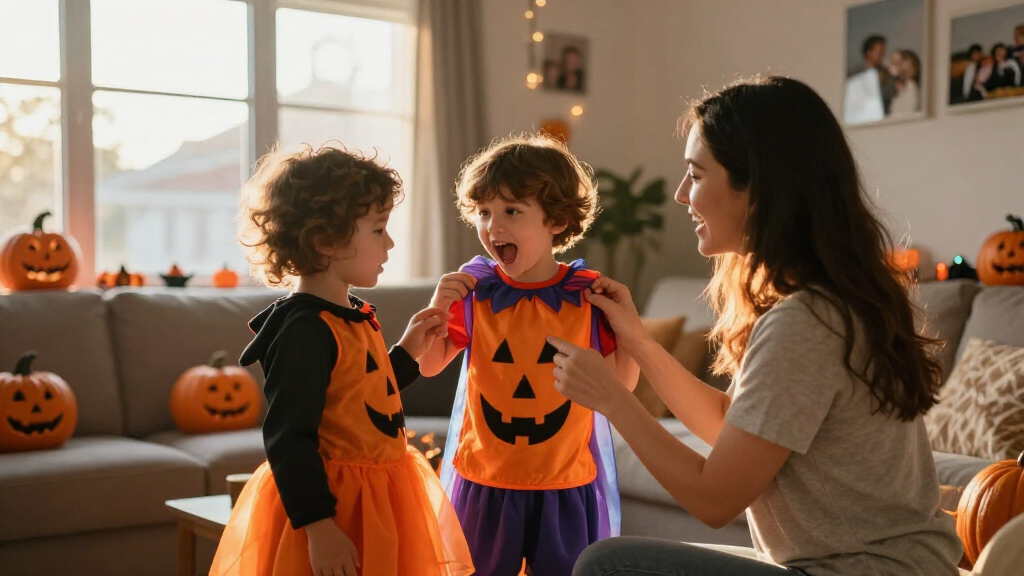
For example, a toddler dressed as a pumpkin might wear a loose-fitting orange jumpsuit and a hat, so they can run and play without discomfort. Add reflective tape or glow sticks for visibility, especially if the costume is dark or covers the entire body.
In fact, the CDC reports that nearly 2,800 children are treated annually for costume-related injuries—most from tripping, falling, or choking—so prioritizing fit and safety features can prevent accidents.
Always check that accessories are non-choking, and supervise young children during trick-or-treating to avoid hazards.
The Best Way to Make a Kid-Friendly Costume for Cold or Wet Weather
Halloween weather varies wildly from year to year. A costume that works in warm weather might turn into a soggy mess or a cold trap if it rains or gets chilly. The trick? Layering and weather-proofing.
For example, add a waterproof poncho over a princess dress or a thermal shirt under a superhero suit. Use costumes made from thicker, fleece-like fabrics that insulate but still look fun. Rain boots or waterproof shoes keep tiny feet dry, and a hat or hood adds extra warmth.
Imagine a kid dressed as a firefighter—adding a raincoat over the costume means they stay warm and dry while still looking authentic. Plus, bright-colored accessories like reflective vests boost safety in low light conditions.
Adjusting costumes with layers not only keeps children warm and dry but also offers flexibility. If the temperature drops unexpectedly, layering allows quick adaptation, preventing discomfort or hypothermia. Conversely, if it’s unexpectedly warm, removing layers keeps children comfortable without sacrificing safety. This approach also extends the usability of costumes across different weather conditions, saving money and reducing last-minute stress. Being prepared for weather changes ensures that kids can enjoy their night without being hampered by the elements, making Halloween safer and more enjoyable for everyone.
Choosing the Right Size and Fit for Your Child’s Costume
Kids grow fast, so picking the right size can make or break the night. Too tight, and they’ll be uncomfortable; too loose, and tripping hazards increase. Proper measurement is crucial because it ensures the costume fits well and allows for safe movement. For example, a costume that is too snug might restrict breathing or cause skin irritation, while an overly loose costume can catch on objects or cause trips. Measuring your child’s height, chest, and waist and comparing these to the size chart helps you select the best fit. Look for costumes with adjustable straps, elastic waistbands, or flexible fabrics—these features can accommodate slight growth or layering. Remember, a well-fitting costume supports your child’s comfort and safety, reducing the likelihood of accidents or discomfort during the night. Comfort also encourages children to enjoy their time without fussing or removing parts of the costume. Always try on costumes a few days before Halloween to ensure a proper fit, and consider choosing a size that’s slightly larger if your child is in between sizes or if you plan to layer clothing underneath. This proactive approach ensures your child can enjoy their Halloween adventure without unnecessary discomfort or hazards.
How to Make Masks Safer and More Comfortable for Young Kids
Masks can be a double-edged sword. They hide the face and add to the fun but can also fog up, block vision, or cause discomfort. The key to safer masks is selecting designs with large, unobstructed eye holes, made from lightweight, breathable materials that don’t trap heat or moisture. For young children, especially toddlers, face paint becomes a preferable alternative because it reduces choking risks and allows for better airflow. When choosing or making masks, prioritize features like adjustable straps, soft edges, and proper ventilation. Test the mask at home to check for fogging or discomfort, and if issues arise, switch to face paint or a different style of mask. Remember, a mask that fits well and is comfortable encourages children to wear it longer and enjoy the night more fully. Conversely, poorly fitting masks can cause frustration, discomfort, or even safety hazards if they impair vision or breathing. The ultimate goal is to balance fun with safety, ensuring children can participate happily without risking injury or distress.
Smart Tips for Reusing, Donating, or Storing Costumes After Halloween
Costumes don’t have to be one-and-done. Reusing or donating saves money, reduces waste, and allows others to enjoy the fun. To keep costumes in good shape, wash them thoroughly according to the label instructions, then store them in a breathable container such as a cloth bag or bin—this prevents mold and fabric deterioration. Label the storage with your child’s name and the costume type so it’s easy to find next year. For example, a princess dress stored in a clear bin with a labeled tag can be easily retrieved and reused, extending its life and value. Swapping costumes with friends or family can offer fresh ideas and reduce costs, fostering community sharing. If you’re feeling crafty, consider repurposing old costumes into new accessories or themed pieces—like transforming a pirate hat into a headband or embellishing a cape with patches for a personalized touch. Planning ahead saves money, reduces environmental impact, and keeps the tradition of costume play alive year after year. It also teaches children the value of resourcefulness and sustainability, making Halloween not only fun but also environmentally responsible.
Frequently Asked Questions
What are the safest materials for kids’ Halloween costumes?
Look for costumes made from soft, breathable fabrics like cotton or fleece. Avoid cheap plastics or scratchy synthetic materials that can irritate skin or cause discomfort. Always check for labels indicating non-toxic, flame-retardant, and allergy-friendly fabrics.
How can I make a costume more weather-proof?
Add layers like waterproof ponchos, thermal shirts, or rain boots over the costume. Use weather-resistant fabrics or spray-on water repellents on the costume itself. Bright-colored accessories and reflective tape also boost safety in low light or rainy conditions.
Are masks safe for young children?
Masks with large eye holes, lightweight materials, and good ventilation are safest. For toddlers or sensitive kids, face paint or costume accessories that don’t cover the entire face are better options. Always supervise mask use to prevent choking or breathing issues.
How early should I buy or prepare costumes?
Ideally, start shopping or making costumes at least two weeks before Halloween. This allows time for fittings, adjustments, or last-minute DIY tweaks. Planning early also helps avoid last-minute stress or inflated prices.
How can I keep costumes affordable without sacrificing quality?
Use clothes you already own, borrow from friends, or shop secondhand stores. DIY elements or simple accessories can make a costume stand out without a big budget. Look for sales or online deals during the fall season to save money.
Conclusion
Halloween is about fun, but safety and comfort make the night memorable for all the right reasons. When you pick or craft costumes that fit well, suit the weather, and respect your child’s needs, you turn a simple holiday into a safe adventure.
So, next time your kid’s eyes light up at a costume idea, remember: the best costumes are the ones that let them enjoy every moment—without tripping, scratching, or feeling uncomfortable.
Halloween Picks
halloween
As an affiliate, we earn on qualifying purchases.