
When choosing a supportive mattress, focus on how well it relieves pressure points and aligns your spine. Look for features like memory foam that mold to your body and adjustable firmness options to customize your comfort. Consider your sleep position and any health issues to find the right balance of softness and firmness. Testing different settings can help you discover what’s best. Keep exploring to learn more about selecting the perfect mattress for your sleep needs.
Key Takeaways
- Assess your sleep position, health needs, and comfort preferences to choose a supportive mattress accordingly.
- Prioritize mattresses with memory foam for personalized support and pressure relief.
- Consider adjustable firmness features for customizable support tailored to your changing sleep needs.
- Test different firmness settings to find the optimal balance between softness and support.
- Ensure the mattress promotes proper spinal alignment and relieves pressure points for better sleep quality.
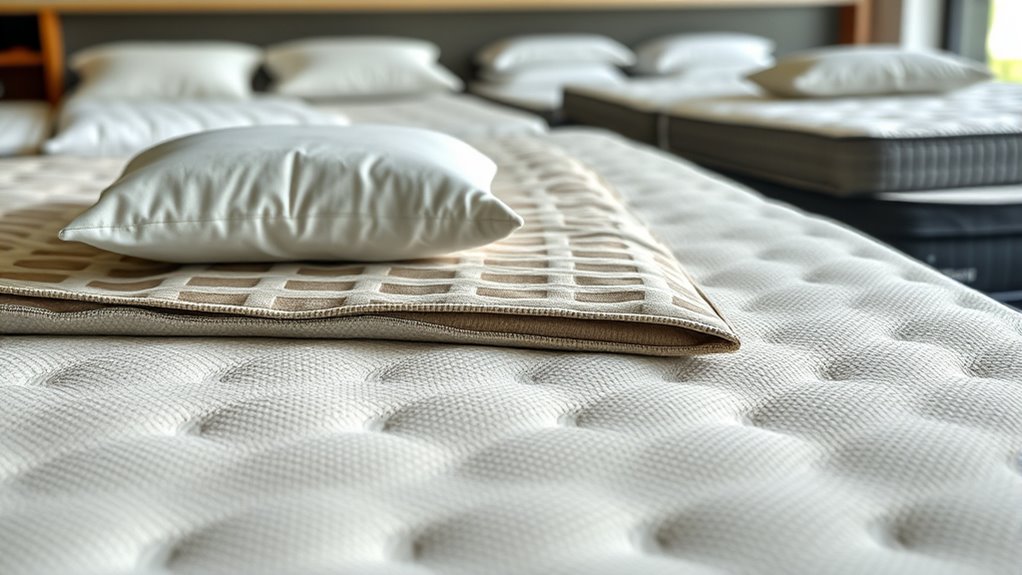
Are you struggling to find a mattress that offers the right support? If so, you’re not alone. Many people face this challenge because a supportive mattress is vital for a good night’s sleep and overall health. One popular option to consider is a mattress made with memory foam. Memory foam contours to your body, providing personalized support that relieves pressure points and aligns your spine properly. It’s especially beneficial if you suffer from joint pain or back issues because it absorbs movement and reduces tossing and turning. However, comfort isn’t one-size-fits-all, which is why adjustable firmness features are a game-changer.
With an adjustable firmness mattress, you get to customize the level of support to suit your preferences and needs. This flexibility allows you to find the perfect balance between soft and firm, ensuring your body receives adequate support without feeling too hard or too soft. For example, if you prefer a plush feel, you can set the mattress to a softer setting that cushions your body while still maintaining proper alignment. Conversely, if you need a firmer surface for back support, you can adjust the firmness accordingly. This adaptability is especially beneficial if your sleep preferences change over time or if you share a bed with a partner who has different comfort needs.
Adjust your mattress firmness for personalized support and comfort tailored to your changing sleep needs.
Many memory foam mattresses now come with adjustable firmness features, often through built-in air chambers or customizable layers. These innovations let you easily change the firmness level using remote controls or smartphone apps. Imagine waking up feeling refreshed because your mattress was perfectly tailored to your comfort that night. It eliminates the frustration of trying multiple mattresses or settling for one that doesn’t quite meet your support needs. Plus, adjustable firmness mattresses are typically designed with quality materials that promote durability and better airflow, helping you stay comfortable throughout the night. Additionally, considering the Gold IRA options for investing in gold-related assets can be a wise way to diversify your financial portfolio and secure your future.
When selecting a supportive mattress, consider how well memory foam combined with adjustable firmness can cater to your specific needs. Think about your usual sleep position, any existing health issues, and your comfort preferences. Trying out different settings can help you identify what works best for your body. Remember, investing in a mattress that offers both pressure relief and customizable support can considerably improve your sleep quality, making a noticeable difference in your day-to-day well-being. Ultimately, choosing a mattress with memory foam and adjustable firmness ensures you get personalized support that keeps you comfortable and well-rested night after night.
Frequently Asked Questions
How Often Should I Replace My Supportive Mattress?
You should replace your supportive mattress every 7 to 10 years, depending on its mattress lifespan and your comfort needs. Over time, the mattress loses its support and can cause discomfort or health issues. Regularly check for signs like sagging, increased allergies, or waking up stiff. Staying attentive to these indicators helps determine your replacement frequency, ensuring you continue to enjoy restful, supportive sleep.
What Is the Best Mattress for Allergy Sufferers?
Imagine sinking into a cool, fresh cloud—perfect for allergy sufferers. The best mattress for you features hypoallergenic materials that keep dust mites and allergens at bay. Look for one with excellent mattress ventilation, allowing air to circulate and prevent mold or mildew buildup. This combination helps you breathe easier and sleep soundly, waking refreshed and allergy-free. Choose wisely, and your nights will be healthier and more restful.
Do Supportive Mattresses Help With Back Pain?
Supportive mattresses can definitely help with back pain by providing proper spinal alignment and reducing pressure points. The benefits of a supportive mattress include improved posture and decreased discomfort, which lead to better sleep quality. When choosing one, look for firmness and materials that match your body’s needs. Using a supportive mattress benefits your back by offering the necessary support for relief from chronic or occasional back pain.
Are Memory Foam Mattresses Suitable for Side Sleepers?
You’re in luck—memory foam mattresses are great for side sleepers. They contour to your body, providing targeted support and pressure relief where you need it most. This helps keep your spine aligned and minimizes aches. While some might prefer a firmer feel, memory foam adapts well to side sleeping, making it a cozy choice. With the right firmness, it’s a match made in heaven for a good night’s sleep.
How Do I Determine the Right Mattress Firmness for Me?
To determine the right mattress firmness, start by considering the firmness scale, which ranges from soft to extra firm. Think about your personal preferences and sleep position; side sleepers often prefer softer options for pressure relief, while back and stomach sleepers may need firmer support. Test different levels in stores, and trust your comfort — the best firmness feels supportive yet comfortable, aligning with your sleep needs.
Conclusion
Choosing the right supportive mattress is like finding a trusted anchor in a storm—steady and reliable. When you prioritize your comfort and support, you’ll wake up feeling refreshed and ready to face the day. Remember, a good mattress isn’t just a place to sleep; it’s the foundation for your well-being. So take your time, trust your instincts, and let your new mattress be the sturdy sail that guides you through restful nights.