You need different air strategies for bedrooms and basements because each space has unique air quality needs. Bedrooms require fresh air exchange to support healthy sleep, focusing on removing pollutants and maintaining comfort. Basements, on the other hand, often struggle with excess moisture and mold, so moisture control and proper ventilation are critical. Knowing these distinctions helps you improve each space’s air quality effectively—continue to discover how tailoring your approach makes a difference.

Turn the school run and nap time into listening time
- Thousands of audiobooks, podcasts and originals
- Listen on your phone, tablet or Echo — also offline
- Cancel anytime
Key Takeaways
- Bedrooms require consistent fresh air exchange to support sleep quality and respiratory health.
- Basements often have moisture and mold issues, needing moisture control rather than continuous fresh air intake.
- Ventilation strategies differ due to bedrooms’ focus on air quality and basements’ focus on humidity management.
- Mechanical ventilation helps bedrooms maintain air quality without humidity buildup, while basements need moisture removal systems.
- Sealing leaks and controlling environmental factors are prioritized differently based on each space’s primary function.
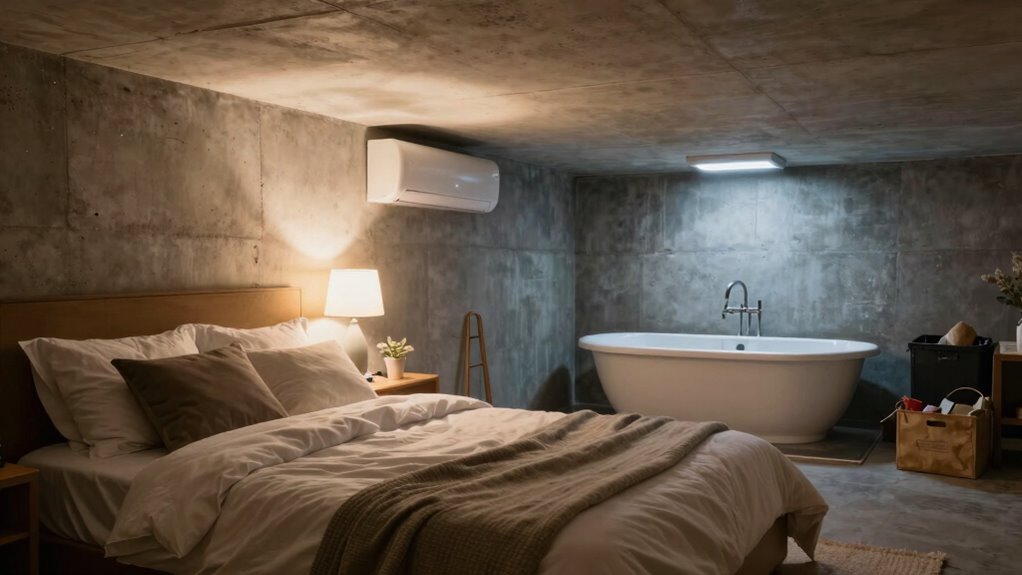
When it comes to maintaining a healthy indoor environment, bedrooms and basements require different air strategies because their functions and conditions vary considerably. Your bedroom is a space where you sleep and relax, so air quality is vital for your health and comfort. In contrast, basements often serve as storage or utility areas, which means their air needs are different. To guarantee each space remains healthy, you must adopt tailored ventilation methods that address their unique demands.
In bedrooms, good air quality directly impacts your sleep quality and overall well-being. Poor air can cause allergies, respiratory issues, or sleep disturbances. To improve air quality, you should focus on increasing fresh air exchange without compromising temperature or humidity levels. Mechanical ventilation systems like HRVs (Heat Recovery Ventilators) or ERVs (Energy Recovery Ventilators) are excellent options because they bring in fresh air while exhausting stale indoor air. These systems help maintain a steady flow of clean air, reducing indoor pollutants and allergens. Additionally, simple strategies like opening a window periodically or using air purifiers can supplement ventilation efforts, especially if outdoor air quality is good. The key is to guarantee that ventilation methods are consistent and controlled, providing continuous circulation without introducing excess humidity or outdoor pollutants. Proper air exchange is essential for maintaining a healthy sleeping environment. Incorporating air filtration devices can further enhance indoor air quality by removing microscopic pollutants that might be present. Ensuring proper air movement can also prevent the buildup of indoor pollutants and improve overall comfort.
Basements, on the other hand, often struggle with excess moisture, mold growth, and stale air. Poor ventilation can lead to dampness, which not only damages structures but also worsens air quality by fostering mold spores and musty odors. Here, your focus should be on removing excess humidity and preventing air stagnation. Mechanical ventilation in basements usually involves exhaust fans or dehumidifiers that actively reduce moisture levels and promote air exchange. Installing sump pumps and waterproofing measures can also help keep the space dry, thereby supporting better ventilation efficiency. Unlike bedrooms, where fresh air is a priority, basements benefit from removing contaminated or humid air rather than constantly bringing in outside air, especially if outdoor conditions are humid or polluted. Proper ventilation methods in basements should aim at controlling moisture, preventing mold, and ensuring that stale air doesn’t linger. Incorporating moisture control strategies is crucial for maintaining a safe and healthy basement environment. Maintaining proper air circulation can significantly improve overall air quality in these damp spaces. Additionally, sealing any leaks or cracks can prevent outdoor humidity from infiltrating and complicating moisture management efforts.
Heat Recovery Ventilator for bedroom
As an affiliate, we earn on qualifying purchases.
As an affiliate, we earn on qualifying purchases.
Frequently Asked Questions
How Do Climate Differences Affect Air Strategies for Bedrooms and Basements?
Climate differences profoundly influence your air strategies for bedrooms and basements. In humid climate zones, you need to prioritize humidity control to prevent mold and discomfort, especially in basements where moisture tends to accumulate. Conversely, in drier climates, focus on maintaining proper air exchange and humidity levels. Bedrooms require tailored strategies to guarantee comfort and air quality, adapting to these climate variations for ideal health and comfort.
What Are the Signs of Poor Air Quality in Bedrooms Versus Basements?
You’ll notice poor air quality in bedrooms if you experience allergies from airborne allergens, frequent sneezing, or stuffy noses. In basements, signs include a musty smell, mold growth, or increased dust and odor buildup. Both spaces might cause headaches or respiratory issues. If these signs appear, it’s time to improve ventilation, clean regularly, and consider air purifiers to enhance air quality and reduce airborne allergens and odors.
Are There Specific Ventilation Systems Recommended for Both Spaces?
You need tailored ventilation systems for each space. For bedrooms, opt for units emphasizing air filtration and humidity control to guarantee a restful environment. Basements benefit from systems with strong air circulation and moisture management to prevent mold. It’s a case of the right tool for the job—using specialized ventilation helps maintain healthy air quality, addressing specific needs, and keeping your home comfortable and safe.
How Often Should Air Quality Be Tested in Bedrooms and Basements?
You should test air quality in bedrooms and basements every three to six months. When testing, guarantee proper air purifier placement to maximize effectiveness, especially in bedrooms where you sleep. In basements, focus on humidity control to prevent mold and musty odors. Regular testing helps identify issues early, so you can adjust ventilation or air purification strategies accordingly, maintaining a healthier environment in both spaces.
Can Shared Air Strategies Harm Either Space’s Air Quality?
Shared air strategies can harm your spaces if they neglect proper air filtration and humidity control. When you use one system for both bedrooms and basements, pollutants or excess moisture may spread, reducing air quality in each area. To protect both spaces, you need tailored strategies that focus on effective air filtration and humidity control, ensuring clean, balanced air without cross-contamination or moisture issues.
Conclusion
To keep your bedrooms comfortable, fresh, and healthy, prioritize proper ventilation and maintain ideal humidity levels. To protect your basement from moisture, mold, and stale air, focus on sealing leaks, installing dehumidifiers, and ensuring good airflow. Bedrooms and basements demand different air strategies because they serve different purposes and face different challenges. By tailoring your approach, you create a living environment that’s inviting, safe, and well-maintained—because your home’s comfort depends on understanding those unique needs.
Fall Picks
fall essentials
As an affiliate, we earn on qualifying purchases.