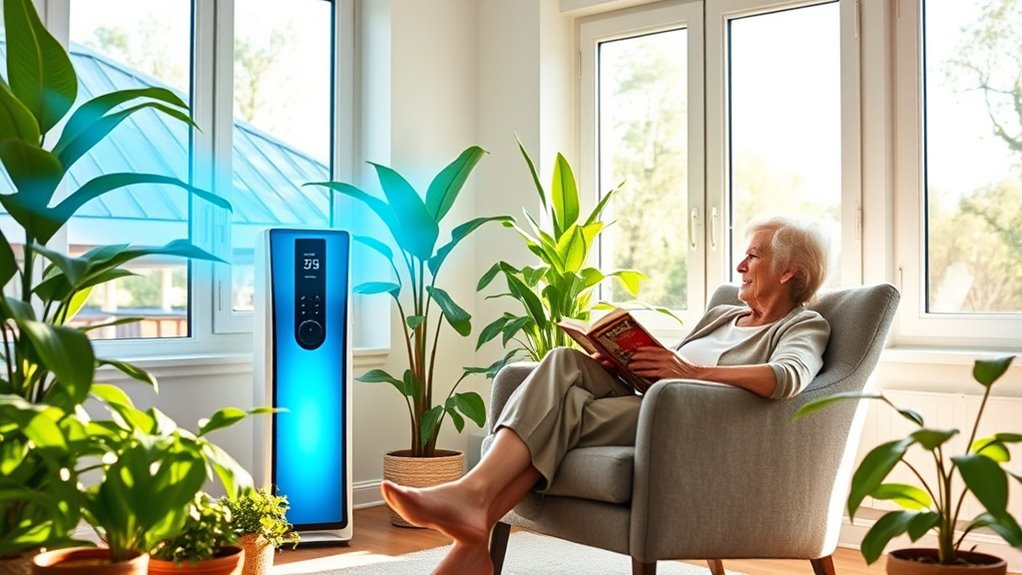

To support healthy aging, it’s important to improve your indoor air quality by reducing dust, pet dander, mold, and VOCs. Keep humidity levels between 30-50% to prevent mold growth and use exhaust fans and proper ventilation. Regularly clean with natural products and update your air filters to trap tiny particles. Managing your indoor environment can greatly boost your respiratory health. Keep exploring to discover more simple ways to breathe easier and stay healthier.
Key Takeaways
- Maintain humidity levels between 30-50% to prevent mold growth and reduce airborne allergens.
- Ensure proper ventilation through regular airing and exhaust fans to improve indoor air freshness.
- Use HEPA filters in air purifiers to effectively trap dust, pet dander, and other airborne pollutants.
- Choose fragrance-free cleaning products and minimize VOC sources to reduce indoor chemical emissions.
- Regularly monitor and address IAQ issues, especially as immune systems weaken with age.
Have you ever wondered how the air inside your home impacts your health? It’s an essential question, especially as you age. Indoor air quality (IAQ) directly influences your well-being, energy levels, and overall health. Poor IAQ can lead to respiratory problems, allergies, and even more serious conditions over time. As you get older, your immune system naturally weakens, making you more vulnerable to airborne pollutants. That’s why maintaining good indoor air quality is indispensable for healthy aging.
Indoor air quality is vital for health, especially as you age and your immune system weakens.
One of the main issues is indoor pollutants such as dust, pet dander, mold spores, and volatile organic compounds (VOCs). These tiny particles can irritate your lungs and airways, especially if you already have asthma or allergies. Mold, in particular, thrives in humid environments and can cause respiratory infections or worsen existing conditions. By keeping humidity levels in check—ideally between 30-50%—you can help prevent mold growth and reduce moisture that encourages dust mites and mold.
Ventilation plays a critical role in improving IAQ. You should regularly air out your home by opening windows when weather permits, especially after cooking or cleaning when airborne particles are most prevalent. Using exhaust fans in the kitchen and bathroom helps remove contaminants that might otherwise linger. Installing an air exchange system or air purifier with a HEPA filter can also dramatically reduce airborne pollutants. These devices trap tiny particles, making the air safer to breathe and reducing the risk of respiratory issues as you age. Additionally, understanding indoor pollutant sources enables you to better identify and mitigate potential hazards.
Furthermore, it’s important to choose cleaning products and household items carefully. Many conventional cleaners contain chemicals that release VOCs into your indoor environment, contributing to poor air quality. Opt for natural or fragrance-free cleaning supplies and avoid aerosol sprays. Regularly dusting and vacuuming with a HEPA-filter vacuum cleaner will minimize dust accumulation and reduce allergens.
Maintaining good indoor air quality isn’t just about cleaning and ventilation; it’s also about awareness. Keep an eye out for signs of poor air quality, like musty odors, stale air, or increased allergy symptoms. If you notice these signs, take action to improve ventilation, reduce pollutant sources, and consider professional testing if necessary. Taking these steps ensures that your indoor environment supports your health as you age, helping you breathe easier, stay active, and enjoy a better quality of life.
Frequently Asked Questions
How Does Indoor Air Quality Affect Cognitive Function in Seniors?
Poor indoor air quality can profoundly impact your cognitive function as you age. When pollutants like dust, mold, or volatile organic compounds accumulate, they may cause inflammation or reduce oxygen flow to your brain. This can lead to forgetfulness, difficulty concentrating, or slower thinking. By ensuring good ventilation, reducing pollutants, and maintaining a clean environment, you help protect your mental sharpness and overall cognitive health.
What Are the Best Plants to Improve Air Quality Indoors?
You should choose plants like snake plants, pothos, and peace lilies to boost indoor air quality. These plants actively filter toxins and increase oxygen levels, making your environment healthier. Snake plants are low-maintenance and effective at removing formaldehyde. Pothos thrive in low light and purify air from benzene. Peace lilies not only improve air quality but also add beauty. Incorporate these plants into your space for fresher, cleaner indoor air.
How Often Should Air Filters Be Replaced in Aging Homes?
You should replace your air filters every 1 to 3 months, especially in aging homes. Regularly changing filters guarantees peak air quality and helps prevent dust, allergens, and pollutants from circulating. If you notice reduced airflow or increased dust buildup, replace filters sooner. Using high-efficiency filters can also improve indoor air and protect your health as your home ages. Stay proactive to maintain a healthier living environment.
Can Air Purifiers Eliminate All Indoor Pollutants?
Air purifiers can’t eliminate all indoor pollutants, but they considerably reduce harmful particles. Did you know that indoor air can be up to five times more polluted than outdoor air? While purifiers help remove dust, pollen, pet dander, and some airborne chemicals, they don’t eliminate gases like radon or odors entirely. To maximize air quality, use a combination of purifiers, regular cleaning, and good ventilation.
What Are Affordable Ways to Improve Indoor Air Quality?
You can improve indoor air quality affordably by regularly ventilating your space with fresh air, using exhaust fans in kitchens and bathrooms, and keeping your home clean to reduce dust and allergens. Adding houseplants can also help filter pollutants naturally. Avoid smoking indoors, limit use of harsh chemicals, and opt for natural cleaning products. These simple steps make a noticeable difference without breaking the bank.
Conclusion
Think of your home’s air as the invisible thread weaving your health and aging well. Just like a gardener tends to fragile plants, you must nurture your indoor environment to thrive. When you improve air quality, you’re shielding yourself from unseen pollutants that can speed up aging. Remember, small changes—like airing out rooms or using air purifiers—are like watering your plants. Keep your indoor air clean, and you’ll help yourself flourish in every stage of life.