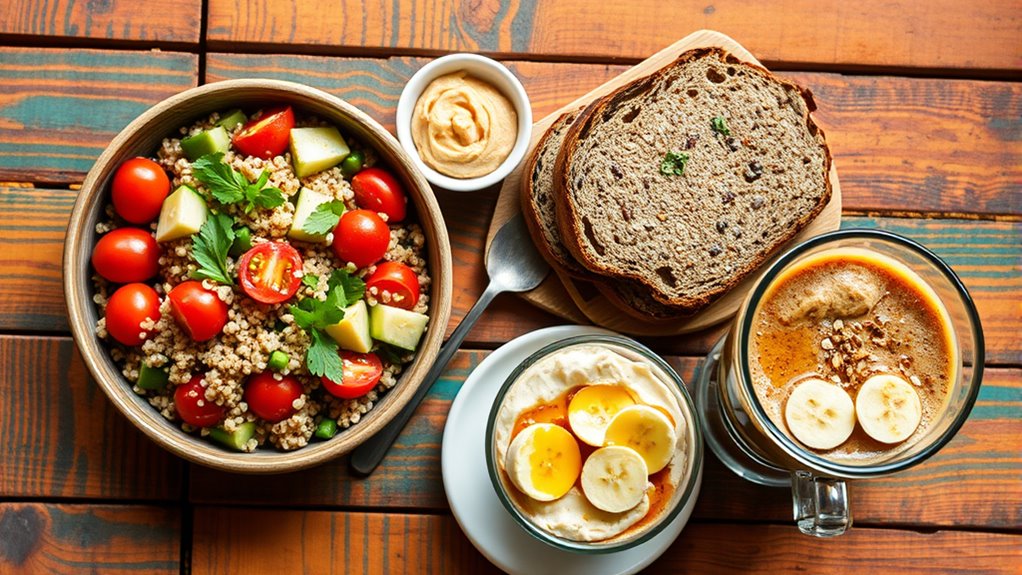

To incorporate whole grains into your meals, start by choosing a variety like brown rice, quinoa, oats, or barley. Rinse grains thoroughly, use proper water ratios, and cook with broth or spices for extra flavor. You can add cooked grains to salads, soups, stir-fries, or enjoy them as side dishes. Experimenting with preparation methods boosts taste and digestibility. Keep exploring simple tips to make your meals nourishing and delicious every time.
Key Takeaways
- Incorporate a variety of whole grains like brown rice, quinoa, oats, and barley into different meals for diversity.
- Properly rinse and cook grains using appropriate water ratios and techniques to enhance flavor and digestibility.
- Use grains as bases for salads, stir-fries, soups, or side dishes to seamlessly include them in your diet.
- Enhance taste by cooking grains in broth or adding herbs and spices during preparation.
- Gradually replace refined grains with whole grains to improve nutritional intake and overall health benefits.

Adding whole grains to your meals is a simple and effective way to boost your overall health. Whole grains come in various grain varieties, each offering unique flavors, textures, and nutritional benefits. From brown rice and quinoa to oats and barley, exploring these options allows you to diversify your diet effortlessly. Incorporating different grains not only keeps your meals interesting but also ensures you get a broad spectrum of nutrients, like fiber, vitamins, and minerals. To maximize their benefits, it’s essential to understand the best cooking techniques for each grain variety. Proper preparation makes a significant difference in taste, texture, and digestibility.
When cooking grains, start by rinsing them thoroughly. This step removes any dust or excess starch that might make the grains gummy or overly sticky. For most grains, like brown rice or barley, using a ratio of water to grain specified on the packaging helps achieve the ideal texture. For example, brown rice typically requires a 2:1 water-to-rice ratio and a longer cooking time, around 45 minutes, to become tender. Quinoa, on the other hand, cooks faster—about 15 minutes—and requires less water, usually a 1.75:1 ratio. Using a fine-mesh strainer to rinse quinoa before cooking removes the natural saponins, which can cause bitterness.
Cooking techniques can also influence the final flavor and texture of your grains. Boiling is the most common method, but you can also try simmering or using a rice cooker for convenience. Toastting grains in a dry skillet before cooking enhances their nutty flavor, adding depth to your dishes. For grains like oats, soaking overnight can reduce cooking time and improve digestibility. When preparing grains for salads or cold dishes, cook them al dente—tender but still slightly firm—to prevent them from becoming mushy once cooled. Being aware of potential allergy risks associated with certain grains can help you make safer choices and prevent adverse reactions.
Adding herbs, spices, or broth during cooking can elevate simple grains into flavorful components of your meals. For instance, cooking quinoa in vegetable broth with a bay leaf infuses it with extra flavor. Incorporating whole grains into soups, stir-fries, or salads is easy once you master these cooking techniques. Keep in mind that each grain variety may require slight adjustments in cooking time or water ratio, so reading packaging instructions helps ensure perfect results. By paying attention to these details, you’ll make your whole grains not only nutritious but also delicious, encouraging you to include them regularly in your diet.
Frequently Asked Questions
How Can I Store Whole Grains to Maximize Freshness?
You should store whole grains in an airtight container in a cool, dark place to maximize freshness. Proper storage helps with moisture control, preventing mold and spoilage. Keep them away from heat sources and sunlight, and consider refrigerating or freezing if you won’t use them soon. Regularly check for any signs of moisture or pests, and reseal tightly after each use to maintain their quality and extend shelf life.
Are There Any Health Risks Associated With Consuming Whole Grains?
You might face health risks if you’re gluten sensitive, as some whole grains contain gluten, which can cause issues. Also, beware of pesticide residues on non-organic grains, potentially leading to health problems with frequent consumption. To minimize risks, choose certified organic whole grains, and consult your healthcare provider if you have gluten sensitivity or other dietary concerns. Moderation and proper selection help you enjoy whole grains safely.
Can Children or Seniors Easily Digest Whole Grains?
You might find that children and seniors can sometimes have digestive sensitivities to whole grains, making digestion a bit more challenging. Their bodies may take longer to break down the fiber, which can affect nutrient absorption. To help, introduce whole grains gradually and choose easily digestible options like oats or refined whole wheat. Monitoring their reactions guarantees they enjoy the benefits without discomfort.
What Are Some Creative Ways to Incorporate Whole Grains Into Desserts?
You can make sweet grain treats by swapping refined flour with whole grains like oats or whole wheat flour in recipes. Try adding cooked quinoa or brown rice to fruit crisps or muffins for a healthy grain swap. Incorporate crushed graham crackers made from whole wheat for pie crusts. These creative ideas boost fiber and nutrients while satisfying your sweet tooth, making desserts both delicious and nourishing.
How Do I Choose the Best Whole Grain Products at the Store?
Choosing the best whole grain products is like steering a maze, but focus on grain labeling—look for “100% whole grain” or “whole wheat” on the package. You’ll find a variety of options like breads, cereals, and pastas, so pick the ones that suit your taste and needs. Check ingredient lists and opt for products with minimal added sugars and preservatives, ensuring you get the real deal.
Conclusion
So, next time you’re planning a meal, remember that adding whole grains isn’t just healthy—it’s a simple way to surprise your taste buds. Coincidentally, that extra crunch or nutty flavor might become your new favorite. By incorporating these grains, you’re not only nourishing your body but also discovering delightful new textures and tastes. So, go ahead—embrace whole grains and enjoy the delicious, wholesome benefits they bring to every bite.