
To safeguard your pipes from freezing, insulate them properly with foam, fiberglass, or rubber materials, making sure the insulation fits snugly and gaps are sealed. Adding heat tape offers extra security by providing continuous warmth, especially in very cold weather. Wrap the heat tape tightly around your pipes before insulating, and use a thermostat for controlled heat. If you keep these tips in mind, you can prevent costly damage — learn more to guarantee your pipes stay safe all winter.
Key Takeaways
- Measure pipes accurately and cut insulation to size for a snug fit.
- Wrap heat tape evenly around pipes before installing insulation for layered protection.
- Follow manufacturer instructions carefully when installing heat tape, ensuring secure placement.
- Use a thermostat or temperature controller with heat tape to prevent overheating and save energy.
- Seal gaps with insulation tape to improve insulation efficiency and prevent cold air infiltration.
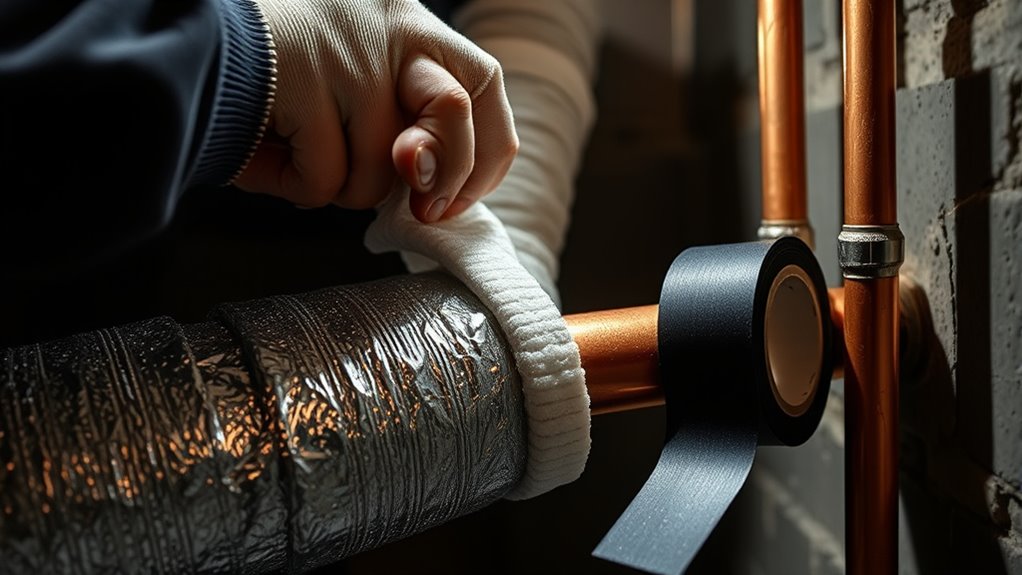
Have you ever wondered why insulating pipes is vital? The truth is, proper insulation helps prevent your pipes from freezing during cold weather, which can lead to costly repairs and water damage. When considering pipe insulation, you need to choose the right pipe insulation materials that suit your climate and pipe type. Foam, fiberglass, and rubber are common options, each offering different levels of thermal resistance. Foam pipe insulation, for instance, is lightweight and easy to install, making it a popular choice for residential applications. Fiberglass wraps provide excellent insulation but require careful handling to avoid irritation. Rubber-based insulation is flexible and durable, ideal for pipes that need to bend or move. Selecting the right material guarantees your pipes stay warm and prevents energy loss, saving you money on heating bills.
Once you’ve chosen the appropriate pipe insulation materials, the next step is to properly install them. Measure your pipes accurately to cut the insulation to the correct length. Make sure to snugly fit the insulation around each pipe, sealing any gaps with insulation tape or adhesive designed for this purpose. Proper installation is vital because gaps or loose fittings can allow cold air to seep in, defeating the purpose of insulation. For added protection, especially in areas prone to extreme cold, consider using heat tape installation. Heat tapes are electrical heating cables that you wrap around the pipe before insulating. They provide a continuous source of warmth, preventing pipes from freezing even in the harshest conditions. When installing heat tape, follow the manufacturer’s instructions carefully—ensure the tape is evenly wrapped and secured, and avoid overlapping to prevent overheating.
Heat tape installation is a straightforward process that can greatly enhance your pipe protection plan. It works best in conjunction with traditional pipe insulation, creating a layered defense against freezing temperatures. Before applying heat tape, make sure your pipes are clean and dry, and check that your electrical system can support the additional load. You’ll also want to install a thermostat or temperature controller with the heat tape, allowing it to turn on only when needed and reducing energy consumption. By combining effective pipe insulation materials with heat tape installation, you’re creating a reliable barrier that keeps your pipes safe from freezing damage. This proactive approach not only preserves your plumbing but also provides peace of mind during winter months. With proper planning and installation, you’ll minimize the risk of burst pipes, water damage, and expensive repairs, making your home much more resilient against cold weather. Incorporating proper insulation techniques can significantly improve overall energy efficiency and protect your home’s plumbing system.
Frequently Asked Questions
How Do I Choose the Best Heat Tape for My Pipes?
You should choose the best heat tape for your pipes by considering pipe insulation needs and heat tape types. Look for a tape with the right wattage for your climate, and verify it’s compatible with your pipe size. Check if it’s self-regulating or constant wattage, and match it with your pipe insulation for maximum protection. Always follow manufacturer instructions for safety and efficiency.
Can Insulation Prevent Freezing Without Heat Tape?
Insulation acts like a cozy blanket for your pipes, but it can only do so much. If your pipes are made of metal, which conducts heat quickly, thicker insulation helps prevent freezing more effectively. However, in extremely cold conditions, insulation alone might not be enough—adding heat tape guarantees your pipes stay warm. So, while good insulation reduces risk, combining it with heat tape offers the best protection.
What Safety Precautions Are Necessary When Installing Heat Tape?
When installing heat tape, you need to prioritize safety. Make certain you follow proper installation instructions closely to prevent electrical hazards, such as short circuits or shocks. Always turn off the power supply before starting, and use the correct gauge wiring. Keep the tape away from water and flammable materials. Regularly inspect the installation for damage, and never overload circuits. Proper installation reduces risks, guaranteeing safe and effective pipe protection.
How Long Does Insulating Pipe Work Typically Last?
Pipe insulation typically lasts between 10 to 15 years, but its durability depends on the insulation material used and environmental conditions. You should regularly check for signs of wear, such as cracks, tears, or moisture, which can reduce effectiveness. Proper installation and maintenance extend the lifespan of your pipe insulation, ensuring it continues to protect against freezing and energy loss. Keep an eye on its condition to maximize its insulation material lifespan.
Are There Eco-Friendly Insulation Options for Pipes?
Yes, you can choose eco-friendly insulation options for your pipes. Look for materials made from recycled or sustainable resources, like recycled denim, wool, or cork. These options are effective while reducing environmental impact. By selecting sustainable insulation, you help conserve resources and promote recycling. Eco-friendly materials often have a lower carbon footprint, making them a responsible choice for maintaining energy efficiency and supporting environmental health.
Conclusion
So, congratulations! Now you’re officially an expert in insulating pipes and adding heat tape. Who knew that wrapping pipes could save you from icy disasters and expensive repairs? Just imagine the envy of your neighbors as they watch you play DIY hero. Just remember, if all else fails, you can always pretend you’re a secret agent protecting your pipes from the evil cold. Stay warm, be prepared, and keep those pipes cozy!