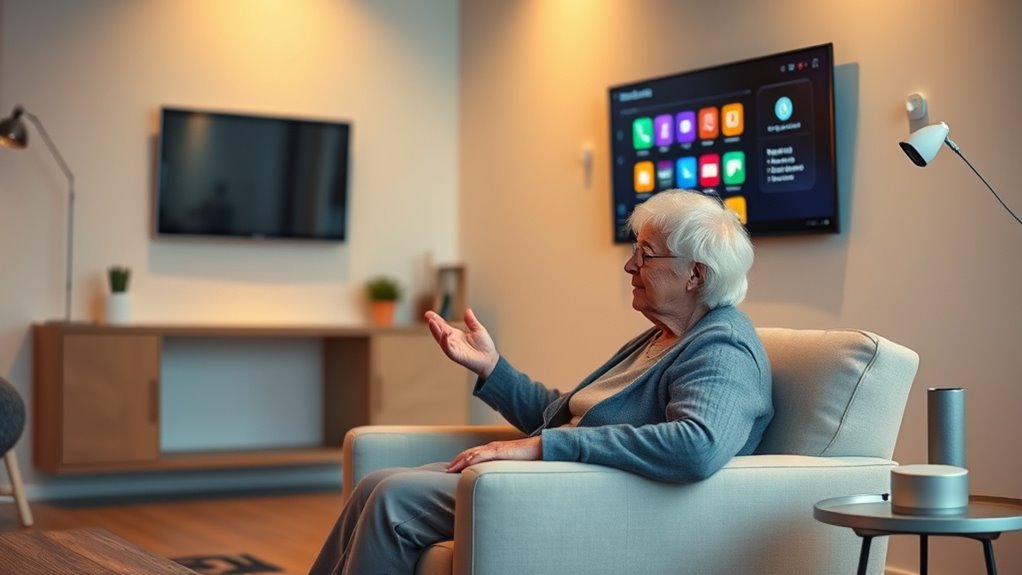

Smart home updates with voice controls and sensors make everyday routines easier and safer for seniors. You can use voice commands to control lights, thermostats, and security systems, reducing manual effort. Sensors detect movement, falls, or temperature changes, providing real-time alerts to keep you safe. These technologies help you stay independent while offering peace of mind. Keep exploring to discover how these innovations can improve your home life even further.
Key Takeaways
- Voice controls enable seniors to manage security, lighting, and climate easily without manual effort.
- Sensors detect falls, movement, and temperature changes, providing real-time emergency alerts.
- Smart security cameras and remote monitoring enhance safety and peace of mind for seniors and their families.
- Integration with platforms like Alexa or Google Assistant makes system management more accessible.
- Continuous updates improve usability, energy efficiency, and safety features tailored for senior living.

Smart home technology continues to evolve rapidly, offering homeowners more convenience, security, and energy efficiency than ever before. If you’re considering updates to your home, incorporating voice controls and sensors can make a significant difference, especially for seniors. These advancements not only simplify daily routines but also enhance safety and peace of mind. With integrated security systems, you can monitor your home remotely, receive alerts for unusual activity, and control access more easily. Voice-activated devices allow you to arm or disarm security systems, check security cameras, or lock doors without lifting a finger. Sensors placed around your home can detect movement, temperature changes, or even falls, providing real-time data that helps you respond quickly to emergencies or unusual situations. Additionally, many of these smart devices are compatible with popular smart home platforms, making integration seamless and user-friendly. The use of home automation technology has become more accessible, allowing even those unfamiliar with smart systems to benefit from their features.
Smart home tech enhances safety, security, and convenience—ideal for seniors and modern living.
One of the biggest advantages of these updates is how they improve energy management. Smart thermostats, for example, learn your routines and adjust heating and cooling accordingly, reducing waste and lowering utility bills. Voice commands make it effortless to change the temperature, even if you’re busy or physically limited. Sensors can also identify when a room is empty and automatically turn off lights or adjust the climate, further conserving energy. This seamless control makes managing your home’s energy use more intuitive and less burdensome, especially for seniors who might find manual adjustments challenging. Incorporating energy-efficient devices can also contribute to reducing your carbon footprint and supporting sustainability goals. Furthermore, understanding dream symbolism can sometimes offer insights into subconscious concerns or hopes, which may be especially meaningful during times of change or stress.
Security systems integrated with voice controls and sensors also provide a heightened sense of safety. You can check live security footage or receive alerts about suspicious activity via your smartphone or voice assistant. This means you don’t have to be physically present to ensure your home is secure, giving you peace of mind whether you’re at home or away. Sensors can alert you if a door or window is opened unexpectedly or if there’s unusual movement during certain hours, helping prevent break-ins or accidents. Moreover, installing smart security features can give you peace of mind by providing real-time updates and remote control options. For seniors, these features offer an extra layer of safety, reducing the need for constant supervision while remaining connected and informed. As smart home technology continues to advance, the market growth makes these solutions more accessible and affordable than ever before.
Implementing these updates is straightforward, and many devices work seamlessly with popular smart home platforms. Voice controls are compatible with virtual assistants like Alexa, Google Assistant, or Siri, allowing you to customize commands to suit your needs. Sensors can be placed in strategic locations around your home to monitor specific areas or activities. Setting up these systems might require some initial effort, but the long-term benefits—enhanced security, improved energy efficiency, and greater independence—are well worth it. As technology continues to advance, these smart home updates will become more intuitive and accessible, making everyday life safer and more manageable for seniors and their families alike.
Frequently Asked Questions
How Secure Are Voice-Controlled Smart Home Devices for Seniors?
You might wonder how secure voice-controlled smart home devices are for seniors. These devices use encryption protocols to protect your data and user authentication to guarantee only authorized users can access controls. While no system is completely foolproof, choosing reputable brands and regularly updating software helps keep your smart home safe. Stay informed about security features to confidently enjoy the convenience these devices offer without risking your privacy.
Can Sensors Detect Emergencies Like Falls or Medical Issues?
Sensors can indeed detect emergencies like falls or medical issues. Fall detection technology uses motion and proximity sensors to identify sudden impacts, triggering alerts instantly. Medical alert sensors monitor crucial signs such as heart rate and oxygen levels, alerting you or caregivers to potential problems. These sensors provide peace of mind, ensuring help is quickly on the way when an emergency occurs, making them essential for senior safety.
Are Voice Controls Easy for Seniors With Speech Impairments?
Imagine a senior with a mild speech impairment trying to use voice controls; customizing voice commands can make a huge difference. While speech impairment challenges exist, many systems now offer tailored voice command customization, making them more accessible. These adjustments help seniors communicate effectively, ensuring they can easily control their environment. With the right setup, voice controls become a practical, user-friendly solution, supporting independence despite speech challenges.
What Is the Cost Range for Comprehensive Smart Home Updates?
When considering all-encompassing smart home updates, you’ll want to look at pricing estimates and installation costs. These can vary widely based on the devices and systems you choose, typically ranging from $1,500 to $10,000 or more. You might find some costs include professional installation, while others are DIY. It’s best to get quotes from providers to understand what fits your budget and needs before making a decision.
How Do Smart Devices Protect Seniors’ Privacy and Data?
You might wonder how smart devices protect your privacy and data. They use data encryption to secure your information from unauthorized access, ensuring your personal details stay private. Additionally, you have control over your data through user consent, deciding what information to share and with whom. These measures help keep your data safe while allowing you to enjoy the benefits of smart technology tailored to your needs.
Conclusion
As you embrace these smart home updates, you’ll find managing daily tasks easier and safer. Did you know that 78% of seniors feel more confident and independent when using voice controls and sensors? By incorporating these technologies, you can create a more comfortable, accessible environment that truly supports your needs. It’s a small investment for a big boost in quality of life, helping you stay connected and secure in your own home.