To install smart faucets and touchless taps, start by turning off your water supply and guaranteeing compatibility with your plumbing. Follow manufacturer instructions to connect the fixture securely, then calibrate the sensors for proper sensitivity. Adjust water pressure to prevent splashing and ensure smooth operation. Test the faucet now and then to fine-tune responsiveness and flow. Carefully completing these steps will help you create a hygienic, efficient setup—keep going to learn more about perfecting your installation.
Key Takeaways
- Turn off water supply and verify plumbing compatibility before installation.
- Connect the faucet securely, following manufacturer instructions, to prevent leaks.
- Calibrate the sensor sensitivity to ensure accurate activation and avoid false triggers.
- Adjust water pressure settings to achieve smooth flow and prevent splashing.
- Test the faucet thoroughly, fine-tuning calibration and pressure for optimal performance.
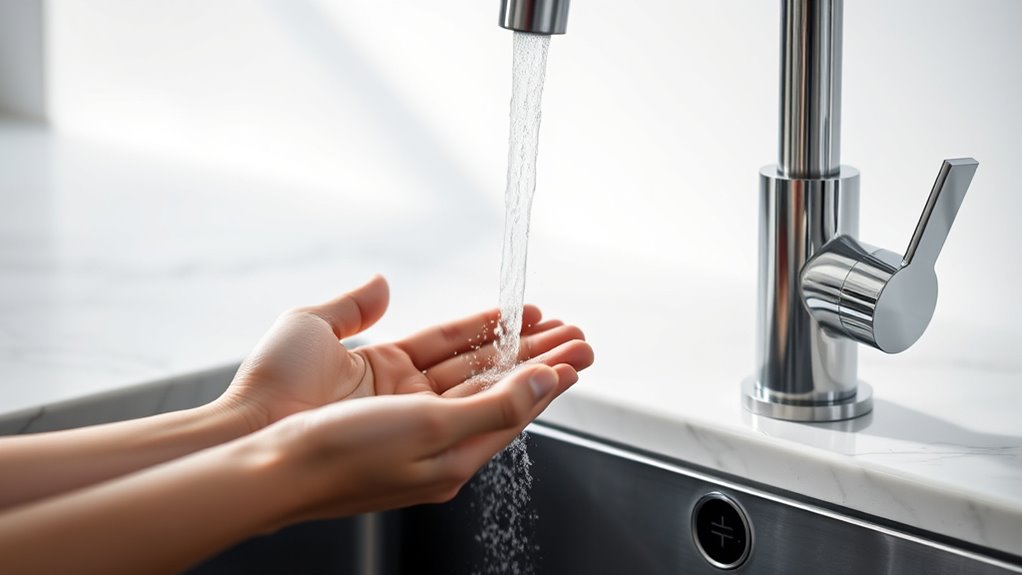
Installing smart faucets and touchless taps can considerably enhance your kitchen or bathroom’s convenience and hygiene. These modern fixtures eliminate the need to touch handles, reducing the spread of germs and making handwashing more efficient. When setting up your new touchless faucet, you’ll likely need to focus on sensor calibration to ensure it responds accurately to your gestures. Sensor calibration involves adjusting the sensitivity of the motion detector so that the faucet activates only when you intend it to. If the sensor is too sensitive, it might turn on when you’re simply passing by, wasting water and causing frustration. Conversely, if it’s not sensitive enough, you’ll have to wave your hand repeatedly, which defeats the purpose of a touchless system. To calibrate the sensor properly, follow the manufacturer’s instructions, usually involving a few simple steps like activating the faucet and adjusting sensitivity settings through a control panel or app. Proper sensor calibration guarantees a seamless experience, so you don’t have to worry about accidental activations or delays. Additionally, understanding the importance of proper installation practices can significantly improve the durability and performance of your touchless faucet. Equally important is adjusting the water pressure to match your needs. Most smart faucets come with a feature for water pressure adjustment, allowing you to set a comfortable flow rate without wasting water. If the water pressure is too high, it can cause splashing or make the water flow too forcefully, creating a mess and wasting water. If it’s too low, you might find it frustratingly slow, especially when washing dishes or hands. Adjusting water pressure typically involves turning a screw or dial located under the sink or within the faucet’s connection point. Take your time to find a balanced flow that feels right for your tasks. Proper water pressure adjustment not only enhances usability but also prolongs the lifespan of your faucet by preventing undue stress on internal components. When installing these fixtures, make sure your plumbing is compatible and that you follow all safety guidelines. Turn off the water supply before connecting the faucet to prevent leaks or water damage. Once installed, test the sensor’s responsiveness and tweak the calibration if needed. Similarly, check the water flow and make final adjustments to the pressure setting. This ensures your smart faucet operates smoothly and effectively. Investing a little effort into sensor calibration and water pressure adjustment during installation will pay off in a more reliable, efficient, and hygienic experience. You’ll enjoy the convenience of touchless technology every time you wash your hands or do dishes, making your space more modern and functional.
Frequently Asked Questions
Are Smart Faucets Compatible With All Plumbing Systems?
Smart faucets may not be compatible with all plumbing systems. You should check the plumbing compatibility before faucet installation to guarantee the smart features work properly. Some systems might lack the necessary connections or pressure levels for ideal performance. It’s smart to review your plumbing setup and follow the manufacturer’s guidelines to avoid issues during installation and ensure your smart faucet functions smoothly with your existing plumbing.
What Is the Average Lifespan of a Touchless Tap?
A touchless tap typically lasts around 10 to 15 years, depending on usage and maintenance. You’ll find that their durability helps reduce maintenance costs over time. Plus, they promote water conservation by minimizing waste, making them a smart investment. Regular upkeep ensures your tap functions well, extending its lifespan. Overall, with proper care, you can enjoy your touchless faucet’s benefits for many years.
Do Smart Faucets Require Wi-Fi or Internet Connection?
Think of your smart faucet like a smartphone—it needs Wi-Fi connectivity to work at its best. While some models operate offline, most rely on an internet connection to enable features like remote control and updates. Without internet dependence, your faucet might lose some smart functions, but it will still turn on and off. So, if you want full functionality, ensuring a stable Wi-Fi connection is essential.
How Energy-Efficient Are Touchless Faucet Sensors?
Touchless faucet sensors are quite energy-efficient, helping you achieve significant energy savings by reducing water waste. They rely on sensor accuracy to activate only when needed, preventing unnecessary water flow and power use. As a result, you’ll notice lower utility bills and a more sustainable setup. Plus, with precise sensor operation, you get reliable performance without extra energy consumption, making them a smart choice for eco-conscious households.
Can Smart Faucets Be Installed Without Professional Help?
You can install smart faucets yourself; about 80% of homeowners do DIY projects like this. The installation requirements are straightforward—mainly turning off water supply and connecting to existing plumbing. Follow DIY installation tips such as reading the manual carefully, using the right tools, and checking connections for leaks. With patience and attention to detail, you’ll have your smart faucet up and running without needing professional help, saving time and money.
Conclusion
Once you’ve installed your smart faucet or touchless tap, you’ll find it’s as smooth as silk. These modern fixtures make everyday tasks easier and more hygienic, transforming your space into a high-tech haven. Just like a well-oiled machine, your new faucet will work seamlessly, saving you time and effort. Embrace the convenience and innovation, and enjoy the sleek, touchless experience every day—it’s a small upgrade that makes a big difference.