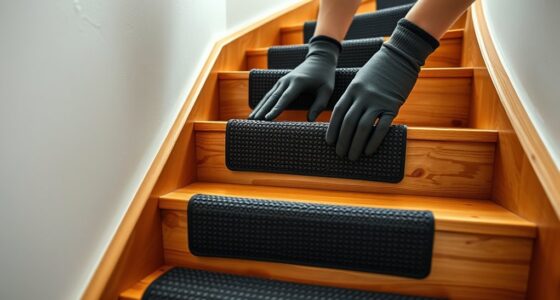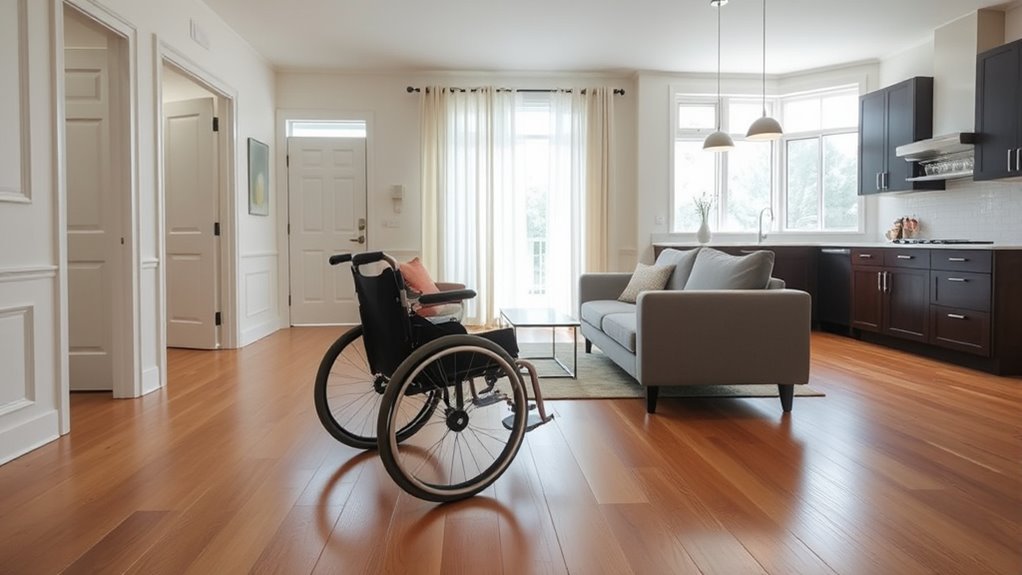

To create a fully accessible home, focus on wide doorways, threshold ramps, and open floor plans to guarantee easy wheelchair navigation. Incorporate smart technology like automated lighting and voice-activated controls to simplify daily tasks. Use ergonomic, adjustable-height furniture and accessible storage solutions for comfort and practicality. Prioritize safety with emergency systems and clear pathways throughout the house. These expert tips will guide you in making your space both functional and adaptable for long-term needs.
Key Takeaways
- Prioritize universal design features like wider doorways, lower switches, and accessible countertops for seamless mobility throughout the home.
- Incorporate smart home technology to automate lighting, locks, and climate controls for easier operation and increased safety.
- Ensure all areas, including bathrooms and kitchens, are fully accessible with slip-resistant flooring and strategically placed grab bars.
- Use data-driven insights to identify and address specific accessibility gaps, optimizing layout and functionality during the remodel.
- Implement safety measures such as voice-activated emergency systems and automatic ramps to enhance safety during emergencies.
Have you ever considered how fully accessible your home is for someone using a wheelchair? If you’re planning a major remodel, making your entire space wheelchair-friendly should be a top priority. Not only does this improve daily living, but it also enhances safety and independence. A smart home setup can be a game-changer, allowing you to automate lighting, door locks, and thermostats to simplify navigation and control. With integrated voice commands or remote access, managing your environment becomes more seamless, especially for those with mobility challenges. When designing for accessibility, think beyond just door widths and ramps—integrate smart technology that can be operated easily and intuitively, reducing the need for physical effort. Incorporating data-driven strategies can help optimize your remodel for safety, efficiency, and user experience. Additionally, incorporating universal design principles ensures that your home remains functional and adaptable for all users, regardless of future needs. Considering ergonomic design features can further support ease of use and comfort for wheelchair users. Implementing adaptable features like adjustable-height countertops and accessible storage solutions can further enhance usability and comfort for wheelchair users. Emergency preparedness is another critical aspect of whole-home wheelchair accessibility. Prepare your space so that in case of emergencies—like power outages, natural disasters, or medical crises—everyone can evacuate quickly and safely. Install smart emergency systems that can send alerts to your phone or emergency services and ensure that critical areas, such as bathrooms and bedrooms, are accessible at all times. Consider adding voice-activated door openers or automatic ramps that activate during emergencies, giving wheelchair users swift access to exits. Keep emergency supplies within reach and ensure pathways are free of clutter, making sure that mobility isn’t hindered when time matters most. Utilizing smart emergency systems can significantly enhance your home’s safety and responsiveness during critical moments.
Frequently Asked Questions
What Are the Best Flooring Options for Wheelchair Mobility?
When choosing flooring for wheelchair mobility, you want surfaces that are smooth and easy to roll over. Non-slip flooring provides safety, especially in wet areas, while low pile carpet offers comfort without hindering movement. Both options minimize resistance, making it easier for you to move around. Prioritize these flooring choices to enhance accessibility and safety throughout your home, ensuring you can navigate comfortably and confidently.
How Can Doorways Be Widened Without Major Structural Changes?
Imagine you’re redesigning your doorway for wheelchair access. You can achieve this by removing the threshold, creating a smooth passage, and reinforcing the doorway frame to support wider openings. This method avoids major structural changes while providing extra width. With careful doorway reinforcement and threshold removal, you can make entrances more accessible, ensuring ease of movement without extensive renovations. It’s an effective, practical solution for improving home accessibility.
Are There Budget-Friendly Ways to Improve Accessibility?
When seeking budget solutions to improve accessibility, you can consider simple home modifications like adding grab bars, installing threshold ramps, or widening doorways with temporary solutions. These changes are cost-effective and don’t require major remodeling. Focus on prioritizing areas that need the most attention. Small adjustments make a significant difference, helping you create a safer, more accessible environment without breaking the bank.
How Do I Ensure Bathroom Safety for Wheelchair Users?
Think of your bathroom as a sanctuary you want to keep safe. To guarantee wheelchair users’ safety, install sturdy grab bars near the toilet and shower. Use non-slip mats to prevent slips and falls on wet surfaces. Keep pathways clear of obstacles, and consider a walk-in shower with a seat. These simple steps create a safer, more accessible space, making every bathroom visit worry-free.
What Are the Legal Building Code Requirements for Accessibility?
You need to guarantee your remodel meets building code compliance and adheres to ADA standards. Check local regulations for specific requirements, like door widths of at least 32 inches and accessible pathways. You’re responsible for confirming that features like ramps, grab bars, and accessible fixtures follow these standards. Consulting with a professional ensures your home remains compliant, safe, and accessible for wheelchair users, avoiding legal issues down the line.
Conclusion
By making these remodel tips, you’ll transform your home into a welcoming, accessible sanctuary—breaking down barriers like a well-placed bridge. Remember, creating a space that truly works for everyone isn’t just about compliance; it’s about crafting a home where independence and comfort flourish. With thoughtful planning, you’ll turn your house into a fortress of freedom, ensuring that no doorway is too narrow and no obstacle too high. Your home can be a haven for all.