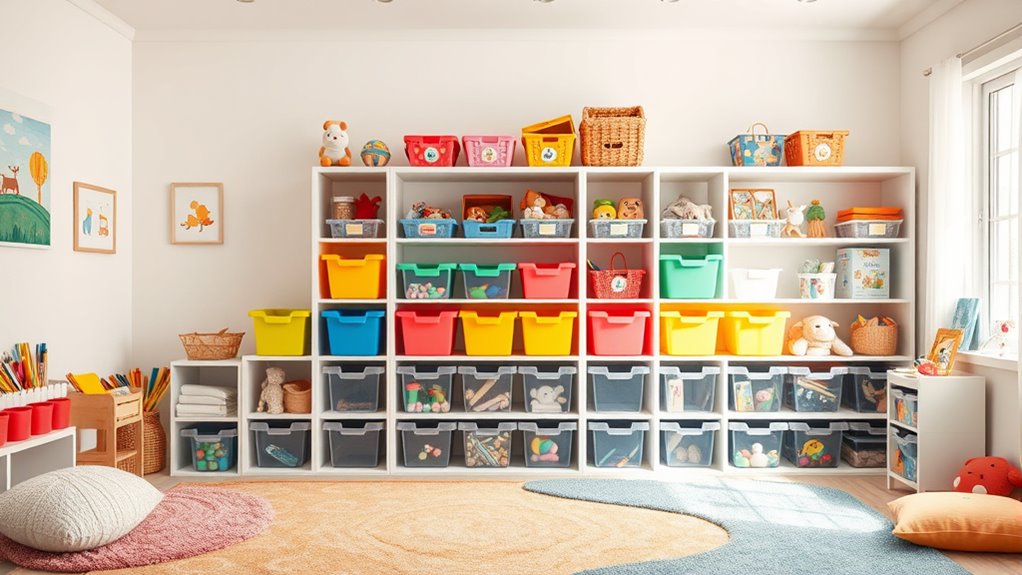

Creating kid-friendly organizing systems means choosing colorful, labeled containers or bins that kids can easily identify and use. Make storage fun with playful shapes or themes that match their interests. Get children involved in choosing and placing items, fostering a sense of responsibility. Keep routines simple and routines consistent to make tidying natural. Incorporate eco-friendly materials to teach responsibility while keeping everything easy to maintain—so you’ll discover more practical tips ahead.
Key Takeaways
- Use colorful, labeled containers and themed storage boxes to make organization visually appealing and engaging for children.
- Involve kids in choosing storage solutions and deciding item placement to foster ownership and responsibility.
- Establish simple, consistent routines for tidying up, integrating them into daily activities like after play or homework.
- Incorporate eco-friendly storage options and repurpose items to teach environmental responsibility.
- Keep storage systems straightforward, fun, and easy to maintain to encourage ongoing participation and good habits.

Ever wonder how to keep your kids’ belongings organized without constant battles over clutter? The answer lies in creating kid-friendly organizing systems that combine creative storage solutions with routine management. When you make storage fun and accessible, your kids are more likely to participate in keeping their space tidy, reducing your stress and fostering independence.
Start by thinking outside the box when it comes to storage. Traditional bins and shelves are great, but you can take it further with creative storage ideas. Use colorful containers, labeled baskets, or even personalized bins that your kids can identify easily. Incorporate playful elements like hanging organizers shaped like animals or themed storage boxes that match their interests. This visual appeal makes tidying up feel less like a chore and more like an engaging activity. Plus, when storage solutions are appealing, kids are more inclined to put their belongings away without fuss.
Get creative with colorful, themed storage to make tidying fun and engaging for kids.
Routine management is just as essential as creative storage. Establish simple daily habits that your children can easily follow. For example, set a specific time each day for putting toys back in their designated spots or organizing school supplies after homework. Keep routines consistent and straightforward—if your child knows that every evening they need to tidy their desk or toy area, it becomes a natural part of their day rather than a struggle. Reinforce these routines with gentle reminders and praise when they follow through, helping them understand that organization is part of their daily responsibilities.
Involving your kids in the setup process makes a big difference. Let them choose storage bins or decide where certain items should go. When they have a say in how their space is organized, they develop a sense of ownership and responsibility. This involvement also helps them remember where things belong, making routine management more effective. Keep the system flexible enough to adapt as they grow or their needs change. For example, a small corner for art supplies can evolve into a more organized craft station over time.
Additionally, understanding that eco-friendly living practices can be incorporated into organization—such as using sustainable storage options or repurposing items—can teach children the importance of environmental responsibility from a young age. Finally, keep things simple. Overcomplicating storage or routines can lead to frustration for both you and your child. Focus on creating a system that’s easy to maintain, visually clear, and fun to use. When kids see organization as an enjoyable part of their day, they’re more likely to develop good habits that last. By combining creative storage solutions with consistent routine management, you’ll set the stage for a more peaceful, clutter-free home where your kids take pride in keeping their space neat.
Frequently Asked Questions
How Can I Involve Children in Organizing Their Spaces?
You can involve children in organizing their spaces by making it fun and engaging. Let them choose their favorite playroom decor and involve them in color coding storage bins, which makes tidying up easier and visually appealing. Encourage them to decide where things go, fostering responsibility. Use bright labels and playful containers to motivate them and create a space they’re proud of, making organization a team effort.
What Are the Safest Storage Options for Kids?
A safe space is a happy space, and that starts with choosing the right storage options. You should look for containers made from non-toxic materials, ensuring toy safety and peace of mind. Opt for furniture with rounded edges and secure lids to prevent accidents. Avoid sharp or fragile items, and always supervise play areas. By prioritizing non-toxic, sturdy storage, you create an environment where kids can explore freely and safely.
How Do I Teach Kids to Maintain Organization?
To teach kids to maintain organization, use motivational strategies like praise and rewards to encourage their efforts. Break down organizational tasks into simple steps to overcome common organizational challenges. Keep routines consistent, involve them in sorting and cleaning, and set clear expectations. By making organization fun and rewarding, your kids will develop good habits and understand the importance of staying organized on their own.
Are There Eco-Friendly Organizing Products Suitable for Children?
Like Mother Nature herself, you can find eco-friendly organizing products for kids made from biodegradable storage and recycled materials. These options are safe for children and gentle on the planet. Look for containers crafted from bamboo, recycled plastics, or paperboard, which are durable yet sustainable. By choosing these, you teach your kids the importance of caring for the environment while keeping their space organized and clutter-free.
How Can I Adapt Systems for Different Age Groups?
You can adapt systems for different age groups by using creative storage solutions that suit each stage, like low bins for toddlers and labeled drawers for older kids. Incorporate age-appropriate labels with clear, simple words or pictures, making it easy for kids to identify their belongings. Keep storage accessible and organized to foster independence, and update the system as they grow to match their changing needs and abilities.
Conclusion
Now that you’ve discovered these kid-friendly organizing systems, imagine the chaos turning into calm—almost overnight. But here’s the twist: the real magic happens when your little ones start taking charge, turning every cluttered corner into a space of their own. Are you ready to see how simple changes can transform your home in ways you never expected? The best part? The adventure is just beginning, and the most exciting moments are still ahead.