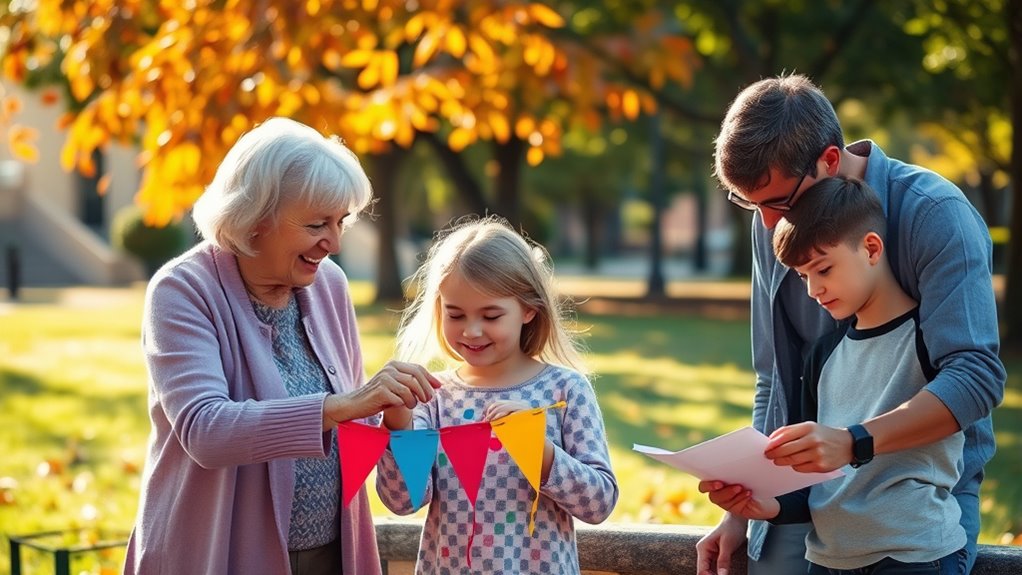

To encourage interaction between generations, create opportunities like family gatherings, storytelling evenings, or cultural workshops where everyone can participate actively. Promote sharing stories, traditions, or recipes to build connections and foster understanding. Engage in activities that highlight cultural heritage, helping bridge gaps and break stereotypes. When you facilitate open dialogue and value each voice, you nurture trust and empathy. Keep exploring ways to strengthen these bonds, and you’ll discover even more meaningful ideas to bring generations closer together.

Turn the school run and nap time into listening time
- Thousands of audiobooks, podcasts and originals
- Listen on your phone, tablet or Echo — also offline
- Cancel anytime
Key Takeaways
- Organize family gatherings, storytelling nights, and cultural workshops to facilitate meaningful intergenerational interactions.
- Promote shared activities like cooking traditional recipes or crafts to deepen bonds and preserve cultural heritage.
- Encourage active listening and open dialogue to bridge stereotypes and foster mutual understanding.
- Incorporate storytelling and personal experiences to connect age groups through shared narratives.
- Create space for curiosity and participation, ensuring all voices feel valued during intergenerational exchanges.
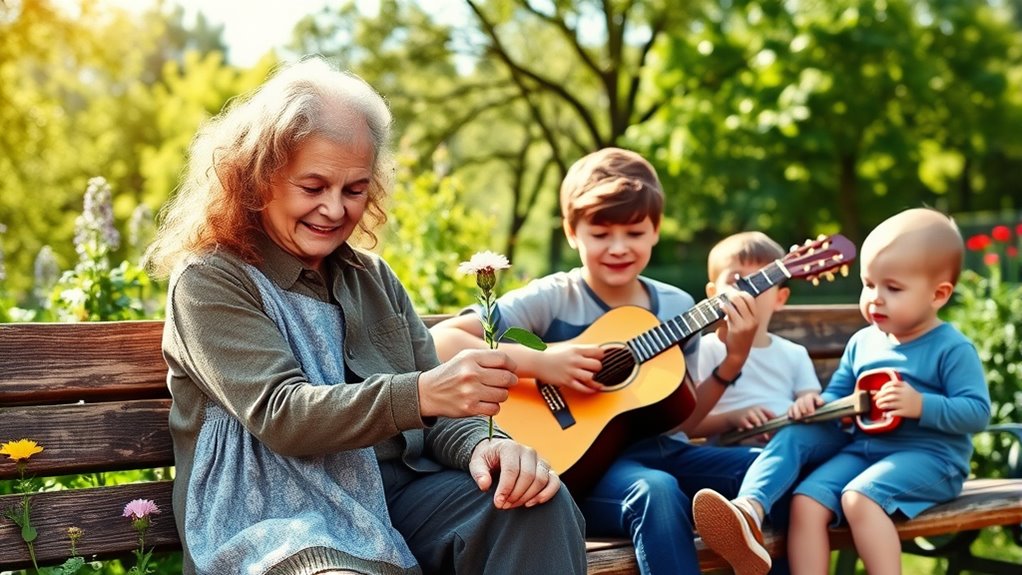
Understanding how different generations interact is essential for building strong relationships and fostering mutual respect. One of the most effective ways to achieve this is through intergenerational storytelling, where older individuals share their personal experiences, anecdotes, and lessons learned. This practice allows younger generations to gain insight into the past, understand different perspectives, and appreciate the context behind shared cultural traditions. When you encourage storytelling sessions, you create a space where stories become bridges that connect age groups, fostering empathy and understanding. These stories often highlight shared cultural traditions, reinforcing a sense of identity and belonging across generations. By listening actively and asking questions, you promote a two-way exchange that nurtures genuine connections.
Storytelling bridges generations, fostering empathy, understanding, and shared cultural bonds through active listening and meaningful exchanges.
Incorporating shared cultural traditions into interactions can also serve as a powerful tool for encouraging engagement. Traditions—whether they involve cooking recipes, holiday rituals, or community celebrations—carry the history and values of a community. When you participate in these traditions with different generations, you help preserve cultural heritage while creating new memories. For example, cooking a family recipe passed down through generations allows younger members to learn about their roots firsthand. Engaging in traditional crafts or music can spark conversations about their significance and origins, making these activities more meaningful. These shared experiences foster a sense of continuity and pride, deepening bonds across age groups.
To promote intergenerational interaction, it’s important to be intentional about creating opportunities for these exchanges. Organize family gatherings, storytelling nights, or cultural workshops where multiple generations can come together. These settings encourage dialogue and participation, breaking down stereotypes or misconceptions that might exist. When you facilitate these interactions, you help cultivate a culture of openness and curiosity. As everyone shares their stories and traditions, you’ll notice a natural appreciation for each other’s differences and similarities. The key is to approach these moments with patience and genuine interest, ensuring that every voice feels valued. Additionally, understanding how different generations interact can be enhanced by recognizing that intergenerational communication plays a vital role in building trust and mutual understanding.
Ultimately, fostering intergenerational storytelling and shared cultural traditions isn’t just about passing down knowledge; it’s about building a community grounded in respect, understanding, and shared history. When you create spaces for these exchanges, you help bridge the gap between generations, making connections that enrich everyone involved. By valuing stories and traditions from all ages, you set the stage for stronger, more meaningful relationships that stand the test of time.
Top picks for "encourag interaction between"
As an affiliate, we earn on qualifying purchases.
Frequently Asked Questions
How Can Technology Bridge Generational Communication Gaps Effectively?
You can bridge generational communication gaps effectively by leveraging technology through digital storytelling and virtual mentorship. Share stories across ages via videos or social media to foster understanding and connection. Encourage older generations to mentor younger ones virtually, exchanging skills and perspectives. These tools create meaningful interactions, build empathy, and help break down barriers, making communication more engaging and accessible for everyone involved.
What Roles Do Schools and Community Programs Play in Fostering Intergenerational Bonds?
Schools and community programs play a crucial role in fostering intergenerational bonds by organizing intergenerational mentorships and shared history projects. You might think it’s hard to connect different age groups, but these initiatives make it fun and meaningful. By creating spaces where young and older generations interact regularly, you help build understanding and respect, breaking down stereotypes and strengthening community ties. Your involvement can truly make a difference in creating lasting relationships.
How Can Workplaces Encourage Interaction Across Different Age Groups?
You can encourage interaction across age groups at work by establishing mentorship programs where employees share experiences and knowledge. Promote team-building activities that require collaboration between different generations, fostering understanding and respect. Create informal spaces for conversations and shared experiences, like coffee breaks or lunch sessions. Recognize the value of diverse perspectives, and encourage open dialogue, helping everyone learn from each other and build strong intergenerational relationships.
What Are Some Common Misconceptions About Different Generations?
You might think stereotypes challenge genuine understanding, but many misconceptions about generations are just ageism myths. For instance, you may believe older workers resist change, or younger employees lack experience. These ageism misconceptions overlook individual skills and adaptability. Avoid stereotypes and challenge challenges by recognizing each person’s unique strengths. By doing so, you foster a more inclusive environment, where everyone’s contributions are valued beyond age-based assumptions.
How Does Intergenerational Interaction Impact Mental Health and Well-Being?
Imagine a bridge connecting two vibrant islands, each filled with stories and wisdom. Intergenerational interaction boosts your mental health by strengthening emotional resilience and providing essential social support. You feel more understood, less isolated, and capable of facing life’s storms. This connection nurtures empathy, reduces stress, and fosters a sense of belonging, enriching your overall well-being and transforming challenges into opportunities for growth.
Conclusion
By embracing opportunities to connect across generations, you create meaningful bonds that enrich everyone’s lives. Imagine volunteering at a local community center and sharing your skills with seniors, while learning from their experiences in return. These interactions foster understanding, respect, and lasting friendships. So, step out, start a conversation, or join a program—your small effort can bridge gaps and build a stronger, more connected community for all ages.
Fall Picks
fall essentials
As an affiliate, we earn on qualifying purchases.