
To encourage shared play areas, create designated zones that cater to different activities and age groups, making the space inviting and inclusive. Promote community involvement by organizing events like playdates, clean-up days, or classes, which build bonds and shared responsibility. Guarantee proper supervision to keep play safe and help children learn boundaries. By fostering an engaging, safe environment, you’ll support social skills, physical activity, and emotional growth—keep exploring to discover how to make it thrive even more.
Key Takeaways
- Engage community members in planning and maintaining the play area to foster ownership and participation.
- Designate specific zones for different activities to promote organization and reduce conflicts.
- Organize regular events and activities, such as playdates and clean-up days, to encourage ongoing use and community bonding.
- Educate caregivers on supervision and inclusive play to ensure safety and positive social interactions.
- Incorporate body awareness activities within play to enhance children’s self-regulation and social development.
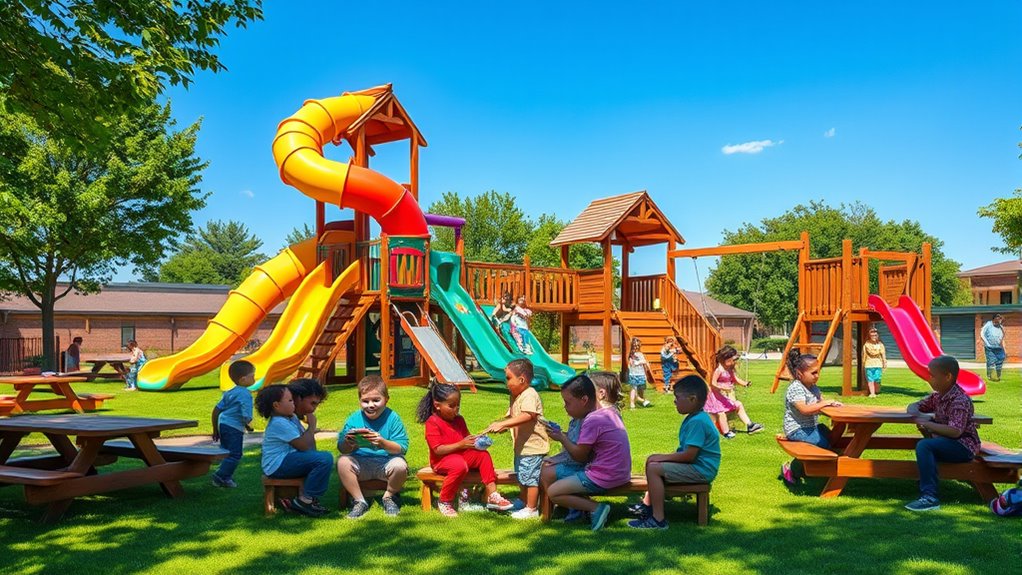
Shared play areas offer a convenient space where children can enjoy outdoor activities while fostering social skills and community connection. When you create and maintain such spaces, you’re giving kids a safe environment to explore, learn, and build friendships. Supervised play is essential in these settings, as it guarantees children can freely engage with one another while staying safe. Your role involves monitoring the activities, intervening when conflicts arise, and encouraging positive interactions. This active oversight helps children understand boundaries, share equipment, and develop conflict-resolution skills, all of which are fundamental for healthy social development. Additionally, incorporating elements of body awareness can help children become more attuned to their own physical sensations, promoting better self-regulation during play. Community engagement plays a critical part in making shared play areas successful. When you involve local residents, parents, and community leaders in planning and maintaining the space, it becomes more than just a playground—it becomes a communal hub. Organizing regular events, like playdates, clean-up days, or outdoor classes, fosters a sense of ownership and shared responsibility. As community members participate, they build stronger bonds, which often translate into increased safety and pride in the space. This collective effort also encourages diverse play options, ensuring the area appeals to children of various ages and interests.
Supervised play in shared areas fosters social skills, safety, and healthy friendships among children.
Creating opportunities for supervised play doesn’t mean just watching from afar; it’s about actively engaging with children and encouraging inclusive behavior. You can set up designated zones for different activities, so kids can choose based on their interests and comfort levels. This structure helps prevent conflicts and guarantees that everyone has a fair chance to participate. Additionally, by being present and attentive, you demonstrate that their safety and enjoyment matter, which boosts their confidence and willingness to try new activities.
Encouraging community engagement also involves educating parents and guardians about the importance of supervised play. When they understand that their involvement enhances safety and promotes positive social interactions, they’re more likely to participate. This could be through volunteering as play monitors or organizing community events that highlight the shared space’s benefits. The more invested everyone feels, the more vibrant and secure the shared play area becomes.
Ultimately, fostering successful shared play areas hinges on your commitment to supervised play and community engagement. These elements create a safe, inclusive environment where children can thrive socially and physically. By actively participating in and promoting these spaces, you help cultivate a sense of community that benefits everyone involved. The result is a lively, well-used space that encourages children to explore, connect, and grow within a supportive environment.
Frequently Asked Questions
How Can I Fund the Development of Shared Play Areas?
You can fund the development of shared play areas by exploring grant opportunities from local government, nonprofits, and community foundations. Additionally, implement effective fundraising strategies like hosting events, launching online campaigns, and soliciting donations from local businesses. Engaging your community in these efforts boosts support and donations, making it easier to secure the necessary funds. Combining grants and grassroots fundraising will help turn your shared play area vision into reality.
What Safety Standards Should Shared Play Areas Meet?
You should guarantee shared play areas meet strict safety standards—think of playground maintenance and safety signage like a superhero duo. Regular inspections keep equipment safe, preventing surprises like cracked swings or rusty slides. Clear safety signage guides kids and parents, reducing accidents. By adhering to these standards, you create a secure environment where everyone can enjoy the fun without worry, proving that safety isn’t an afterthought but a top priority.
How Do I Involve Community Members in Planning?
You involve community members by actively engaging them in the planning process through community events, surveys, and meetings. Foster stakeholder collaboration by inviting parents, teachers, and local organizations to share their ideas and concerns. Encourage community engagement by creating opportunities for feedback and participation, ensuring everyone feels heard. This inclusive approach builds trust, garners diverse input, and helps design shared play areas that truly meet the needs and preferences of the community.
What Are Effective Ways to Promote Shared Play Spaces?
Think of shared play spaces as the heart of your community’s pulse. To promote them effectively, leverage community engagement through outreach events, social media, and local partnerships. Prioritize inclusive design, ensuring play areas welcome everyone regardless of age, ability, or background. By actively involving residents in planning and highlighting the benefits of shared spaces, you foster ownership and enthusiasm, turning simple parks into vibrant hubs of connection and joy.
How Can I Address Potential Conflicts Among Children?
You can address potential conflicts among children by teaching conflict resolution skills and promoting inclusive design in play areas. Encourage kids to communicate their feelings calmly, listen to others, and find compromises. Design the space to accommodate diverse interests and abilities, reducing competition and frustration. When conflicts arise, step in calmly, guide children to resolve issues peacefully, and reinforce positive interactions, creating a safe, welcoming environment for everyone.
Conclusion
By embracing shared play areas, you’re opening a world where laughter echoes louder than thunder and friendships blossom faster than lightning. Imagine a space so lively, it feels like the heartbeat of the entire neighborhood, where every giggle and game sparks a chain reaction of joy. When you create these magical spots, you’re not just building play zones—you’re crafting legendary adventures that will be remembered for generations. So, go ahead, make shared play areas happen and turn ordinary days into extraordinary stories!