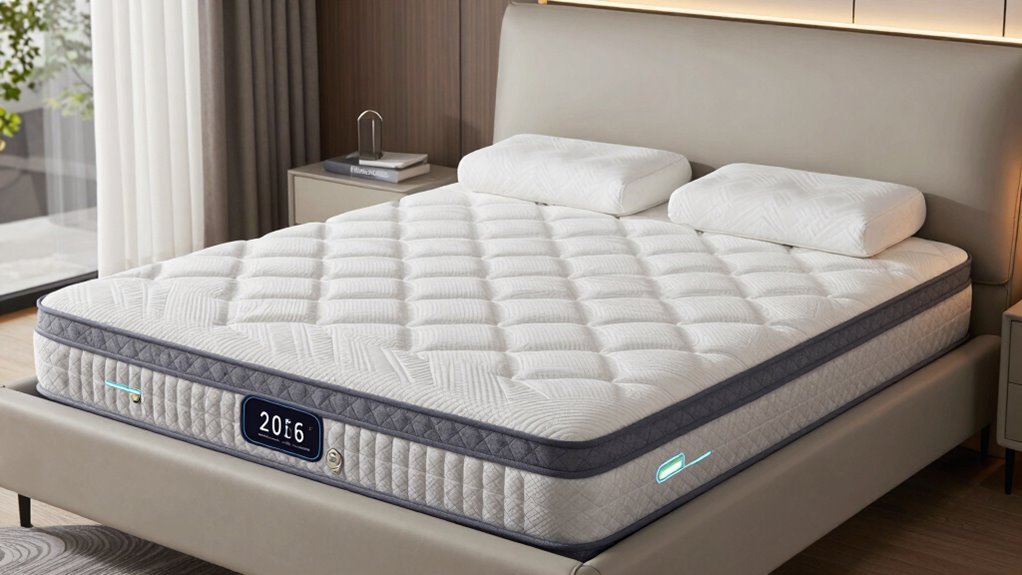

A low air loss mattress system for home can help manage pressure and moisture, but the right choice depends on the care plan, bed fit, and how much adjustability the household needs. I rank the Drive Medical Med-Aire Melody first for its combination of alternating pressure and low air loss, while the Invacare microAIR MA800 stands out for added pulsation therapy and the Lunderg pad for a simpler setup with static mode. The main tradeoffs are therapy features versus ease of use, replacement-mattress support versus a pad-style design, and added functions versus setup complexity. These systems are not interchangeable with every mattress or care plan, so confirm clinical needs and bed dimensions before choosing. Continue reading for the full comparison, selection criteria, and guidance on matching a system to your home.

Turn the school run and nap time into listening time
- Thousands of audiobooks, podcasts and originals
- Listen on your phone, tablet or Echo — also offline
- Cancel anytime
Complete the kit


Key Takeaways
- The Med-Aire Melody ranks first because its low air loss and alternating pressure functions give it a strong balance of therapy features for home use.
- The Invacare microAIR MA800 is the feature-led pick for buyers whose care team wants pulsation therapy as well as alternating pressure and low air loss.
- The lineup includes both replacement systems and mattress pads; check which type each listing supplies before assuming it will fit your existing bed arrangement.
- Size and support surface compatibility matter as much as pump features, especially when choosing between the 84-inch Drive Medical system and shorter listed formats such as ProHeal.
- Simplicity is a real tradeoff: Lunderg’s static mode and quiet-pump emphasis may suit less complex needs, while multi-mode systems can demand more setup and care-plan coordination.
| Drive Medical Med-Aire Melody Alternating Pressure and Low Air Loss Mattress Replacement System |  | Best for Adjustable, Straightforward Care | Model: 14026 | Dimensions: 80 × 35 × 8 inches | Weight capacity: 350 pounds | VIEW ON AMAZON | See Our Full Breakdown |
| Drive Medical Med-Aire Low Air Loss Mattress Replacement System |  | Best for Breathable Cover Care | Air cells: 20 individually replaceable 8-inch bladders | Pump airflow: 8 liters per minute | Alternating cycle time: 10 minutes | VIEW ON AMAZON | See Our Full Breakdown |
| Protekt Aire 4000 Low Air Loss/Alternating Pressure Mattress System |  | Best for Easier Cover Laundering | Model number: 22017 | Material: Polyurethane | Water resistance: Water repellent | VIEW ON AMAZON | See Our Full Breakdown |
| Low Air Loss Mattress System for Pressure Relief, 110V |  | Best Lightweight Basic Option | Model: Mlona012 | Dimensions: 1.95 × 0.9 m | Maximum load: 297.62 pounds | VIEW ON AMAZON | See Our Full Breakdown |
| Invacare microAIR MA800 Alternating Pressure Low Air Loss Mattress System with Pulsation Therapy |  | Best for Advanced Pressure and Heel Care | Model: MA800 | Dimensions: 80 × 36 × 10 inches | Weight capacity: 600 pounds | VIEW ON AMAZON | See Our Full Breakdown |
| KEKOY Alternating Pressure Mattress Pad with Low Air Loss Technology |  | Best for Quiet Home Use | Product type: Alternating pressure mattress pad | Technology: Alternating pressure and low air loss | Pressure settings: 5 | VIEW ON AMAZON | See Our Full Breakdown |
| Drive Medical Med-Aire Alternating Pressure and Low Air Loss Mattress System, 84 x 36 Inches |  | Best for Caregiver Safeguards | Dimensions: 84 × 36 × 8 inches | Air cells: 20 | Pump airflow: 8 LPM | VIEW ON AMAZON | See Our Full Breakdown |
| ProHeal Low Air Loss Alternating Pressure Mattress, 36 x 80 x 8 in |  | Best for High Weight Capacity | Dimensions: 36 × 80 × 8 inches | Weight: 30 lbs | Weight capacity: 1,000 lbs | VIEW ON AMAZON | See Our Full Breakdown |
| Lunderg Alternating Air Pressure Mattress Pad with Static Mode and Quiet Pump |  | Best Simple Static-Mode Pad | Size: Twin, 35 × 75 inches | Weight capacity: Up to 300 lbs | Pump noise: 23 dBA | VIEW ON AMAZON | See Our Full Breakdown |
| low air loss mattress system for home | Weight capacity | Dimensions |
|---|---|---|
| Drive Medical Med-Aire Melody | 350 pounds | 80 × 35 × 8 inches |
| Drive Medical Med-Aire Low Air | 350 pounds | — |
| Protekt Aire 4000 Low Air Loss | — | — |
| Low Air Loss Mattress System f | — | 1.95 × 0.9 m |
| Invacare microAIR MA800 Altern | 600 pounds | 80 × 36 × 10 inches |
| KEKOY Alternating Pressure Mat | — | — |
| Drive Medical Med-Aire Alterna | 450 lbs | 84 × 36 × 8 inches |
| ProHeal Low Air Loss Alternati | 1,000 lbs | 36 × 80 × 8 inches |
| Lunderg Alternating Air Pressu | Up to 300 lbs | — |
More Details on Our Top Picks
Drive Medical Med-Aire Melody Alternating Pressure and Low Air Loss Mattress Replacement System
The Med-Aire Melody earns this spot for pairing alternating pressure with low air loss in a replacement system that gives caregivers useful control without adding advanced therapy modes. Its adjustable weight settings let the pump be tailored to the user, while a visual low-pressure alarm offers a clear prompt to check the setup. Compared with the more feature-heavy Invacare MA800, the Melody is simpler and has a lower stated weight capacity, but it still provides 20 removable air cells and a 10-minute cycle. Those removable cells can make targeted maintenance easier; the tradeoff is that the nylon cover is limited to spot cleaning rather than machine washing. It suits home care where basic pressure and moisture management are the priority, provided the 350-pound capacity and standard 120V power requirement fit the setup.
Pros:- Combines alternating pressure and low air loss for pressure redistribution and microclimate support.
- Adjustable weight settings allow the pump pressure to be tailored to the user.
- Visual low-pressure alarm provides a direct cue to check system pressure.
- Twenty removable air cells and a spot-cleanable cover support maintenance.
Cons:- The 350-pound weight capacity is below the Invacare MA800’s stated 600-pound capacity.
- Cover care is limited to spot cleaning.
- Requires a 120V power supply and continuous pump operation.
Best for: Home caregivers who want adjustable pressure settings, a visible low-pressure alert, and replaceable air cells for an adult within the 350-pound capacity.
Not ideal for: Users who need a machine-washable cover, a capacity above 350 pounds, or a system with added pulsation therapy and heel-specific features.
- Model:14026
- Dimensions:80 × 35 × 8 inches
- Weight capacity:350 pounds
- Air cells:20 removable cells
- Pressure range:30–60 mmHg
- Cycle time:10 minutes
- Air output:8 liters per minute
- Power supply:120V/60Hz
Our verdict“Choose the Med-Aire Melody for adjustable, no-frills pressure and moisture support at home if its 350-pound limit and spot-clean-only cover suit your care routine.”
Drive Medical Med-Aire Low Air Loss Mattress Replacement System
This Med-Aire replacement system stands out for its cover: the four-way stretch polyurethane is fluid resistant and vapor permeable, a useful combination for home care where moisture and friction need attention. It also has 20 individually replaceable 8-inch bladders, automatic pressure monitoring, and audio-visual alarms. Compared with the Med-Aire Melody, this model puts more emphasis on a breathable, fluid-resistant cover and pressure monitoring, while the Melody specifies adjustable weight settings and a visual alarm. Both use 20 cells, an 8-liter-per-minute pump, and a 10-minute cycle, so the cover and control details are key points of difference. This is a standard-dimension replacement mattress that needs its pump to operate; it may not fit nonstandard beds, and buyers should plan for the equipment and power setup that continuous air therapy requires.
Pros:- Vapor-permeable, fluid-resistant four-way stretch cover supports moisture management.
- Twenty individually replaceable 8-inch bladders support targeted cell replacement.
- Automatic pressure monitoring with audio-visual alarms helps flag pressure issues.
- Alternating pressure and low air loss combine pressure redistribution with airflow.
Cons:- Designed for standard bed dimensions, which may limit fit on nonstandard frames.
- Requires a pump and tubing system for operation.
- Does not specify adjustable weight settings, unlike the Med-Aire Melody.
Best for: Caregivers seeking a standard-size home replacement system with a vapor-permeable, fluid-resistant cover and individually replaceable air cells.
Not ideal for: People with a nonstandard bed size, or buyers who prefer a simpler setup without a separate pump and tubing system.
- Air cells:20 individually replaceable 8-inch bladders
- Pump airflow:8 liters per minute
- Alternating cycle time:10 minutes
- Weight capacity:350 pounds
- Cover:Removable four-way stretch polyurethane; fluid resistant and vapor permeable
- Built-in pillow:Yes
- Pressure alerts:Automatic pressure monitoring with audio-visual alarm
- Origin:Made in USA and imported
Our verdict“Pick this Med-Aire when a breathable, fluid-resistant cover and replaceable cells matter more than adjustable weight settings or advanced therapy modes.”
Protekt Aire 4000 Low Air Loss/Alternating Pressure Mattress System
The Protekt Aire 4000 is the clearest fit here for households that need to launder the cover rather than rely on spot cleaning. Its water-repellent polyurethane cover can be machine washed and tumble dried on low, a practical advantage over the spot-clean-only cover on the Med-Aire Melody. The system includes the pump, mattress cover, tubing, and connectors, so the listed components cover the basic setup rather than leaving those pieces unspecified. It still combines alternating pressure with low air loss, but the supplied details do not give a weight capacity, cycle time, or cell count. That makes it harder to compare its clinical fit with the specification-rich Invacare MA800, and the listed one-size format limits flexibility. I’d favor it when cleanability and included setup parts outweigh the need for detailed sizing or capacity information.
Pros:- Machine-washable cover can be tumble dried on low for routine laundering.
- Water-repellent polyurethane cover helps simplify surface cleanup.
- Pump, tubing, and connectors are listed as included components.
- Combines alternating pressure and low air loss in a mattress system.
Cons:- Only one size is listed, limiting fit flexibility.
- Product data does not state a weight capacity or mattress dimensions.
- No cell count or cycle time is provided for comparison with the Med-Aire systems.
Best for: Home caregivers who prioritize a washable, water-repellent cover and want the pump, tubing, and connectors included in the system.
Not ideal for: Buyers who need a verified weight capacity, specific mattress dimensions, or multiple size choices before selecting a system.
- Model number:22017
- Material:Polyurethane
- Water resistance:Water repellent
- Care instructions:Machine wash; tumble dry low; do not bleach
- Included components:Mattress cover, air pump, tubing, and connectors
- Target audience:Adult
- Firmness:Plush
Our verdict“Choose the Protekt Aire 4000 if washable-cover care and included setup components matter more than detailed capacity and sizing specifications.”
Low Air Loss Mattress System for Pressure Relief, 110V
This Mlonausz low air loss system is the lightweight, basic pick for buyers who want a wipe-clean alternating-pressure surface without the more detailed controls and cell information found on the Med-Aire Melody. The listing gives a 5-pound item weight, standard-bed dimensions, detachable air tube, and a motor rated at 45 dB or less, which may help when the pump will run in a bedroom. Its PVC construction and wipe-clean surface suit simple cleanup, but the stated maximum load is 297.62 pounds—lower than the 350-pound Med-Aire systems and far below the 600-pound capacity listed for the Invacare MA800. Product details do not specify air-cell count, cycle timing, or alarm features, making its pressure management harder to evaluate. I’d treat it as a basic option for a compatible user, not a substitute for a more fully specified care system.
Pros:- Listed item weight of 5 pounds may make handling and setup easier.
- Wipe-clean PVC surface supports straightforward routine cleanup.
- Detachable air tube can simplify disconnecting the mattress system.
- Motor noise is specified at 45 dB or less.
Cons:- Maximum load of 297.62 pounds is lower than the Med-Aire systems’ 350-pound capacities.
- Product details do not specify air-cell count, cycle time, or pressure range.
- Requires a 110V power supply and pump operation.
Best for: Home caregivers seeking a lightweight, wipe-clean alternating-pressure mattress for an adult whose weight is within the 297.62-pound limit.
Not ideal for: Users above the stated load limit, or caregivers who need documented cell details, pressure alarms, adjustable settings, or advanced therapy modes.
- Model:Mlona012
- Dimensions:1.95 × 0.9 m
- Maximum load:297.62 pounds
- Item weight:5 pounds
- Material:PVC
- Voltage:110V
- Noise level:≤45 dB
- Included components:Alternating pressure air mattress, main unit, English manual, and installation accessories
Our verdict“Consider this lightweight system for basic home pressure relief and easy surface cleaning only if its lower load limit and sparse therapy specifications fit the user.”
Invacare microAIR MA800 Alternating Pressure Low Air Loss Mattress System with Pulsation Therapy
The Invacare microAIR MA800 is the most therapy-focused choice in this group, combining alternating pressure and low air loss with pulsation therapy and HeelSense technology. That broader toolset makes it a different proposition from the Med-Aire Melody, which offers adjustable weight settings and a low-pressure alarm but no listed pulsation or heel-specific feature. The MA800 also has the highest stated capacity here at 600 pounds, plus a Max Inflate mode for transfers and care procedures. Those features may suit users with more involved care needs, though the product data identifies use for medium- to high-risk individuals and stages I–IV; a clinician should guide suitability. Its specialization can mean more complexity for caregivers, and the listing’s 0.01-ounce item weight is not credible as a practical equipment weight. This is a care-oriented system, not the simplest home setup.
Pros:- Combines alternating pressure, low air loss, and pulsation therapy.
- HeelSense technology provides an added focus on heel pressure relief.
- Max Inflate mode supports transfers and nursing procedures.
- Stated 600-pound capacity exceeds the listed capacities of the Med-Aire and Mlonausz systems.
Cons:- Multiple therapy features may require more caregiver involvement than a basic system.
- The listed item weight of 0.01 ounces is unreliable as a guide to handling or setup.
- The specialized feature set may be unnecessary for users seeking basic home pressure management.
Best for: People with medium-to-high pressure-injury risk who need multiple therapy modes, heel-focused pressure relief, or a stated capacity up to 600 pounds, with caregiver or clinical guidance.
Not ideal for: Buyers seeking a simple, lightweight pad for occasional use, or households unable to manage a more involved care system with caregiver support.
- Model:MA800
- Dimensions:80 × 36 × 10 inches
- Weight capacity:600 pounds
- Therapy modes:Alternating pressure, low air loss, and pulsation
- Alternating cycle:3:1
- Pulsation cycle:60 seconds
- Cover material:Quilted nylon
- Intended use:Medium-to-high risk of pressure sores or stages I–IV
Our verdict“Choose the MA800 for more involved pressure and heel-care needs when its added modes and caregiver requirements match the home care plan.”
KEKOY Alternating Pressure Mattress Pad with Low Air Loss Technology
The KEKOY stands out for pairing alternating pressure with low-air-loss vents in a pad sized for a standard 75-inch bed. Its pump operates below 28 dBA, which may suit a bedroom where pump noise is a concern. Compared with the Drive Medical Med-Aire, it has fewer documented care features: the Drive includes diagnostic alarms, a CPR valve, and cell-on-cell outage protection, while the KEKOY’s listed feature set is simpler. Five pressure settings allow some adjustment, and the waterproof PVC surface is straightforward to wipe clean. The tradeoff is dependence on continuous power: the pad deflates when unplugged, so it does not offer the outage support described for the Drive. I’d choose it for basic home use, not for buyers seeking a more feature-rich replacement system.
Pros:- Combines alternating pressure cycling with low-air-loss vents
- Five pressure settings give caregivers adjustment options
- Pump noise is specified at under 28 dBA
- Waterproof medical-grade PVC surface is easy to clean
Cons:- Requires continuous power and deflates when unplugged
- Lacks the listed outage protection and diagnostic alarms of the Drive Medical Med-Aire
- Its 75-inch length may not suit beds that need an 84-inch system
Best for: Home caregivers seeking a quieter, wipe-clean mattress pad with both alternating pressure and low-air-loss airflow for a 75-inch bed.
Not ideal for: Caregivers who need cell-on-cell power outage protection, diagnostic alarms, or a CPR valve; the listed KEKOY features do not include them, and it deflates when unplugged.
- Product type:Alternating pressure mattress pad
- Technology:Alternating pressure and low air loss
- Pressure settings:5
- Pressure cycle:Approximately every 10–12 minutes
- Pump noise:Under 28 dBA
- Material:Medical-grade PVC
- Inflated dimensions:75 × 36 inches
- Power requirement:Continuous power; deflates when unplugged
Our verdict“Choose the KEKOY for a quieter, straightforward home mattress pad, but pick the Drive Medical Med-Aire if outage protection and care alarms matter more.”
Drive Medical Med-Aire Alternating Pressure and Low Air Loss Mattress System, 84 x 36 Inches
The Drive Medical Med-Aire earns this spot through a more complete caregiver-oriented feature set than the KEKOY pad: its digital pump has diagnostic alarms, and a CPR valve allows rapid deflation when needed. Twenty air cells cycle at selectable 10-, 15-, 20-, or 25-minute intervals, while the vapor-permeable stretch cover pairs fluid resistance with airflow across the surface. Its cell-on-cell design also helps retain support during a power outage, unlike the KEKOY, which deflates when unplugged. Those safeguards come with a fit tradeoff: at 84 inches long, this system will not suit every home bed. I’d favor it for caregivers who value alarms and outage support, but buyers with shorter beds should check fit before choosing it.
Pros:- Twenty air cells combine alternating pressure with low-air-loss therapy
- Four cycle times let caregivers tailor the cycling interval
- Cell-on-cell construction helps retain support during power outages
- Fluid-resistant, vapor-permeable cover and CPR valve support care needs
Cons:- The 84-inch length may not fit common shorter home beds
- Requires a powered digital pump to operate
- More care-oriented controls may be more than buyers seeking a simple pad need
Best for: Caregivers who want a replacement mattress with adjustable cycles, diagnostic alarms, a CPR valve, and added support during a power outage.
Not ideal for: Households with a 75- or 80-inch bed, or anyone unable to accommodate an 84-inch mattress system.
- Dimensions:84 × 36 × 8 inches
- Air cells:20
- Pump airflow:8 LPM
- Cycle times:10, 15, 20, or 25 minutes
- Weight capacity:450 lbs
- Cover:Removable, fluid-resistant, vapor-permeable 4-way stretch PU
- Outage feature:Cell-on-cell power outage protection
- Additional features:Pillow function, CPR valve, diagnostic alarms
Our verdict“Choose the Drive Medical Med-Aire when alarms, a CPR valve, and outage support outweigh the need for a shorter, simpler mattress pad.”
ProHeal Low Air Loss Alternating Pressure Mattress, 36 x 80 x 8 in
For home buyers who need a higher listed capacity, the ProHeal’s 1,000-pound rating sets it apart from the Drive Medical Med-Aire’s 450-pound capacity and the Lunderg pad’s 300-pound limit. It also offers a broad set of care functions: alternating, static, and auto-firm modes, four cycle intervals, and alarms for low pressure, power failure, and alternating failure. Low-air-loss ventilation and a removable fluid-resistant cover address moisture and cleanup, while cell-on-cell construction helps keep air in the lower layer during power loss. This is a more feature-dense replacement mattress than the simpler KEKOY pad, but the supplied information does not state whether it deflates or how long support lasts during an outage. Buyers should also confirm that an 80-inch mattress suits their bed.
Pros:- Listed weight capacity is 1,000 lbs
- Alternating, static, and auto-firm modes offer varied care settings
- Low-air-loss ventilation and a removable fluid-resistant cover support moisture management and cleanup
- Cell-on-cell design retains air in the lower layer during a power failure
Cons:- The 80-inch length may not fit beds requiring an 84-inch mattress
- The supplied product data does not state pump noise or airflow
- Power-failure alarms and cell retention do not specify how long the lower layer maintains support
Best for: Home caregivers who need an 80-inch replacement mattress with a high stated weight capacity, multiple operating modes, and system alarms.
Not ideal for: Buyers who need an extra-long 84-inch mattress or who want clearly stated pump noise and power-outage support duration before choosing.
- Dimensions:36 × 80 × 8 inches
- Weight:30 lbs
- Weight capacity:1,000 lbs
- Layers:2
- Air bladders:20
- Alternating cycles:10, 15, 20, and 25 minutes
- Modes:Alternating, static, and auto firm
- Alarms:Low pressure, power failure, and alternating failure
- Cover material:Removable, fluid-resistant nylon
Our verdict“Pick the ProHeal if its 1,000-pound capacity and multiple care modes fit your needs, and verify bed dimensions and outage expectations before ordering.”
Lunderg Alternating Air Pressure Mattress Pad with Static Mode and Quiet Pump
The Lunderg is the simplest choice here for someone who wants alternating pressure plus a stable static mode, rather than the low-air-loss ventilation offered by the KEKOY, Drive Medical Med-Aire, and ProHeal. Static mode keeps all cells inflated, giving caregivers an option when cycling is not wanted. Its 23 dBA pump is the quietest stated figure in this group, and the waterproof twin-size pad includes hoses and a quick connector. The compromises are meaningful: its 300-pound capacity is below the Drive and ProHeal figures, setup takes about 20 minutes to inflate, and spot-clean-only care is less convenient than a removable cover. I’d choose it for basic pressure cycling and quiet operation, but not when low-air-loss airflow or a higher capacity is a requirement.
Pros:- Alternating and static modes allow a choice between cycling and a stable surface
- Pump noise is specified at 23 dBA
- Waterproof surface supports wipe-down cleanup
- Quick connector, hoses, and setup instructions are included
Cons:- Does not list low-air-loss ventilation, unlike the KEKOY, Drive Medical Med-Aire, and ProHeal
- Weight capacity is limited to 300 lbs
- Inflation takes about 20 minutes and the pad is spot-clean only
Best for: Home caregivers seeking a quiet twin-size pad with alternating and static modes for a person within its 300-pound capacity.
Not ideal for: Buyers who specifically need low-air-loss ventilation, a capacity above 300 lbs, or a removable cover for machine washing.
- Size:Twin, 35 × 75 inches
- Weight capacity:Up to 300 lbs
- Pump noise:23 dBA
- Modes:Alternating and static
- Pressure:Adjustable
- Material:Polyvinyl chloride (PVC)
- Water resistance:Waterproof
- Inflation time:About 20 minutes
- Care:Spot clean only
Our verdict“Choose the Lunderg for quiet, basic alternating-pressure support with static mode, but skip it if low-air-loss airflow or a higher capacity is needed.”

How We Picked
I ranked these systems around the decisions that matter in a home: whether the product combines low air loss with alternating pressure, whether its format and stated dimensions can suit the bed, how much therapy choice it offers, and how manageable the equipment appears for everyday caregiving. I also treated clear distinctions between replacement systems and pad-style products as a buyer priority, since a mismatch can affect fit and support.
The ranking favors options with a useful balance of functions and a clear home-care role, not the longest feature list. That puts the Med-Aire Melody ahead as a balanced first choice, while the Invacare MA800 earns a place for specialized pulsation needs and simpler pad options rank lower for buyers seeking a full replacement system. Product listings do not establish which therapy is medically appropriate, so I treat clinical suitability as a decision to confirm with a qualified clinician rather than infer from marketing language.
Factors to Consider When Choosing Low Air Loss Mattress System For Home
Before choosing a system, I would settle the care and setup questions that product descriptions cannot answer for a particular household. These factors can prevent a feature-rich system from becoming a poor fit.
Match the therapy to the care plan
Low air loss, alternating pressure, static mode, and pulsation are not interchangeable labels. They describe different functions, and a longer feature list does not mean a product is a better match for a particular person. Ask the clinician managing skin or pressure concerns which functions are appropriate, and whether the user’s position or care needs call for any specific operating mode. Do not select a system solely because a listing uses terms such as pressure relief. If the care plan changes, check whether the system’s controls and modes can accommodate that change. This step matters more than comparing names or advertised features.
Confirm mattress type and dimensions
Check whether you need a full replacement mattress system or a pad intended to sit on an existing surface. Then measure the bed and compare length, width, and height with the listing; the roundup includes differing formats, including an 84-inch Drive Medical model and an 80-inch ProHeal model. A small mismatch can affect how the system sits and how securely bedding fits. Verify the bed frame, rails, and any existing mattress arrangement rather than assuming a standard size will work. Ask the seller or manufacturer about compatibility when the listing is unclear. Do not rely on the product name alone to establish fit.
Plan for pump placement, sound, and power
A powered system adds a pump, tubing, and electrical connection to the bedroom, so think through placement before delivery. The pump needs a stable location with enough clearance for airflow and tubing that can reach without being pulled or pinched. Noise can matter to both the person using the bed and anyone sharing the room, but quietness claims should not replace checking return terms or asking for operating details. Confirm the required power supply and what the household should do during an outage or equipment fault. Keep the pump accessible for adjustments and cleaning. A setup that is easy to reach can reduce caregiver strain over time.
Choose controls caregivers can manage
More modes can help when they match a care plan, but they also create more settings to understand. Consider who will adjust the pump, how often settings may need to change, and whether more than one caregiver needs to learn the controls. Ask for clear operating instructions and confirm whether settings should only be changed under clinical guidance. A simpler system may be easier to manage in a household with limited caregiving support, while a multi-function system may better fit a prescribed routine. Avoid changing therapy settings to troubleshoot comfort without checking the instructions or contacting the care team. Ease of use includes setup, alarms, and routine maintenance, not just the control panel.
Account for care tasks and replacement needs
Low air loss systems are part of a broader care routine, not a substitute for regular skin checks, repositioning guidance, or other clinician-recommended support. Ask how the cover and components should be cleaned, whether replacement parts are available, and what maintenance the pump requires. Clarify who to contact if the mattress stops cycling or develops a leak, since downtime can disrupt the care setup. Check warranty coverage and the process for service or replacement before buying. Households with limited backup support may want to prioritize accessible service and straightforward instructions over extra modes. A product’s long-term practicality depends on support as well as its initial feature set.
Frequently Asked Questions
Do I need a replacement mattress system or a pad?
Start with your current bed arrangement and the care plan, not the product name. Replacement systems and pads are different formats, and a pad may depend on an existing mattress for its base. Confirm what is included in the listing and whether the manufacturer says it is compatible with your bed. Measure the available surface and check the system’s dimensions before ordering. If you are unsure which format the clinician intended, ask them to clarify before buying.
Is alternating pressure necessary if a system already has low air loss?
Not automatically. Low air loss and alternating pressure refer to different functions, so one does not confirm that the other is needed. The Med-Aire Melody and Invacare MA800 combine both functions, while a buyer should still match those features to the individual care plan. Ask the clinician which functions are indicated rather than treating more features as inherently better. If the answer is unclear, pause before choosing a system based on a listing’s feature count.
Can I use one of these systems on any home bed frame?
No single product listing should be read as proof of compatibility with every frame or mattress. Check the product’s stated dimensions and format, along with the frame’s usable surface, rails, and existing mattress. Also confirm that the pump and tubing can be placed safely without kinks or obstructions. The 84-inch and 80-inch products in this roundup illustrate why measuring matters. Contact the manufacturer if the setup includes an adjustable frame or nonstandard bed.
Should I choose the system with the most modes?
Only if those modes serve a real care need and the household can operate them correctly. The Invacare MA800 adds pulsation therapy to its listed functions, while simpler options can be easier to manage when fewer controls are needed. Extra settings can add setup steps without improving fit for a particular user. Ask the care team which functions are appropriate and whether caregivers should adjust them. Choose for the prescribed use, not the longest feature list.
What should I ask before buying a low air loss system for home?
Ask which therapy functions are recommended, whether the specific system format fits the bed, and who will set up and maintain it. Confirm cleaning instructions, warranty coverage, service access, and what to do if the pump fails or power is interrupted. Check whether the listing includes the pump, mattress or pad, cover, and required accessories. For a home with shared sleeping space, ask about pump sound and placement. Getting these details in writing can prevent a mismatch that feature comparisons alone will not reveal.
Conclusion
Best overall: I would start with the Drive Medical Med-Aire Melody for a balanced combination of low air loss and alternating pressure. Best value: the standard Drive Medical Med-Aire Low Air Loss Mattress Replacement System is the simpler place to compare when a replacement format is the priority and added modes are not needed. Best premium or feature-led choice: the Invacare microAIR MA800 suits buyers whose care plan calls for pulsation alongside its other listed functions. Best for beginners: I would look at the Lunderg pad if its format fits the bed and the household wants static mode with a simpler feature set. Best for specific needs: consider the 84-inch Drive Medical system or the ProHeal 80-inch system when stated dimensions are the deciding factor, and compare Protekt Aire 4000, the 110V system, and KEKOY against the required format and care plan. My final recommendation is to confirm clinical needs and bed compatibility before placing an order; those two checks should decide among these picks.
Halloween Picks

8.5 Foot Halloween Inflatable Haunted House Castle with Skeleton, Ghost & Skulls

Panefright Halloween Window Projector – Scary Projector for Spooky Decor

Vexalify 11-Inch Halloween Pumpkin Fog Machine with 12-Color Lights
As an affiliate, we earn on qualifying purchases.