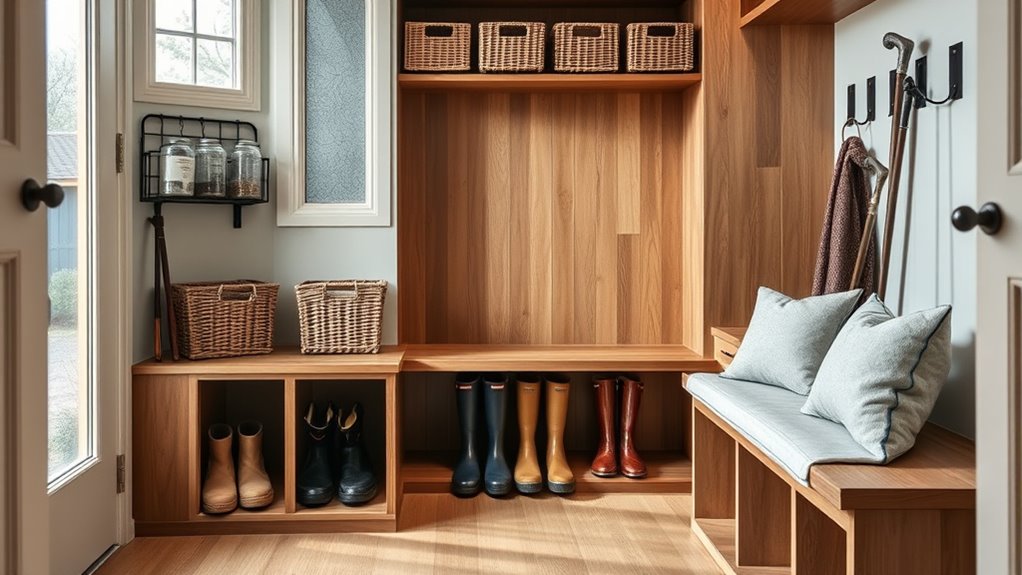

To keep your entry tidy and accessible, design a mudroom with sturdy hooks at different heights for shoes, canes, and mobility gear, along with a bench for seating. Use labeled bins or baskets to organize smaller items, and install good lighting for safety. Incorporate vertical storage and non-slip mats to maximize space and reduce clutter. With thoughtful features, you’ll create a functional space that’s easy to maintain—discover more tips to optimize your mudroom.
Key Takeaways
- Incorporate wall-mounted hooks and racks at accessible heights for canes, mobility aids, and umbrellas.
- Use a sturdy bench with built-in storage bins or baskets underneath for shoes and smaller gear.
- Install dedicated zones with labeled containers to organize shoes, keys, and sunglasses efficiently.
- Ensure bright, motion-activated lighting for quick and safe access to mobility gear and daily essentials.
- Keep the design simple with neutral colors and minimal decor to maintain a clutter-free, calming entry space.
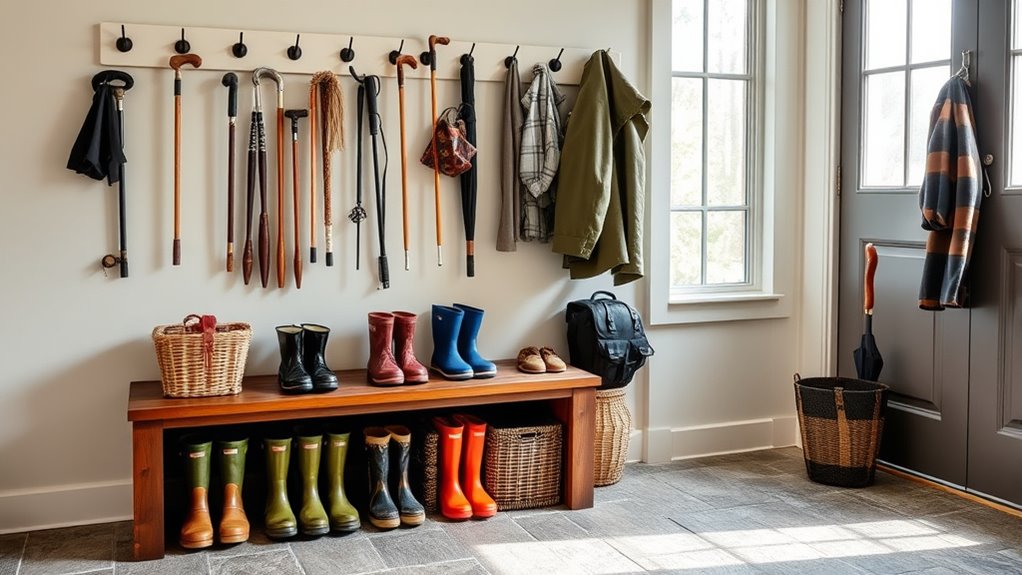
A well-designed entry mudroom can make managing shoes, canes, and mobility gear much easier, especially when space is limited. When you walk through your door, the last thing you want is clutter piling up and making entryways chaotic. Instead, a thoughtfully organized mudroom helps keep everything in its place and streamlines your daily routine. You can carve out a small corner or dedicate a specific area that works best for your needs. The key is to use vertical space effectively—think wall-mounted hooks, shelves, and cubbies—to maximize storage without sacrificing valuable floor space. With the right setup, you’ll find it easier to grab what you need and prevent clutter from spreading throughout your home.
One of the most practical features to incorporate is a sturdy bench or seat. Not only does it provide a convenient spot for putting on or taking off shoes, but it also offers a place to stash small items or bags. Underneath the bench, install storage baskets or bins for shoes you don’t wear every day. Label them if you want to create a system that’s easy to maintain. Hooks mounted above the bench can hold canes, umbrellas, or mobility aids, keeping them accessible but out of the way. For added convenience, consider installing a small shelf above the hooks for items like keys or sunglasses. This setup keeps everything within arm’s reach and prevents you from rummaging through cluttered drawers or pockets.
If mobility gear is part of your daily routine, tailor your mudroom to accommodate it comfortably. Use wide hooks or wall-mounted racks designed to hold canes or walkers without bending or awkward lifting. Position these at a height that’s easy to reach, whether you’re standing or seated. For mobility devices, consider adding a dedicated area with a non-slip mat to prevent slipping or tipping. If space allows, a small rolling cart or portable storage unit can house supplies like mobility aids, cleaning tools, or extra batteries, making it easier to stay organized and prepared. Additionally, incorporating modular storage units can help adapt the space as your needs evolve.
Lighting is another vital aspect. Good illumination makes it easier to find your gear quickly and ensures safety. Install bright, energy-efficient lights or motion sensors that activate when you enter. Clear visibility helps prevent accidents and saves time searching in the dark. Finally, keep the design simple and clutter-free. Use a neutral color palette and minimal decorative elements to maintain a calm, functional space. With these strategies, your entry mudroom becomes a streamlined hub that helps you stay organized, saves time, and reduces stress every time you come home.
Frequently Asked Questions
How Do I Customize a Mudroom for Specific Mobility Needs?
You customize a mudroom for mobility needs by adding accessible features like wider doorways, lower hooks, and adjustable storage. Install sturdy, slip-resistant flooring and include benches with easy-to-reach height for comfort. Incorporate grab bars near seating areas and guarantee ample space for maneuvering mobility devices. Tailor the layout to your specific needs, making sure everything is within easy reach and minimizes obstacles for safer, more convenient entry and exit.
What Materials Are Best for Waterproof Mudroom Storage?
You want waterproof mudroom storage that can withstand a tsunami of mud, water, and everyday spills. Opt for materials like high-grade marine plywood with a waterproof sealant, heavy-duty vinyl or PVC panels, or stainless steel for ultimate durability. These materials laugh in the face of moisture, keeping your gear safe and dry. Choose sturdy, water-resistant options to create a mudroom that’s as resilient as it is organized.
How Can I Make My Mudroom More Accessible for Wheelchairs?
You can make your mudroom more accessible for wheelchairs by installing low, wide shelves and hooks within easy reach. Use smooth, non-slip flooring to prevent falls and guarantee ample space for maneuvering. Incorporate a sturdy, accessible bench for sitting or putting on shoes. Clear pathways and avoid clutter, making it easier to navigate. Adding lever-style door handles also helps, making the space more user-friendly for mobility challenges.
What Are Space-Saving Solutions for Small Entry Mudrooms?
Think of your small mudroom as a tiny garden; every inch counts. To maximize space, install wall-mounted hooks and shelves to free up floor area. Use multi-functional furniture like benches with hidden storage. Opt for slim, vertical storage units to keep clutter at bay. By embracing these clever solutions, you’ll create a neat, efficient entry that welcomes you home without feeling cramped or overwhelmed.
How Do I Maintain Cleanliness and Hygiene in Mudroom Storage?
To keep your mudroom clean and hygienic, regularly sweep or vacuum the floors to remove dirt and debris. Wipe down surfaces with disinfectant to prevent germs from spreading. Use waterproof and easy-to-clean storage bins for shoes and gear, and encourage family members to wash their hands frequently. Establish a routine for cleaning and decluttering to maintain a tidy, healthy space that stays fresh and inviting.
Conclusion
A well-designed mudroom keeps shoes organized, canes accessible, and mobility gear tidy. It creates a space that welcomes you, simplifies your routines, and reduces clutter. It’s a place to store, a place to find, and a place to prepare. With thoughtful organization, your mudroom becomes more than just an entryway—it becomes a sanctuary of order, ease, and comfort. Make it functional, make it inviting, and make your daily life smoother.