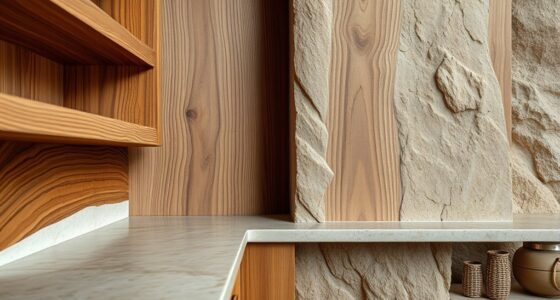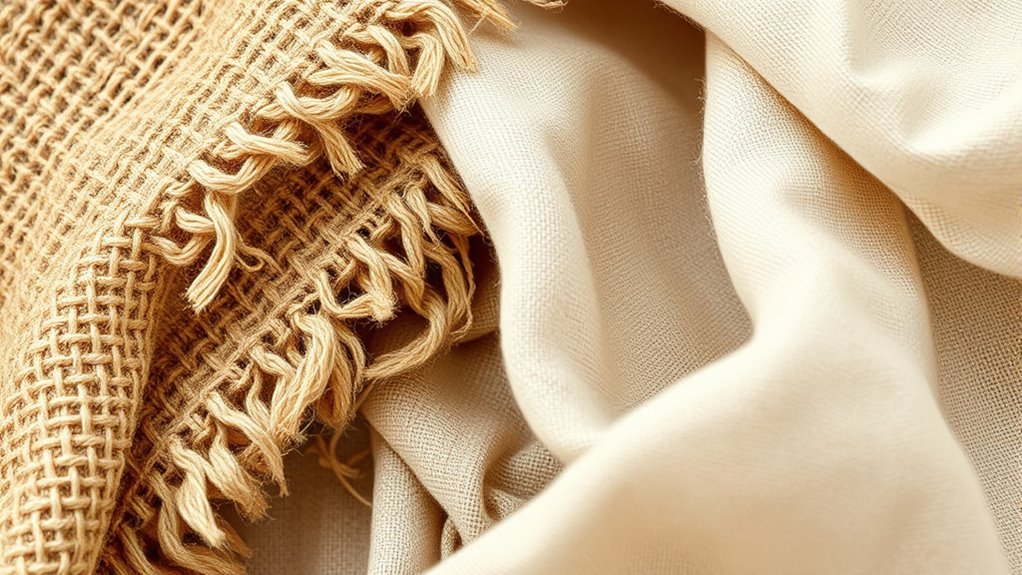

To layer natural textures and fabrics, start with larger pieces like linen sofas or jute rugs as a base. Add smaller textiles such as wool throws, cotton cushions, or silk curtains to create depth. Mix rough and smooth surfaces, pairing chunky wool with soft linen or silky cushions. Adjust varying textures and weights to craft visual interest and comfort. Keep experimenting with contrasts, and you’ll discover how textured layering elevates your space and reflects sustainable choices—so keep exploring these ideas.
Key Takeaways
- Begin with large, foundational pieces like linen sofas or jute rugs to set the texture base.
- Layer smaller textiles such as throws, cushions, and curtains with varied natural fibers for depth.
- Combine different textures (smooth, rough, plush) to create tactile and visual interest.
- Use contrasting finishes, such as matte and glossy, to enhance the layered look.
- Balance tactile elements to foster a cozy, inviting atmosphere through thoughtful texture pairing.
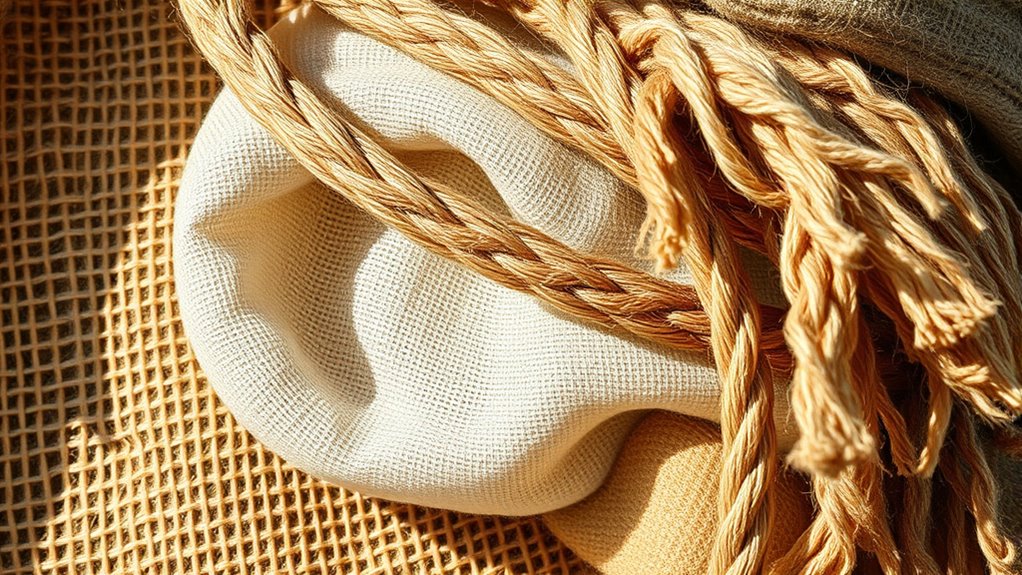
Layering natural textures and fabrics is an effective way to create a warm, inviting space that feels both stylish and comfortable. When you focus on sustainable material choices, you not only elevate your décor but also contribute to eco-friendly living. Choosing natural fibers like organic cotton, linen, hemp, or wool ensures you’re supporting environmentally responsible production. These materials are durable, breathable, and age beautifully, making them ideal for layering. By incorporating sustainable options, you add a layer of meaning and mindfulness to your home, creating a space that’s both beautiful and conscientious.
Mixing textures for depth is key to crafting a rich, multi-dimensional environment. Don’t be afraid to combine plush, soft fabrics with rougher, more tactile surfaces. For example, pair a smooth linen sofa with a chunky wool throw or a silky cushion. This contrast draws the eye and adds visual interest, making your space feel thoughtfully curated. When you layer different textures, you create a sense of balance and harmony. Think about blending matte and glossy finishes, soft and coarse surfaces, or lightweight and heavyweight fabrics. The key is variety—diversity in texture keeps the eye moving and prevents your décor from feeling flat or monotonous.
Start with the larger pieces, like a linen sofa or jute rug, then add layers with smaller textiles such as throws, cushions, or curtains. Incorporate a mix of natural materials that differ in texture and weight. For instance, a linen curtain paired with a woven jute basket or a wool blanket draped over a cotton armchair provides tactile richness. When choosing fabrics, consider how they feel under your touch and how they complement each other visually. The goal is to craft a tactile journey throughout your space, inviting you to touch, feel, and relax.
Frequently Asked Questions
How Do I Maintain Natural Textures Over Time?
To maintain natural textures over time, you should prioritize fabric durability and gentle cleaning. Regularly vacuum or brush your textiles to remove dust and dirt that can wear down fibers. Avoid harsh chemicals, opting for mild detergents, and follow care instructions carefully. Protect fabrics from excessive sunlight and moisture, as these can cause fading and deterioration. With proper care, your natural textures will stay vibrant and inviting for years.
Can Layering Textures Improve Room Acoustics?
Did you know that textured surfaces can absorb up to 50% more sound than flat ones? Layering textures definitely improves room acoustics by enhancing sound absorption and reducing echoes. You’ll find that combining different fabrics and natural textures not only enriches your space’s aesthetic but also creates a more comfortable, inviting environment. So, don’t hesitate to experiment with layered textures for both better acoustics and visual appeal.
What Are Budget-Friendly Options for Natural Fabric Layering?
You can explore cost-effective textiles like cotton, linen, or burlap for natural fabric layering. These eco-friendly layering options are budget-friendly and readily available at thrift stores or online. To enhance your space’s texture, mix different weights and patterns, and consider adding handmade or repurposed pieces. This approach not only saves money but also creates a cozy, sustainable environment, all while improving room acoustics naturally.
How Do I Choose Textures for Small Spaces?
Choosing textures for small spaces is like designing a symphony—balance is key. Opt for texture contrast to add depth and avoid clutter. Use fabric color coordination to keep the space cohesive, making it feel larger. For example, pair a textured throw with sleek cushions in matching tones. Keep it simple but layered, and you’ll create a cozy, visually appealing environment that feels spacious despite limited square footage.
Are There Allergy Concerns With Natural Fabrics?
You might have hypoallergenic concerns with natural fabrics like wool or certain plant fibers, but many are safe if properly treated. Look for options with fabric treatment options that reduce dust mites and allergens. Regular cleaning and choosing tightly woven textiles can also help minimize allergy issues. Always check product labels and consult with manufacturers to guarantee the fabrics you select meet your hypoallergenic needs.
Conclusion
By thoughtfully layering natural textures and fabrics, you gently create a cozy, inviting space that whispers comfort. Embrace the subtle charm of combining different materials, allowing your surroundings to softly reflect your personality. With a delicate touch, these layers can transform your environment into a serene retreat, making every moment feel like a gentle embrace. Remember, the beauty lies in the understated, so trust your instincts and enjoy the calming harmony you craft.