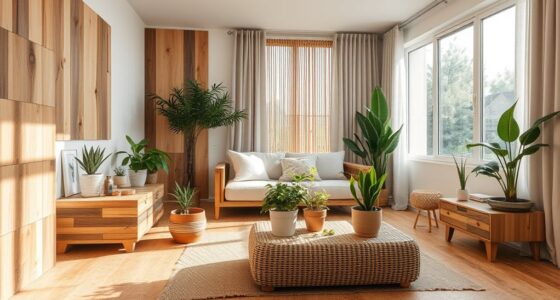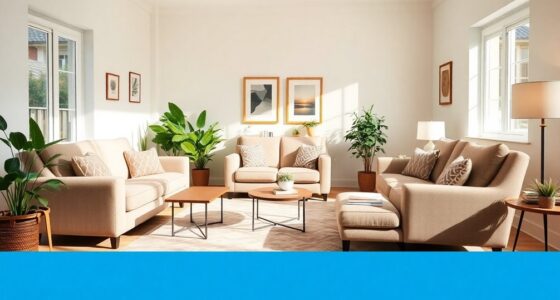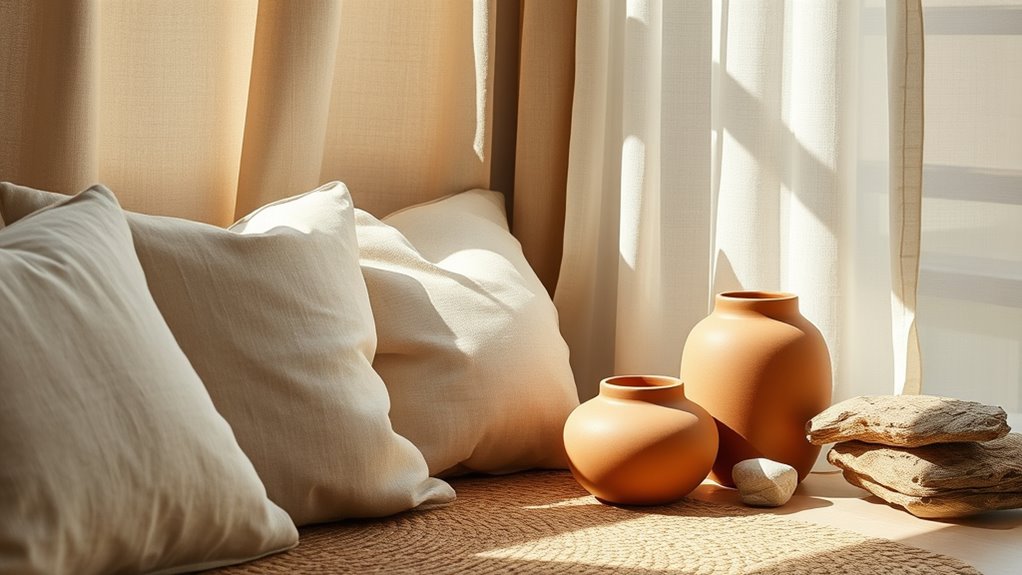

To create a cozy, inviting space, incorporate warm neutrals like soft beiges, taupes, and muted greens, which connect your home to the outdoors. Combine natural materials such as reclaimed wood, rattan, linen, and wool to add texture and depth. Use layered textures—like rough wood and plush textiles—to build visual interest and comfort. Warm lighting accents these elements, enhancing a relaxing atmosphere. Continue exploring how these choices can transform your home into a peaceful sanctuary.
Key Takeaways
- Use warm beiges, taupes, and muted greens as a versatile, calming palette inspired by nature.
- Incorporate natural materials like reclaimed wood, rattan, linen, and wool for authentic texture.
- Pair contrasting textures such as rough wood with soft fabrics to add visual interest and depth.
- Utilize warm lighting, including amber bulbs and candles, to enhance earthy tones and create a cozy atmosphere.
- Select simple, nature-inspired decor like woven baskets and botanical prints to reinforce natural themes.
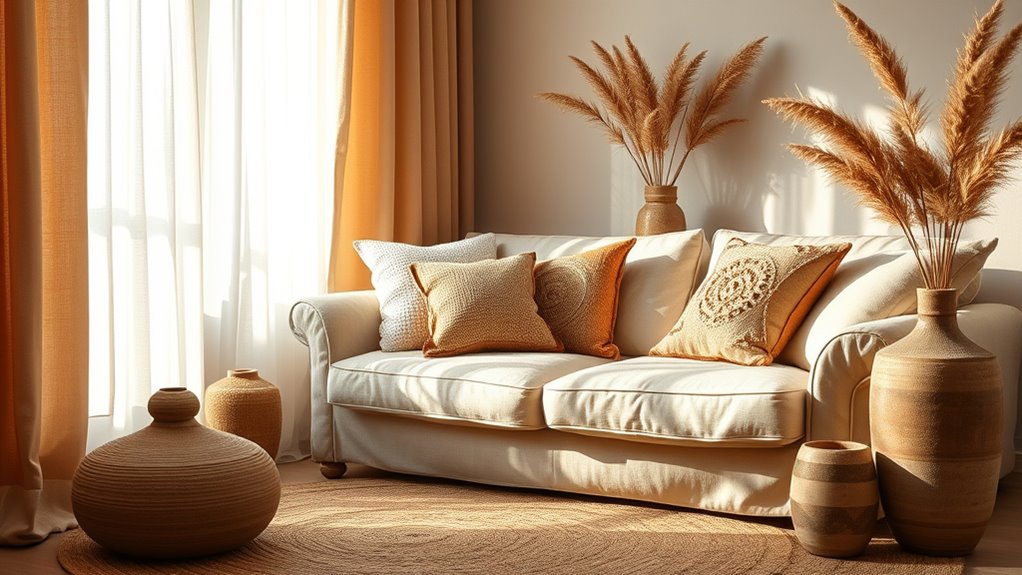
Have you ever wondered how to create a cozy, inviting space that feels both timeless and soothing? The secret lies in embracing warm neutrals and natural materials. When you incorporate earthy textures and organic palettes into your decor, you craft a space that radiates comfort and authenticity. These elements work together to foster a calming environment that invites relaxation.
Creating a cozy, timeless space with warm neutrals and natural textures for ultimate comfort and authenticity.
Start by choosing a color palette inspired by nature—think warm beiges, soft taupes, gentle browns, and muted greens. These tones act as a neutral backdrop that’s versatile and easy to build upon. Organic palettes don’t just set a relaxed tone; they also connect your space to the natural world outside. To enhance this connection, select materials like reclaimed wood, rattan, linen, and wool. These natural textures add depth and tactile interest, making your space feel layered and inviting.
Incorporate earthy textures through furniture and accents. A leather armchair, a jute rug, or stoneware pottery all provide a tactile richness that elevates the overall look. These textures have a grounding effect, making your space feel more rooted and authentic. When you mix different natural textures, you create a subtle visual rhythm that keeps the environment interesting without overwhelming it. For instance, pairing a rough-hewn wooden coffee table with soft linen cushions or a plush wool throw adds contrast and coziness.
Lighting plays a vital role in accentuating these elements. Opt for warm lighting—think amber-toned bulbs or candles—that complements the organic palette and enhances the warm neutrals. This type of lighting softens the space and makes earthy textures pop, creating a welcoming ambiance. When you combine this with natural materials, your space feels harmonious and balanced.
Finally, accessorize with simple, nature-inspired decor. Woven baskets, ceramic vases, and botanical prints reinforce the natural theme. Keep clutter minimal to let the textures and colors shine. Incorporating attention to detail is essential in creating a cohesive and thoughtfully curated environment. When you curate your decor thoughtfully, you emphasize the organic, unpretentious beauty of natural materials, which is key to achieving a cozy, timeless atmosphere. By focusing on earthy textures and an organic palette, you craft a space that’s both stylish and soothing—an ideal retreat from the hustle of everyday life.
Frequently Asked Questions
How Do Warm Neutrals Affect Room Lighting?
Warm neutrals create soft, inviting lighting effects that make your space feel cozy and comfortable. They reflect light gently, enhancing natural brightness without overpowering the room. This color harmony helps balance different lighting sources, reducing harsh shadows and creating a more even glow. As a result, your room feels warmer and more welcoming, perfect for relaxing or entertaining. Warm neutrals truly elevate your lighting experience with subtle, harmonious effects.
Are Natural Materials Sustainable for Long-Term Use?
Natural materials are generally sustainable for long-term use because they have a lower environmental impact and are renewable. You should consider durability considerations, as some materials like hardwood or stone last longer with proper care. By choosing eco-friendly options and maintaining them well, you reduce your environmental footprint and guarantee your spaces stay beautiful and functional for years to come. This makes natural materials a smart, sustainable choice for your home.
Can Warm Neutrals Suit Modern and Traditional Styles?
Yes, warm neutrals suit both modern and traditional styles perfectly. You can enhance your space with decorative accents like textured pillows or artwork that contrast with the neutral palette. Thoughtful color pairing, such as deep greens or soft blushes, adds depth and character. These versatile hues create a cozy, inviting atmosphere, seamlessly blending contemporary sleekness with classic elegance, making your décor adaptable to any style you prefer.
How Do I Maintain Natural Materials Over Time?
To maintain natural materials over time, you should use proper preservation techniques and cleaning methods. Regularly dust and vacuum to prevent dirt buildup, and use gentle cleaners suited for each material, like mild soap and water for wood or specific conditioners for leather. Protect surfaces from excessive sunlight and moisture, and address spills promptly to prevent damage. These practices will keep your natural materials looking beautiful and lasting longer.
What Are the Best Combinations of Warm Neutrals and Natural Materials?
Think of your space as a harmonious symphony, where warm neutrals and natural materials play in perfect harmony. Pair soft beige with rich wood accents, and add texture layering through woven rugs or stone accents. Complementary color pairings like taupe and warm terracotta enhance depth, creating a cozy yet sophisticated atmosphere. This combination invites comfort and elegance, making your space a sanctuary that truly feels like home.
Conclusion
By embracing warm neutrals and natural materials, you create a space that feels inviting and authentic. These elements bring harmony and comfort, making your home a true sanctuary. Remember, sometimes the simplest things make the biggest impact—it’s often the quietest touches that speak volumes. Trust your instincts and let your space reflect your true self. After all, the proof of the pudding is in the eating, so enjoy crafting a cozy, genuine environment that truly feels like home.