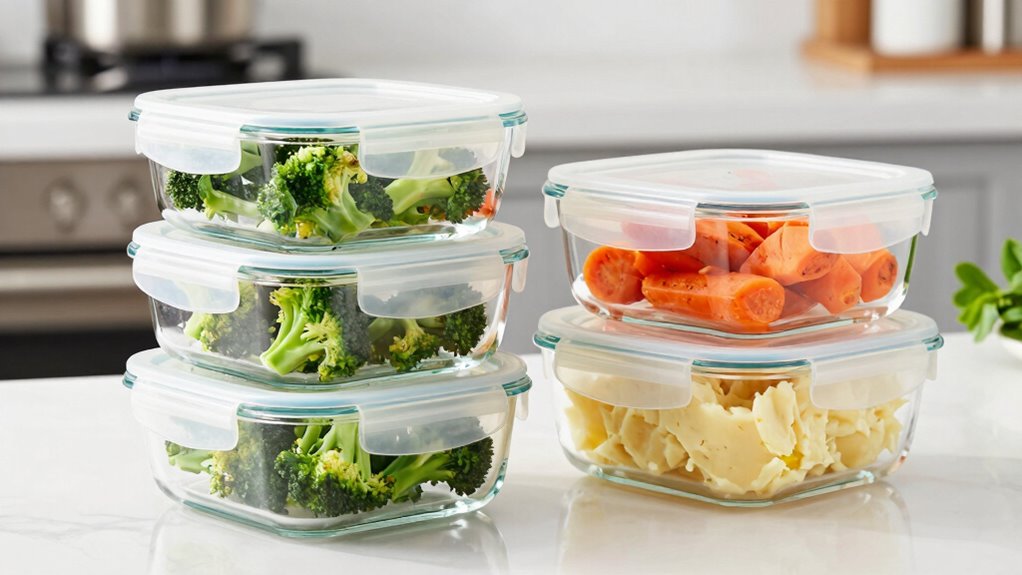

Choosing the right storage containers is key to keeping leftovers fresh, safe, and waste-free. Eco-friendly, durable materials like bamboo or recycled plastics prevent chemical leaching and withstand daily use, while airtight seals lock in moisture and flavors, preventing spoilage and odors. Clear containers make it easy to check leftovers quickly, reducing unnecessary opening. When you prioritize smart features and quality, you prolong freshness and cut down on waste—learn more about optimizing your food storage practices below.
Listen free for 30 days with Audible
Thousands of audiobooks and originals — cancel anytime.
As an affiliate, we earn on qualifying purchases.
Key Takeaways
- Choosing eco-friendly, non-toxic, and durable materials ensures safe, sustainable food storage for leftovers.
- Airtight seals prevent spoilage by blocking air, moisture, and contaminants, extending freshness.
- Transparent containers allow quick food monitoring, reducing unnecessary opening and preserving quality.
- Features like dishwasher and microwave safety enhance convenience and ease of reuse.
- Proper storage reduces food waste, saves money, and promotes healthier eating habits.
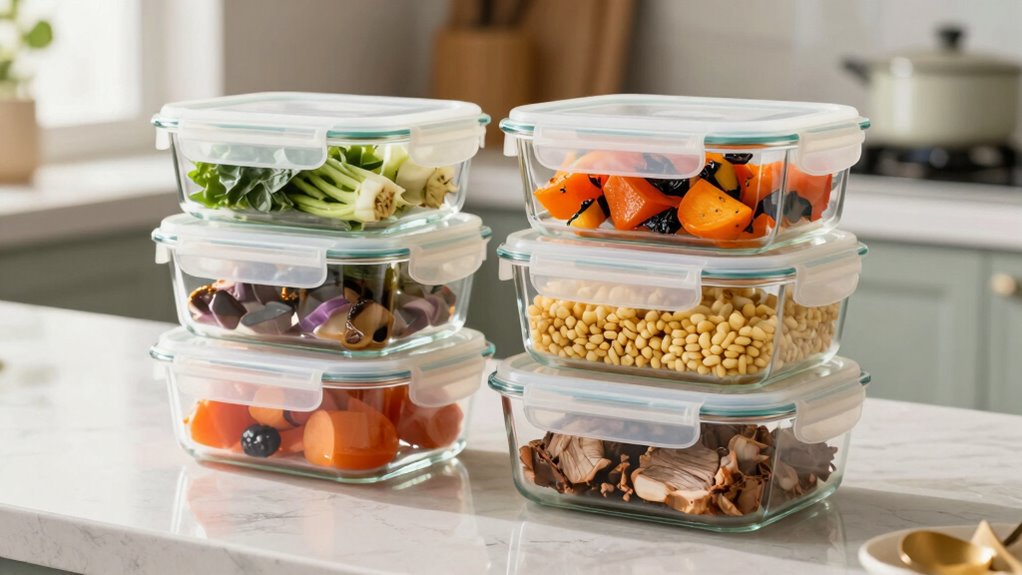
When it comes to keeping leftovers fresh and safe to eat, choosing the right storage containers makes all the difference. The quality of your containers directly impacts how long your food stays tasty and safe from spoilage. Opting for containers made from eco friendly materials isn’t just good for the planet; it often means you’re using non-toxic, food-safe substances that won’t leach chemicals into your food. These materials, such as bamboo, recycled plastics, or biodegradable options, reduce your environmental footprint while maintaining the integrity of your leftovers. Additionally, eco friendly containers are typically designed with durability in mind, so they withstand repeated use without degrading or releasing harmful substances.
Eco-friendly containers keep leftovers safe, fresh, and reduce environmental impact with durable, non-toxic materials.
But beyond the materials, the design of your storage containers plays a crucial role. Airtight seals are essential because they create a reliable barrier against air, moisture, and contaminants. When your containers have airtight seals, they prevent the entry of bacteria and mold, which can cause spoilage and foodborne illnesses. Plus, airtight seals help lock in the flavors and moisture of your leftovers, so they don’t dry out or lose their taste over time. This kind of sealing also minimizes odors escaping, keeping your fridge smelling fresh and preventing cross-contamination between different foods. You’ll find that containers with a secure lid and a proper gasket often provide the best airtight seal, ensuring your leftovers stay as fresh as when they were first stored.
Choosing containers that combine eco friendly materials with airtight seals is a smart move. It’s a way to keep your food fresher longer and reduce waste, both in terms of food and plastic. When you’re selecting storage options, look for those that are dishwasher safe and microwave friendly, as these features add convenience without compromising the seal or material safety. Clear containers help you easily identify leftovers at a glance, saving you time and reducing unnecessary opening and closing of the fridge, which can compromise freshness. Using eco friendly materials in your storage solutions not only benefits the environment but can also contribute to healthier food storage practices. Incorporating airtight seals into your containers enhances the preservation process by creating an optimal environment for leftovers. Furthermore, selecting containers with transparent design makes it easier to monitor your food’s condition without opening them repeatedly, thus maintaining their freshness longer. Including containers that are durable ensures they can withstand daily use, which prolongs their lifespan and reduces the need for frequent replacements. Implementing these features in your storage solutions can also help prevent food waste, saving you money and reducing your environmental impact. These elements work together to extend the life of your leftovers, making sure they remain safe and delicious until you’re ready to enjoy them again.
eco-friendly food storage containers
As an affiliate, we earn on qualifying purchases.
As an affiliate, we earn on qualifying purchases.
Frequently Asked Questions
What Materials Are Safest for Storing Leftovers?
You should choose containers made from glass or BPA-free plastics for storing leftovers, as they offer the best material safety and are free from harmful chemicals. Glass containers are durable, resistant to staining, and won’t leach chemicals into your food. BPA-free plastics are lightweight and durable, making them a safe option. Avoid using containers with cracks or scratches, as they can compromise material safety and reduce container durability over time.
How Do I Prevent Odors From Lingering in Containers?
Imagine sealing in a gentle breeze to keep odors at bay. To prevent lingering smells, choose containers with good ventilation, allowing air to circulate and reduce odor absorption. Clean containers thoroughly after each use, using baking soda or vinegar to neutralize any residual scent. Store leftovers in airtight containers, and consider placing a small piece of bread or coffee grounds inside to absorb lingering odors, keeping your fridge smelling fresh.
Are There Eco-Friendly Options for Storage Containers?
Yes, you can choose eco-friendly storage options like containers made from biodegradable packaging or those compatible with recycling programs. These options reduce plastic waste and are better for the environment. Look for containers made from renewable materials like bamboo or silicone, which are durable and reusable. By selecting these eco-conscious choices, you help minimize your carbon footprint while keeping your leftovers fresh and odor-free.
How Do I Know if a Container Is Microwave-Safe?
Think of container labeling and microwave testing as your kitchen’s secret handshake. To know if a container is microwave-safe, check its label for clear markings or symbols, like a microwave icon. If unsure, test it by microwaving it with a cup of water for about a minute. If the container stays cool and the water heats up, you’re good to go. Always follow the manufacturer’s instructions for safe heating.
What Size Container Is Best for Different Leftovers?
Choosing the right container size helps with container organization and portion control. For small leftovers like sauces or dips, opt for mini containers to avoid waste. Medium-sized containers work well for single servings of meals, making portion control easier. Larger containers are perfect for family-sized leftovers or bulk items. Using appropriately sized containers keeps your fridge tidy, prevents spills, and guarantees you quickly grab the right portion without unnecessary reheating or waste.
Conclusion
Using the right storage containers can make all the difference in keeping your leftovers fresh and safe. Did you know that improperly stored food accounts for about 20% of all food waste? By choosing airtight, microwave-safe containers, you not only extend the life of your leftovers but also reduce waste and save money. So, invest in good containers—you’ll enjoy tastier leftovers and help the environment at the same time. Your future self will thank you!
Flea & tick season Picks
flea and tick prevention
As an affiliate, we earn on qualifying purchases.