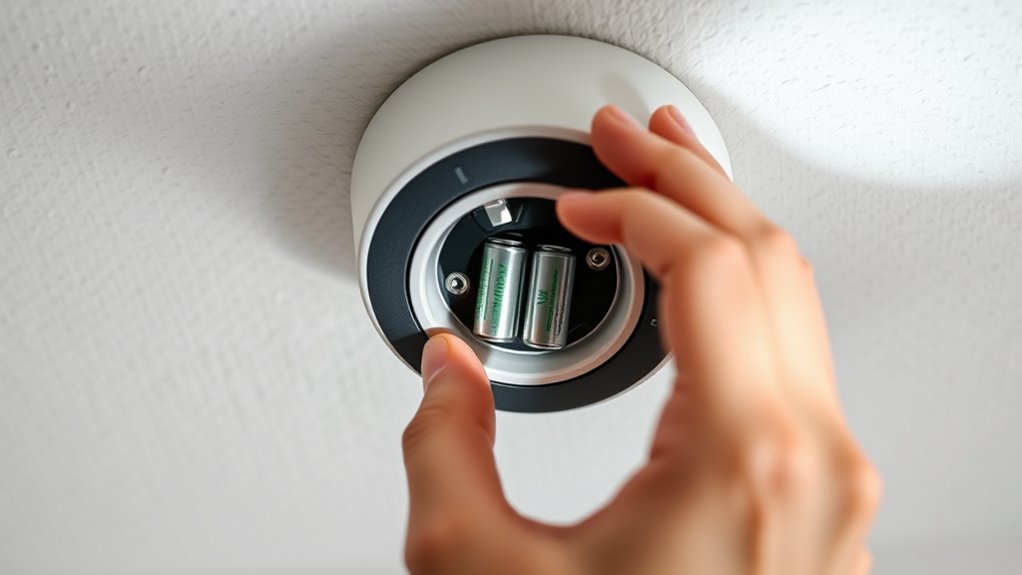

To change your smoke and CO detector batteries, first locate the units and remove the covers carefully. Use recommended batteries, like 9-volt or AA, and replace old or incompatible ones immediately. After installing the new batteries, press the test button to guarantee they sound properly. Remember to label the detectors with the date of replacement and perform routine tests to keep your home safe. Keep going to discover more tips for effective maintenance and safety.
Key Takeaways
- Use the recommended batteries specified by the detector’s manufacturer, such as 9-volt or AA batteries.
- Remove the detector from its mounting and carefully replace the old batteries with new ones.
- Perform a test using the detector’s test button to ensure proper operation after battery replacement.
- Label the detector with the date of the battery change to keep track of maintenance schedule.
- Regularly check and replace batteries at least once a year or immediately if the alarm fails during testing.
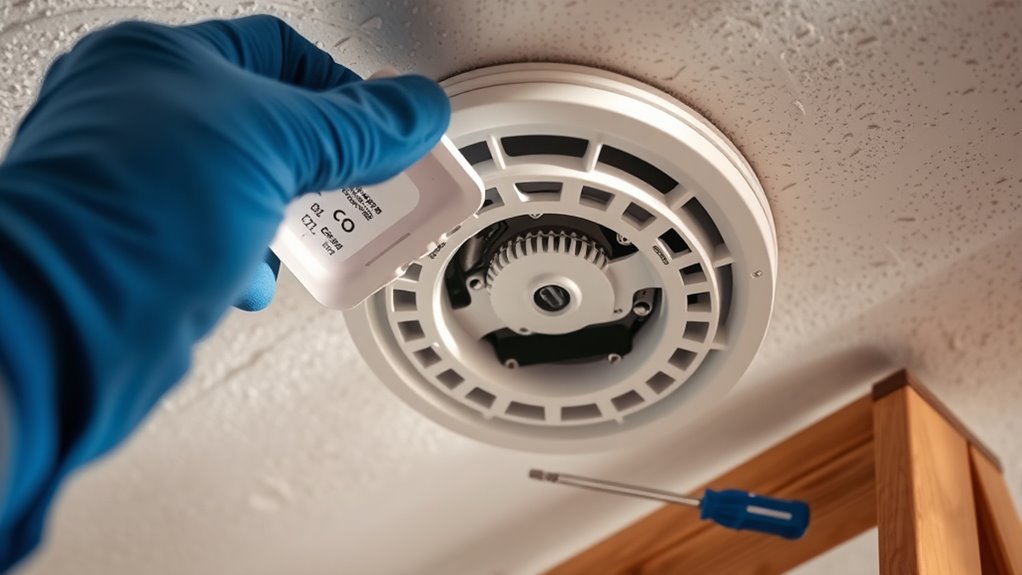
Regularly changing the batteries in your smoke and CO detectors is vital for ensuring they work properly and keep your home safe. If you neglect this routine, you risk your devices failing to alert you during emergencies, which could have serious consequences. One critical aspect of maintaining these detectors is understanding the importance of battery testing. By routinely testing the batteries, you can confirm they still hold a charge and are functioning correctly. Many detectors have a test button—press it once a month to verify the alarm sounds. If it doesn’t, it’s time to replace the batteries immediately. This simple step helps prevent surprises when you need your detectors most.
Another key element is detector placement. It’s not enough to just insert fresh batteries; you need to ensure each detector is positioned correctly for maximum effectiveness. Smoke detectors should be installed on the ceiling or high on the wall, at least 10 feet away from cooking appliances to avoid false alarms. Carbon monoxide detectors, on the other hand, should be placed at knee level or on the wall about 5 feet from the floor, ideally near bedrooms or sleeping areas. Proper detector placement ensures that smoke and CO levels are detected promptly, giving you enough time to respond. It also prevents the detectors from being easily obstructed or triggered by environmental factors, which can compromise their safety function.
When it’s time to change the batteries, avoid using old or incompatible types—stick to the recommended batteries specified by the manufacturer. Typically, this is a 9-volt or AA batteries, but check your device’s manual to be sure. After replacing the batteries, perform a battery test to confirm they’re working correctly. This step is essential because even new batteries can be faulty or drained if stored improperly. Additionally, consider labeling your detectors with the date of the last battery change. This helps you keep track of when they need routine testing and replacement, ensuring continuous protection. Proper maintenance practices can extend the lifespan of your detectors and improve their reliability over time.

GoveeLife Upgraded Smart Water Leak Detector 1s with High Alarm, 6 Pack
- Extended Connectivity Range: Up to 1804 feet through walls
- Multiple Notification Methods: SMS, Email, APP alerts, and sound alarm
- User-Friendly App Features: Push notifications, device find, multi-user alerts
As an affiliate, we earn on qualifying purchases.
Frequently Asked Questions
How Often Should I Test My Smoke and CO Detectors After Replacing Batteries?
You should test your smoke and CO detectors at least once a month after replacing batteries to verify they work properly. Testing frequency helps verify the battery lifespan and that the alarms are functioning correctly. Each time you replace the batteries, it’s a good habit to test the detectors immediately and then regularly check them to maintain safety and avoid any false alarms or malfunctions.
Can I Use Rechargeable Batteries in Smoke and CO Detectors?
You can use rechargeable batteries in smoke and CO detectors, but keep in mind that they may have a shorter battery lifespan compared to disposable batteries. Rechargeable batteries are convenient and eco-friendly, but you should regularly check and replace them when they lose their charge. To guarantee your detectors work reliably, consider using high-quality rechargeable batteries designed for long-term use and test the detectors frequently.
What Should I Do if a Detector’s Alarm Keeps Sounding After Battery Replacement?
If a detector’s alarm keeps sounding after battery replacement, start with battery troubleshooting—make certain the batteries are properly installed and fresh. Clean the detector to remove dust or debris that might cause false alarms. Check for any indicator lights or error codes and consult the user manual for maintenance tips. If the problem persists, consider replacing the detector entirely, as regular detector maintenance helps prevent false alarms and ensures safety.
Are There Specific Battery Types Recommended for Different Detector Models?
Like a well-tuned orchestra, your detector needs the right instruments. Use the manufacturer’s recommended battery types to guarantee compatibility, as mismatched batteries can cause false alarms or failure. Check the battery lifespan regularly; even the best batteries won’t last forever. Sticking to the specified batteries assures peak performance and safety, giving you peace of mind, just like a symphony that’s perfectly in tune.
How Do I Dispose of Old Batteries Safely From Smoke and CO Detectors?
You should dispose of old batteries from smoke and CO detectors responsibly by participating in battery recycling programs, which help reduce environmental harm. Avoid throwing them in regular trash, as they are considered hazardous waste due to their chemicals. Check your local guidelines for hazardous waste disposal days or nearby recycling centers that accept batteries. Proper disposal guarantees safety and environmental protection, preventing potential leaks or fires caused by improper handling.
Conclusion
By checking your alarms regularly, replacing batteries promptly, and staying alert to their sounds, you keep your home safe. Maintaining your smoke and CO detectors isn’t just about replacing batteries; it’s about protecting your loved ones, preventing disasters, and ensuring peace of mind. Stay proactive, stay vigilant, and keep your detectors working — because safety starts with you. Remember, a small action now can prevent a big tragedy later, so make battery changes part of your routine.