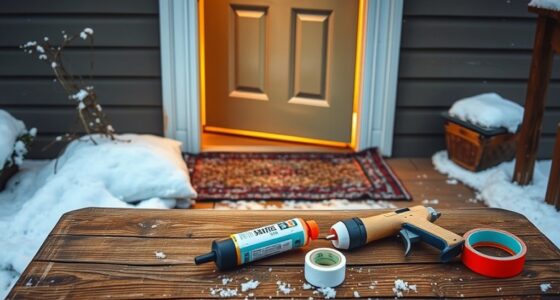
To replace weather stripping and caulking, start by inspecting areas around your windows and doors for gaps, cracks, or deterioration. Remove old materials carefully and measure accurately before selecting suitable replacements like foam tape, V-strip, or rubber. Apply new weather stripping snugly to create a tight seal, then use high-quality caulk to seal any remaining cracks and gaps, especially where building materials meet. Keep going to find out more tips for efficient and long-lasting results.
Key Takeaways
- Inspect windows and doors for gaps, cracks, or damaged seals indicating the need for replacement.
- Choose appropriate weather stripping materials like foam tape or V-strip based on the application.
- Remove old weather stripping carefully and measure accurately for new installation.
- Clean and dry surfaces before applying high-quality caulk to ensure proper adhesion.
- Regularly maintain and replace weather stripping and caulking to enhance insulation and reduce energy costs.
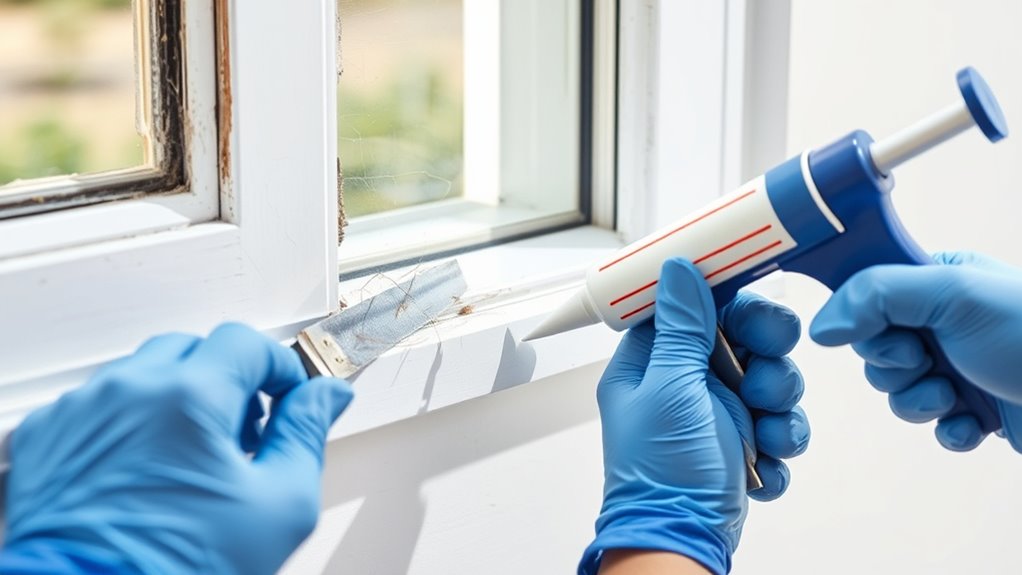
Weather stripping and caulking are essential tools for keeping your home energy-efficient and comfortable. When it comes to improving your home’s insulation, replacing worn or damaged weather stripping and caulking is one of the simplest and most cost-effective steps you can take. Properly sealed windows and doors prevent drafts and reduce heat loss, which directly boosts your home’s energy efficiency. If you notice cold spots near windows or increased heating and cooling bills, it’s a clear sign that your window insulation needs attention. Addressing these issues by updating your weather stripping and caulking ensures your home stays warmer in winter and cooler in summer.
Replacing worn weather stripping and caulking improves home insulation and energy efficiency year-round.
Start by inspecting your windows for gaps, cracks, or deteriorated seals. Weather stripping around windows can become brittle or shift out of place over time, allowing air to seep through. When you replace it, choose materials suited for your climate, such as foam tape, V-strip, or rubber. Make sure to measure accurately so you get the right size and type. Removing old, cracked weather stripping is straightforward—simply peel or scrape it away, then clean the surface thoroughly before applying the new strip. Proper installation is key; the weather stripping should fit snugly without gaps or overlaps, creating a tight seal that prevents drafts and enhances your window insulation.
Caulking works similarly but is often used to fill smaller cracks and gaps around window frames, sills, and edges. Use a high-quality, paintable caulk suitable for outdoor or indoor use, depending on the location. When applying, ensure the surface is clean and dry. Apply a steady bead of caulk along the gaps, smoothing it with a caulk tool or your finger for a clean finish. This not only improves the aesthetic but also maximizes energy efficiency by stopping air leaks that can occur through tiny openings. Pay close attention to areas where different building materials meet, as these spots are common sources of drafts.
Regular maintenance of your weather stripping and caulking can dramatically improve your home’s insulation. It’s a simple task that yields significant benefits—reduced energy bills, increased comfort, and a more environmentally friendly home. Additionally, considering the cost of quality materials like weather stripping and caulk, investing in durable options can save money over time. Keep an eye on the condition of your window insulation and sealing around doors, and don’t hesitate to replace worn materials as needed. Doing so ensures your home remains well-insulated year-round, saving you money while keeping you comfortable no matter the season.
Frequently Asked Questions
How Often Should I Replace Weather Stripping and Caulking?
You should replace weather stripping and caulking every 5 to 10 years, depending on wear. It’s best to adhere to a seasonal inspection schedule, checking for gaps, cracks, or deterioration. If you notice drafts or leaks, replace them sooner. Regular maintenance helps keep your home energy-efficient. Remember, keeping an eye on these seals ensures you prevent air loss and save on heating and cooling costs over time.
Can I Use Household Tools to Remove Old Weather Stripping?
Sure, you can use household tools for removal techniques, but don’t expect a flawless job. A putty knife or screwdriver works, but you’ll need patience and a steady hand. DIY tools might seem convenient, yet they can damage surfaces if used improperly. For best results, gently pry up the old weather stripping without gouging the frame. Sometimes, investing in proper tools makes removal easier and your replacement more effective.
Is There a Difference Between Weather Stripping and Caulking?
Yes, there’s a difference between weather stripping and caulking. Weather stripping is a flexible material that seals gaps around doors and windows, improving sealant durability and insulation effectiveness. Caulking, on the other hand, is a malleable sealant used to fill cracks and gaps in stationary parts like window frames or baseboards. Both are essential for maintaining energy efficiency, but they serve different purposes and materials.
What Types of Weather Stripping Are Best for Exterior Doors?
For exterior doors, you should choose weather stripping made from durable materials like rubber, foam tape, or vinyl, as they provide a good seal and withstand weather conditions. Types of sealants vary, including compression, magnetic, and V-strip options. Rubber and vinyl are especially effective because they flex and maintain their seal over time, preventing drafts and moisture intrusion. Pick the best weather strip material based on your door’s size and climate.
How Do I Identify if My Caulking Needs Replacement?
Like a detective, you notice visual damage or mold growth around your caulking, signaling it’s time to replace. If the caulk cracks, shrinks, or pulls away from surfaces, it’s failing. Mold indicates moisture intrusion, which no longer stays contained. You should remove old, damaged caulk and reseal promptly to prevent further damage. Regular inspection keeps your home airtight and mold-free.
Conclusion
Replacing weather stripping and caulking is like sealing the cracks in your home’s armor, protecting it from the harsh elements outside. When you take the time to maintain these barriers, you’re not just fixing gaps—you’re reinforcing the sanctuary that keeps your loved ones safe and comfortable. Think of each new strip and line of caulk as a vow to preserve warmth and energy, turning your house into a resilient fortress against the unpredictable world beyond.