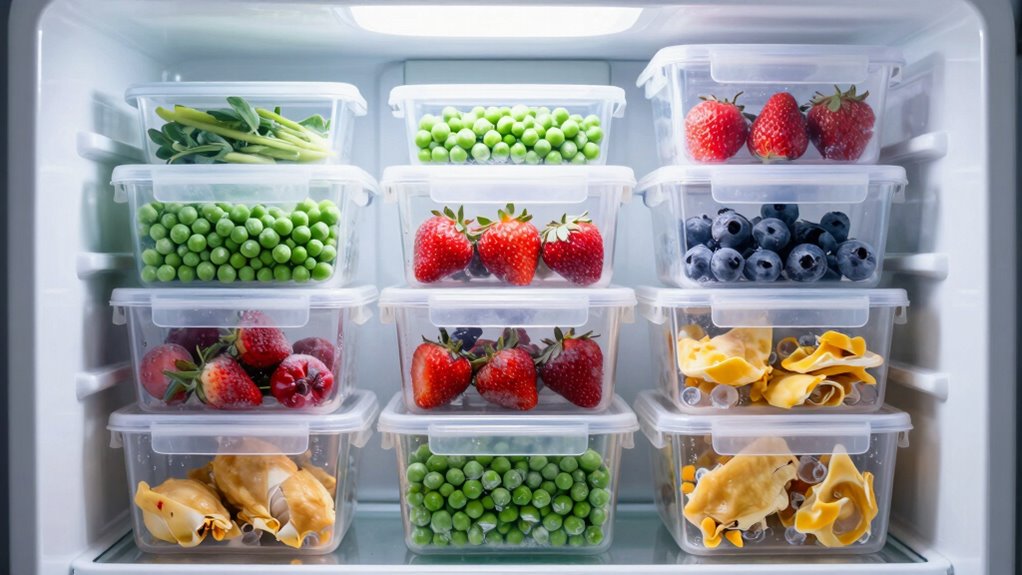

To prevent food loss, establish a quick weekly freezer inventory routine. Spend a few minutes checking for hidden items, updating a list or app with item names, quantities, and dates. Proper labeling and tracking storage times help you spot spoiled food early and guarantee you use older items first, reducing waste. Keeping things organized and intentional with your food choices saves money and stress. Keep going to discover simple tips for making this habit even easier.
Key Takeaways
- Dedicate a few minutes weekly to update your freezer inventory for accuracy.
- Use clear labels with dates on all stored items to monitor freshness.
- Check for buried or hidden items regularly to prevent forgotten spoilage.
- Plan meals based on existing inventory to reduce unnecessary purchases.
- Keep an organized system to facilitate quick identification and rotation of older items.
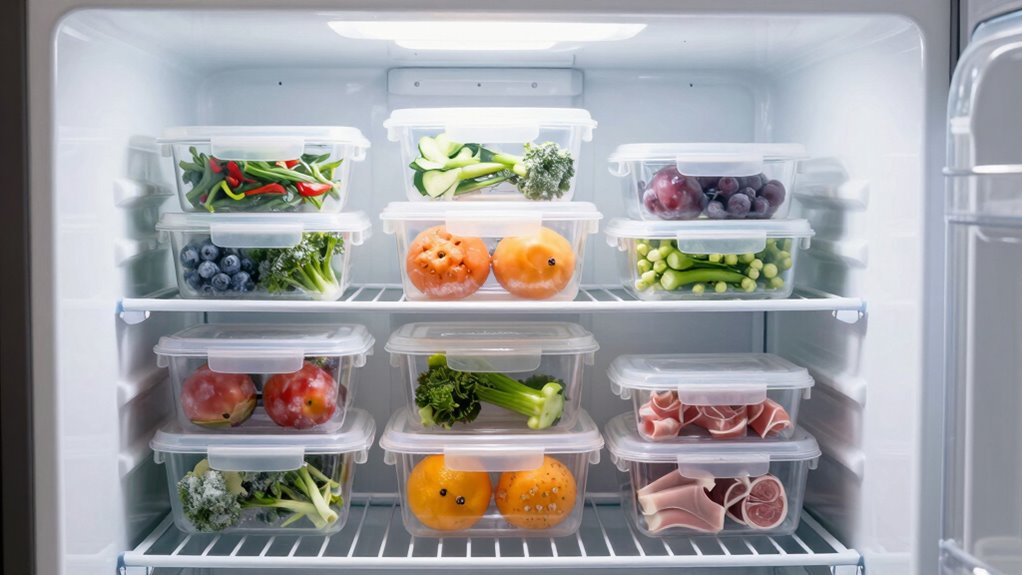
Keeping track of what’s in your freezer might seem like a small task, but developing a regular inventory habit can save you time, money, and stress. When you know exactly what’s stored, you can plan your meals more effectively, reducing the chances of buying duplicates or letting food go to waste. This simple practice enhances your food organization, making it easier to identify ingredients for upcoming meals and avoid last-minute grocery trips. The key is to create a system that’s easy to maintain, so it becomes a natural part of your routine rather than a chore.
Start by setting aside a few minutes every week or biweekly to check your freezer. Pull out any items that are hidden in the back or buried under other packages. As you do this, make a quick list of what you have—this could be a physical notebook, a digital note, or a dedicated app. Write down the item, quantity, and date it was frozen. Keeping track of dates helps prevent you from keeping food past its prime, which can lead to spoilage and waste. When you know what’s available, you can plan your meals around what you already have, which is the essence of good food organization. Regularly updating your inventory helps ensure your list stays accurate and useful over time. Incorporating a proper labeling system can further streamline this process and make future checks even easier. Additionally, understanding food safety guidelines for freezing and storage can help you distinguish between usable and spoiled items, further reducing waste. Developing a consistent inventory routine can also make this process feel more manageable and less like a chore. Establishing a food rotation system ensures older items are used first, minimizing waste and maximizing freshness.
Meal planning becomes much simpler once you have a clear inventory. Instead of guessing what to cook or rushing to the store for missing ingredients, you can choose recipes based on what’s on hand. For example, if you see frozen chicken breasts, vegetables, and rice, you might plan a stir-fry. If you notice a stash of frozen berries and yogurt, you could prepare smoothies for breakfast. This approach not only minimizes waste but also saves money by maximizing the use of what you already own. Plus, it reduces stress, since you won’t have to scramble to come up with ideas or make last-minute grocery runs.
Another benefit of a freezer inventory habit is improved food safety. When you regularly check your freezer, you’re more likely to notice if something has been stored for too long or if a package is damaged. This proactive approach cuts down on the risk of eating spoiled food. Over time, you’ll develop a mental map of your freezer’s contents, making it easier to see what needs to be used up soon and what can be kept for longer. Consistent food organization through inventory keeps your freezer tidy and your meals more intentional, helping you avoid unnecessary waste and enjoy your food more fully.

As an affiliate, we earn on qualifying purchases.
Frequently Asked Questions
How Often Should I Update My Freezer Inventory?
You should update your freezer inventory every two to four weeks to stay on top of meal planning and food preservation. Regular updates help you know what’s available, prevent food waste, and make meal prep easier. Before restocking or grocery shopping, check your inventory to see what’s still good. This habit guarantees your freezer stays organized, reduces spoilage, and helps you make efficient, mindful food choices while preserving leftovers and bulk items.
What Tools Are Best for Tracking Freezer Contents?
You should use a combination of freezer labels and digital apps to track your freezer contents effectively. Freezer labels help you quickly identify items and their expiration dates, while digital apps allow you to keep an organized, up-to-date inventory. By scanning or updating the app regularly and labeling items clearly, you prevent food loss and make meal planning easier. This simple system keeps your freezer organized and minimizes waste.
How Do I Organize My Freezer for Easy Inventory Checks?
You can organize your freezer for easy inventory checks by using clear, labeled containers or bins, which make meal planning and food preservation straightforward. Place similar items together and keep a running list nearby for quick updates. Regularly check and rotate your stock to prevent waste. This method helps you see at a glance what’s available, reduces food loss, and makes meal prep more efficient.
Can a Freezer Inventory Prevent Freezer Burn?
A freezer inventory can help prevent freezer burn by reminding you to check your freezer temperature regularly, keeping it at the perfect 0°F. When you know what’s inside, you can organize food storage tips effectively, ensuring items are tightly wrapped and labeled. This reduces air exposure and moisture loss, which are main causes of freezer burn. Regular inventory checks help maintain ideal conditions, keeping your food fresher longer.
What Are Quick Methods to Defrost and Reorganize?
To quickly defrost and reorganize, start by planning your meal prep to use older items first. Remove items from the freezer and place them in the fridge or use a quick-thaw method like submerging sealed bags in cold water. While doing so, update your food labeling for clarity. This approach keeps your freezer organized, prevents food waste, and makes meal prep more efficient.
Conclusion
By adopting a simple freezer inventory habit, you’ll keep track of your food like a seasoned librarian organizing books on a shelf. This small step prevents food from slipping into the abyss of forgotten leftovers and helps you use what you have before it spoils. Just like a well-maintained toolbox makes repairs easier, a well-kept freezer saves you time, money, and waste. Start today, and enjoy the peace of mind that comes with knowing your food is always under control.