
If you notice a burning smell from your oven, first turn it off and unplug it to prevent hazards. Check for crumbs, spills, or grease buildup inside, and clean any debris with a damp cloth or oven cleaner. Inspect the heating elements for damage or discoloration, and make certain electrical connections are secure. If the smell persists, it could be a sign of deeper issues, so keep exploring these steps to keep your oven safe and working well.
Key Takeaways
- Turn off and unplug the oven immediately to prevent hazards and inspect for visible debris or damage.
- Check for food spills, grease buildup, or crumbs inside the oven that may cause burning odors.
- Examine heating elements for discoloration, damage, or burn marks indicating a fault.
- Inspect electrical connections and sensors for signs of overheating or malfunction.
- Clean the oven thoroughly and run it at low temperature to dissipate any lingering odors.
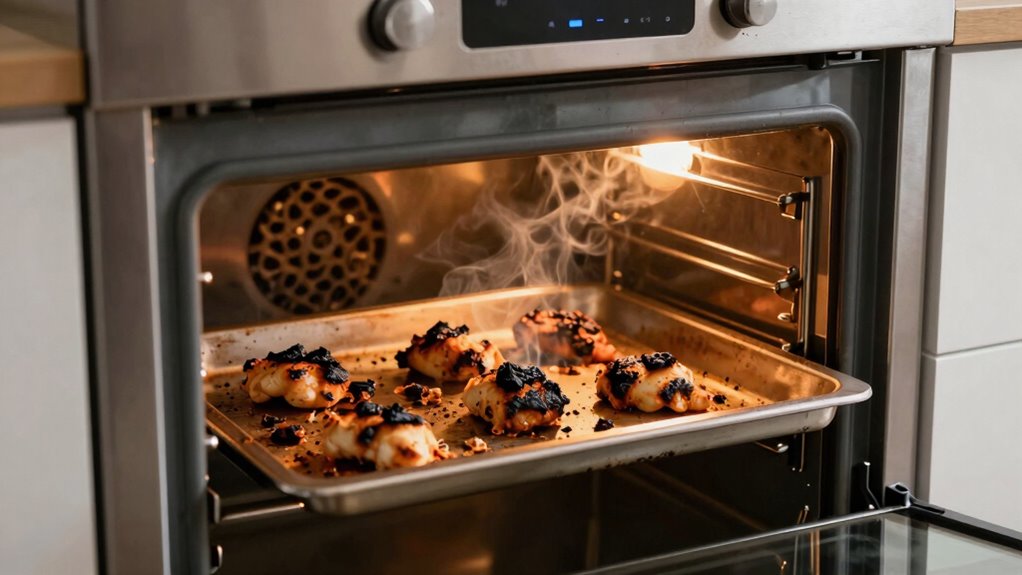
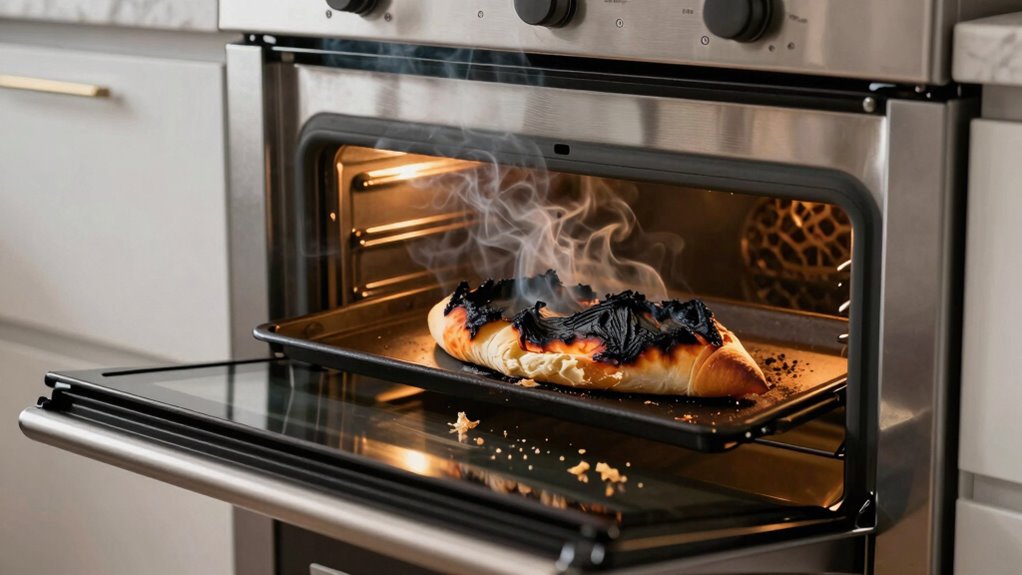
If you notice a burning smell coming from your oven, it’s important not to ignore it. This odor can signal a safety issue or something that needs immediate attention. First, turn off the oven and unplug it to prevent any further damage or potential hazards. Your top priority should be oven safety, which means avoiding any attempts to use the appliance until you identify and fix the problem. Burning smells often result from accumulated grime or food debris that has overheated or burned, so the next step involves inspecting the oven carefully.
If you smell burning, turn off and unplug your oven before inspecting for debris or damage.
Start by opening the oven door and checking for visible crumbs, spills, or grease buildup. Sometimes, small food particles or cooking spills can burn and produce that unpleasant smell. Cleaning tips come into play here—use a damp cloth to wipe away loose debris, but avoid harsh chemicals that might cause additional fumes when the oven heats up. If you notice stubborn stains or baked-on grease, consider using a specialized oven cleaner or a baking soda paste for a more effective, natural cleaning solution. Regular cleaning is essential for oven safety, as it prevents the buildup of flammable residues and reduces the risk of future odors. Additionally, cleaning frequency plays a crucial role in maintaining your oven’s safety and efficiency.
Next, examine the heating elements for any signs of damage or discoloration. Over time, heating coils can wear out or develop cracks, which may cause uneven heating and burn odors. If you spot any damage, it’s best to replace the faulty part or call a professional for repairs. Also, check the oven racks, drip pans, and burners for grease or food residue that could be causing the smell. Removing these components and cleaning them thoroughly can eliminate potential sources of smoke and odor. Additionally, understanding oven components can help you better identify which parts may need maintenance or replacement. Paying attention to wear and tear on electrical parts is also vital to prevent potential electrical faults that could lead to safety hazards.
Another common culprit is a malfunctioning thermostat or sensor, which might cause the oven to overheat. If you notice the smell persists even after cleaning, or if the oven temperature seems inconsistent, it could be a sign of a deeper electrical or mechanical issue. In such cases, consulting an appliance technician is a safe move to ensure your oven operates correctly and safely. Regularly checking electrical connections can also prevent issues related to overheating or electrical faults. It’s also helpful to be aware of signs of electrical problems, which can prevent serious safety hazards. Being familiar with these warning signs can save you from costly repairs and potential safety risks.
Finally, after cleaning and inspecting, run the oven at a low temperature for a short period to see if the smell dissipates. This step can help burn off any remaining residues. Remember, maintaining good oven safety practices includes regular cleaning and prompt repairs, which keep your appliance in top condition and prevent future unpleasant odors. Being attentive to these details will help you enjoy safe, odor-free cooking experiences.

Easy Off Heavy Duty Oven Cleaner, Destroys Tough Burnt on Food and Grease, Fresh Scent, 14.5 oz Can
- Product Name: Easy Off Heavy Duty Oven Cleaner
- Cleans Tough Spills: Destroys baked-on food and grease
- Fast Penetration: Works in as little as 5 minutes
As an affiliate, we earn on qualifying purchases.
As an affiliate, we earn on qualifying purchases.
Frequently Asked Questions
Can a Burnt Smell Indicate a Gas Leak?
A burnt smell can sometimes indicate a gas leak, so it’s important to prioritize gas safety. If you notice this odor, don’t ignore it—ventilate the area and avoid using electrical switches. Gas leaks often produce a distinct odor detection, but the burnt smell could also come from food or heating elements. When in doubt, evacuate immediately and contact emergency services to guarantee safety and prevent potential hazards.
How Long Does It Take for Oven Odors to Disappear?
Ever wondered how long those oven odors stick around? Typically, they take about a few hours to a day to dissipate if you use proper kitchen ventilation and perform regular furnace maintenance. To speed up the process, open windows and run the exhaust fan. Have you checked your oven for leftover food or grease? Keeping your oven clean and well-maintained helps prevent lingering smells and guarantees a fresh kitchen environment.
Is It Safe to Use the Oven After a Burning Smell?
It’s generally safe to use your oven after a burning smell as long as you’ve checked for any hazards. Guarantee proper kitchen ventilation by opening windows or turning on the exhaust fan to clear smoke or fumes. Inspect for any burned residues or damaged components, and make sure the oven is cool before use. Prioritize oven safety by cleaning thoroughly and, if the smell persists, consider consulting a professional before cooking again.
What Cleaning Products Are Best for Oven Odors?
Ever wonder how to banish stubborn oven odors? You should try a good oven deodorizer or natural cleaning solutions. These products can effectively neutralize smells without harsh chemicals. An oven deodorizer, like baking soda or commercial sprays, absorbs odors, while natural solutions like vinegar and lemon juice break down grease and grime. Regular cleaning with these options keeps your oven fresh and odor-free, making cooking more enjoyable.
Should I Call a Professional if the Smell Persists?
If the burning smell persists despite your DIY troubleshooting and oven maintenance efforts, you should call a professional. Persistent odors might indicate a deeper issue, like wiring problems or a faulty heating element, which require expert inspection. Relying on a professional guarantees safety and proper repair, preventing further damage or potential hazards. Don’t hesitate to seek help if your troubleshooting doesn’t resolve the problem, and always prioritize safety.
Conclusion
When that burning smell hits, don’t panic—check these 7 things first. Inspect the oven for drips, crumbs, or spills. Examine the heating elements, vents, and filters. Clear out any blockages and clean surfaces thoroughly. By staying vigilant, troubleshooting effectively, and maintaining your oven regularly, you can prevent future issues. Remember, a little inspection, a bit of cleaning, and routine maintenance go a long way. Keep your oven safe, efficient, and smelling fresh—every time.