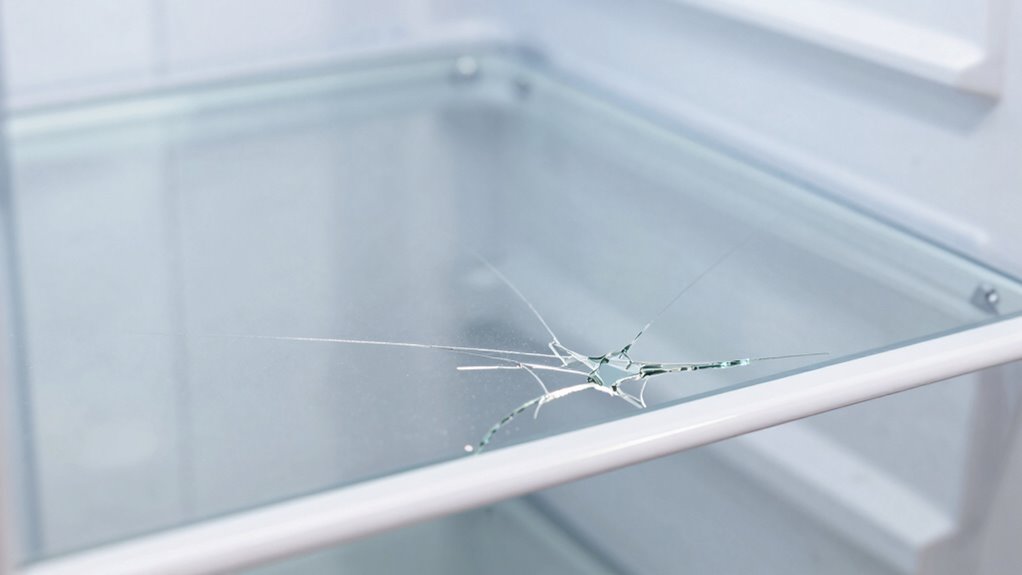

Refrigerator shelves crack mainly because ice buildup from moisture freezing causes stress, while impacts or uneven weight distribution add pressure, weakening the material. Over time, plastic shelves become brittle, and tempered glass or wire shelves can develop stress points if overloaded or mishandled. To prevent cracks, regularly defrost to reduce ice, handle shelves carefully, and evenly distribute weight. Continuing will give you more tips to extend shelf life and avoid costly replacements.

Turn the school run and nap time into listening time
- Thousands of audiobooks, podcasts and originals
- Listen on your phone, tablet or Echo — also offline
- Cancel anytime
Key Takeaways
- Ice buildup causes pressure on shelves, leading to cracks over time. Regular defrosting prevents this.
- Uneven weight distribution and impacts stress shelves, increasing cracking risk; handle items carefully.
- Material type affects durability; tempered glass is sturdy but vulnerable to impact, while plastic weakens with age.
- Proper humidity and airflow inside the fridge minimize ice formation and internal stress on shelves.
- Regular inspection and reinforcement of fragile shelves help prevent cracks and extend their lifespan.
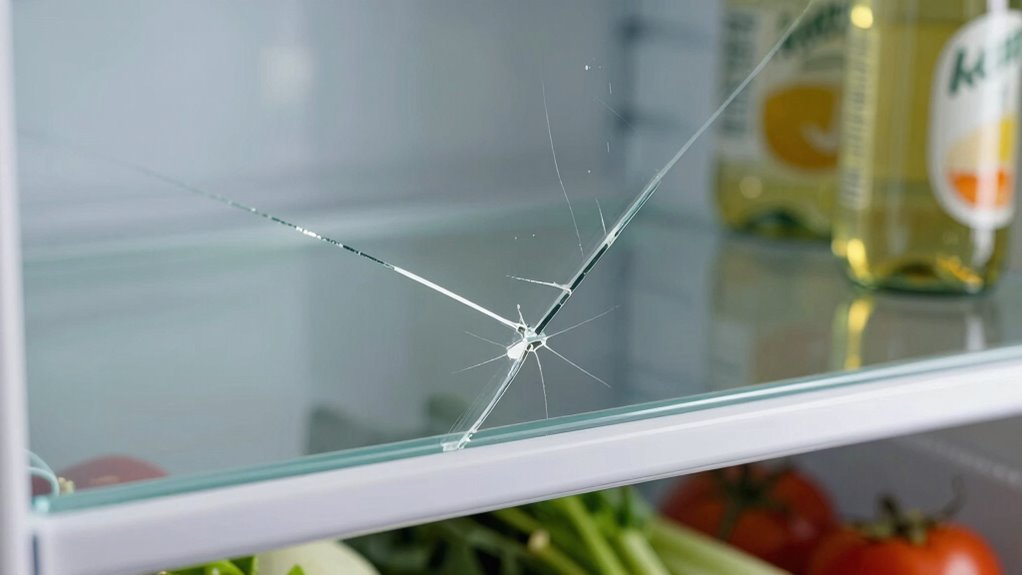
Have you ever opened your refrigerator and noticed a crack in the shelf? It’s frustrating, especially when you’re trying to grab something and suddenly see a jagged line running through the glass or plastic. Cracks like these often happen because of a combination of factors, and understanding why can help you prevent them from happening again. One common reason is ice buildup. When moisture gets into your fridge and freezes on the shelf, it expands as it turns into ice. Over time, this repeated freezing and thawing can exert pressure on the shelf material, especially if the ice isn’t regularly removed. If you neglect to clear away the ice, it can cause stress on the shelf, making it more prone to cracking. This is particularly true in refrigerators with poor defrosting systems or in areas where humidity is high, leading to frequent ice formation. Proper moisture management inside your fridge can help reduce this risk. Additionally, inadequate airflow can contribute to uneven temperature zones, which may increase the likelihood of ice buildup and subsequent cracking. Maintaining proper air circulation can help prevent uneven cold spots and reduce ice formation. It’s also helpful to periodically inspect your shelves for signs of stress or weakness before cracks develop.
Another critical factor is the shelf material itself. Most refrigerator shelves are made from tempered glass, plastic, or sometimes wire. Tempered glass shelves are sturdy but not indestructible. They can crack under sudden impacts or if subjected to uneven weight distribution. If you place heavy items on the edges or unevenly distribute the weight, you may inadvertently stress the glass and cause it to crack over time. Plastic shelves, on the other hand, are more flexible but can become brittle with age or exposure to extreme temperature fluctuations. Over time, the plastic may weaken, especially if exposed to repeated freezing and thawing cycles, making it more susceptible to cracks. Wire shelves tend to be more durable but can still develop stress points if overloaded or if objects are placed improperly. Being mindful of the shelf weight limits can help prevent unnecessary damage. Proper handling and placement of items also play a crucial role in avoiding stress and cracks.
To prevent cracks, focus on maintaining a clean, dry environment inside your fridge. Regularly defrost and remove ice buildup to relieve pressure on the shelves. When placing heavy or unevenly shaped items, do so cautiously, ensuring weight is distributed evenly. If your shelves are plastic or fragile glass, consider replacing them with more durable options or adding extra support if possible. Avoid sudden impacts, like accidentally dropping bottles or containers onto the shelves. Also, make sure your fridge’s temperature setting isn’t too low, which can encourage excessive ice formation. Temperature control is essential in managing ice buildup and preventing damage. Ensuring proper shelf placement can further help distribute weight evenly and reduce stress. By managing moisture levels, handling items carefully, and choosing the right shelf material, you can considerably reduce the risk of cracking and extend the life of your refrigerator shelves.
refrigerator shelf crack repair kit
As an affiliate, we earn on qualifying purchases.
As an affiliate, we earn on qualifying purchases.
Frequently Asked Questions
Can Temperature Fluctuations Cause Refrigerator Shelves to Crack?
Yes, temperature fluctuations can cause refrigerator shelves to crack. When temperature stability isn’t maintained, the shelf material, especially glass or plastic, expands and contracts. Over time, these repeated movements weaken the material, increasing the risk of cracks. To prevent this, keep your fridge at a consistent temperature, avoid sudden temperature changes, and choose shelves made from durable materials like tempered glass or sturdy plastics designed to withstand temperature variations.
Are Certain Foods More Likely to Damage Shelves?
Think of your fridge shelves like delicate glass sculptures—you need to be mindful of food placement and shelf weight. Certain foods, like heavy jars or large bottles, put too much stress on shelves and increase crack risk. For example, stacking multiple large milk cartons can cause cracks over time. To prevent this, distribute weight evenly and avoid overloading shelves, ensuring your fridge stays safe and intact.
How Long Do Refrigerator Shelves Typically Last?
Refrigerator shelves typically last 5 to 10 years, depending on material durability and usage. You may need shelf replacement sooner if you notice cracks or damage. Glass shelves tend to be more durable but can still crack under impact, while plastic ones are more prone to breaking. To extend their lifespan, avoid overloading and handle them carefully. Regularly inspecting your shelves helps catch issues early, saving you time and money on replacements.
Do Different Brands Use Different Materials for Shelves?
Like a secret in a well-guarded vault, brand material differences influence shelf durability. Some brands opt for tempered glass, which resists cracking better, while others use plastic, more prone to damage. Factors like thickness, quality, and design also play roles in shelf longevity. So, when choosing your refrigerator, consider these material differences to guarantee you get shelves that stand the test of time, much like a reliable fortress.
Can Improper Cleaning Methods Weaken Shelf Material?
Yes, improper cleaning methods can weaken shelf material. Using harsh cleaning chemicals or abrasive scrubbers can erode the shelf’s surface, reducing its durability. To protect your shelves, stick to mild soap and water or gentle cleaning solutions. Avoid scrubbing too hard, as this can cause cracks or chips. Proper cleaning preserves shelf integrity and prolongs their lifespan, preventing cracks caused by weakened material.
Conclusion
Imagine reaching into your fridge, expecting a sturdy shelf to hold your favorite snacks, only to find it shattered like fragile glass. Cracked shelves not only disrupt your storage but can also lead to unexpected messes. By handling shelves gently, avoiding overloading, and maintaining proper temperature, you keep them intact—like a glass of pristine water. Protect your fridge’s backbone, so your groceries stay safe and your food stays fresh.
Halloween Picks
halloween
As an affiliate, we earn on qualifying purchases.