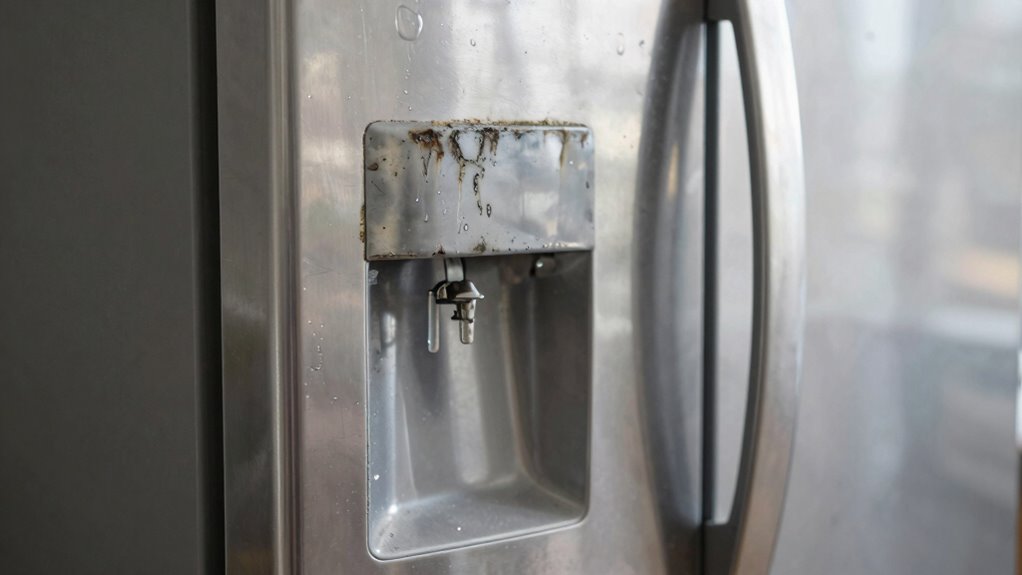

Stainless steel appliances can still corrode because their protective chromium oxide layer can be damaged by environmental factors like humidity, salt air, or chemicals, or through surface scratches and cleaning methods. When this layer is compromised, the metal underneath becomes vulnerable to rust and corrosion. Regular wear or harsh cleaning can accelerate this process. To keep your appliances in top shape, understanding how to care for them is key—know more about how to protect your surfaces efficiently.
Key Takeaways
- The protective chromium oxide layer can be compromised by scratches, chemicals, or wear, exposing the metal to corrosion.
- Environmental factors like humidity, salt air, and chemical exposure accelerate corrosion despite stainless steel’s natural resistance.
- Surface treatments such as passivation or coatings may degrade over time, reducing their effectiveness against corrosion.
- Regular cleaning with harsh chemicals or abrasive materials can damage protective layers, increasing rust risk.
- Proper maintenance, monitoring environmental conditions, and timely repairs are essential to prevent corrosion on stainless steel appliances.
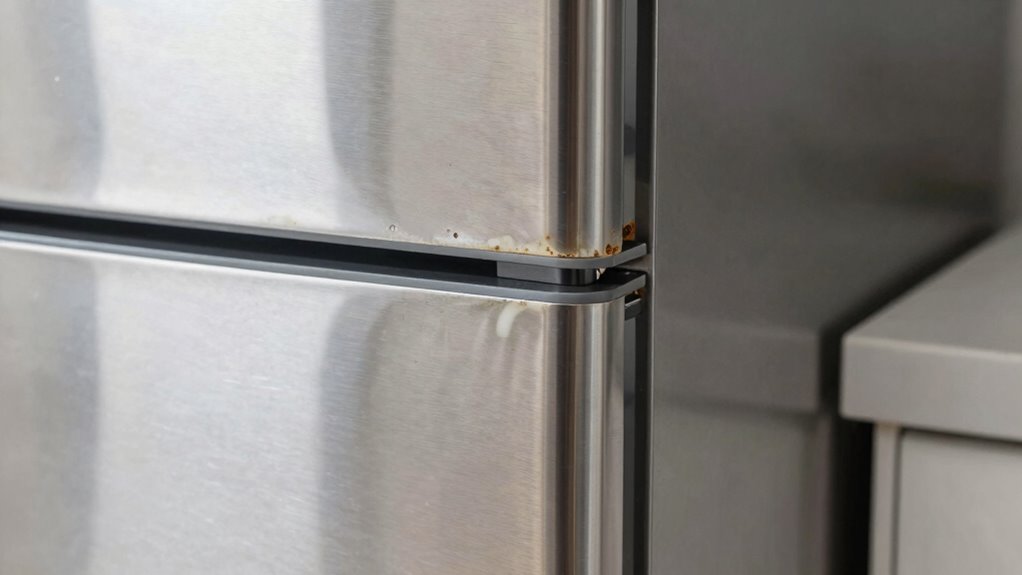
Have you ever wondered why stainless steel appliances, known for their durability and sleek look, still develop corrosion over time? While stainless steel is designed to resist rust and stains, it’s not entirely immune. The secret lies in how surface treatments and maintenance routines influence its longevity. Stainless steel’s corrosion resistance primarily depends on a thin, protective chromium oxide layer that forms naturally on its surface. When this layer remains intact, the appliance stays shiny and corrosion-free. However, various factors can compromise this barrier, leading to corrosion.
Surface treatments play a critical role in enhancing the durability of stainless steel. Manufacturers often apply specific coatings or passivation processes to improve resistance. For example, passivation involves treating the steel with acids that remove free iron particles from the surface, allowing a more stable chromium oxide layer to form. Some appliances come with protective coatings designed to repel moisture and reduce fingerprints, but these can wear down over time, especially with frequent cleaning or abrasive scrubbing. When the surface treatments degrade or are compromised, the underlying metal becomes vulnerable to moisture and contaminants, accelerating corrosion. Additionally, environmental factors such as humidity levels can significantly influence the rate of corrosion, making proper maintenance even more crucial. Regularly monitoring and controlling these environmental conditions can help preserve the integrity of stainless steel surfaces.
Surface treatments like passivation and protective coatings boost stainless steel durability but can wear down, risking corrosion.
Your maintenance routines are equally vital in preventing corrosion. Regular cleaning with mild detergents and soft cloths helps maintain the integrity of the stainless steel surface. Avoid using harsh chemicals, steel wool, or abrasive scrubbers, as they can scratch the surface and damage the protective layer. After cleaning, it’s essential to dry the appliance thoroughly because lingering moisture, especially in crevices or seams, can promote rust formation. Using a stainless steel polish or oil periodically can also help reinforce the surface’s protective barrier, making it more resistant to corrosion-causing agents. Furthermore, understanding the environmental factors that contribute to corrosion can help you better protect your appliances. Recognizing how elements like salty air or chemical exposure affect stainless steel can guide you in taking preventive measures. For example, appliances situated near coastlines are more susceptible to corrosion due to salt exposure.
Furthermore, exposure to harsh environments, like high humidity or salty air, can undermine even well-maintained stainless steel. In such cases, applying additional surface treatments or protective coatings can be beneficial. It’s equally important to inspect your appliances regularly for signs of damage or corrosion, addressing issues promptly before they spread. Small spots of discoloration or rust can often be cleaned and treated to prevent extensive damage. Staying vigilant about these conditions and maintenance can greatly extend the lifespan of your appliances.
In the end, the combination of proper surface treatments and diligent maintenance routines significantly extends the life of your stainless steel appliances. While they’re designed to resist corrosion, neglecting these factors leaves them vulnerable. Staying attentive to their surface condition, avoiding damaging cleaners, and applying protective measures when needed will help keep your appliances looking sleek and functioning optimally for years to come.

Weiman Stainless Steel Cleaner & Polisher, 30 Ct Wipes, Kitchen Appliance
- Cleans and polishes stainless steel: Removes fingerprints, grease, water spots
- Protects against smudges: Leaves a streak-free, protective barrier
- Safe for all finishes: Non-abrasive, won't scratch or dull
As an affiliate, we earn on qualifying purchases.
As an affiliate, we earn on qualifying purchases.
Frequently Asked Questions
Can Stainless Steel Appliances Rust in Saltwater Environments?
Yes, stainless steel appliances can rust in saltwater environments. Marine exposure accelerates salt damage, especially if the stainless steel isn’t of marine-grade quality. Saltwater causes corrosion by breaking down the protective chromium oxide layer on the steel surface. Regular exposure without proper maintenance increases the risk of rust. To prevent this, rinse appliances with fresh water after marine exposure and choose corrosion-resistant stainless steel grades designed for saltwater environments.
Do All Stainless Steel Types Resist Corrosion Equally?
Not all stainless steel types resist corrosion equally. Your choice depends on alloy compositions and surface treatments. For example, 304 stainless steel offers good corrosion resistance due to its chromium content, but 316 stainless steel, with added molybdenum, resists saltwater better. Surface treatments like polishing or passivation can also enhance corrosion resistance. So, selecting the right alloy and surface treatment is key to preventing corrosion in your appliances.
How Does Humidity Affect Stainless Steel Corrosion?
Humidity effects considerably influence stainless steel corrosion. When moisture lingers in the air, it accelerates corrosion mechanisms like rust formation, especially if the environment isn’t well-ventilated. High humidity creates a thin, conductive film that facilitates oxidation and pitting. You should regularly clean and dry stainless steel surfaces in humid conditions to prevent moisture buildup, which can compromise the protective chromium oxide layer and lead to faster corrosion over time.
Can Cleaning Products Cause Stainless Steel to Corrode?
Cleaning chemicals can cause stainless steel to corrode if they contain harsh or abrasive ingredients. Some chemicals break down the protective coatings on the surface, exposing the metal to moisture and air, which leads to corrosion. To prevent this, use gentle cleaning products designed for stainless steel and avoid harsh abrasives. Regularly applying protective coatings also helps maintain the surface’s resistance to corrosion and keeps your appliances looking new.
Is There a Way to Prevent Corrosion on Stainless Steel Appliances?
You can prevent corrosion on stainless steel appliances by applying protective coatings that act as barriers against moisture and chemicals. Maintaining a balanced pH level in cleaning products is equally essential, as acidic or alkaline solutions can weaken the metal. Think of it as shielding your appliances while keeping their environment neutral. Regular cleaning, avoiding harsh chemicals, and using these protective strategies will help preserve your stainless steel’s shine and durability.
Conclusion
So, even with all its toughness, stainless steel isn’t invincible. The next time you see a dull patch or a stain, remember—it’s a sign that corrosion might be lurking beneath the surface. Will you catch it early or let it spread? The choice is yours. Keep a close eye on your appliances, and you might just outsmart the corrosion before it takes over. The secrets to longevity are in your hands—are you ready to discover them?