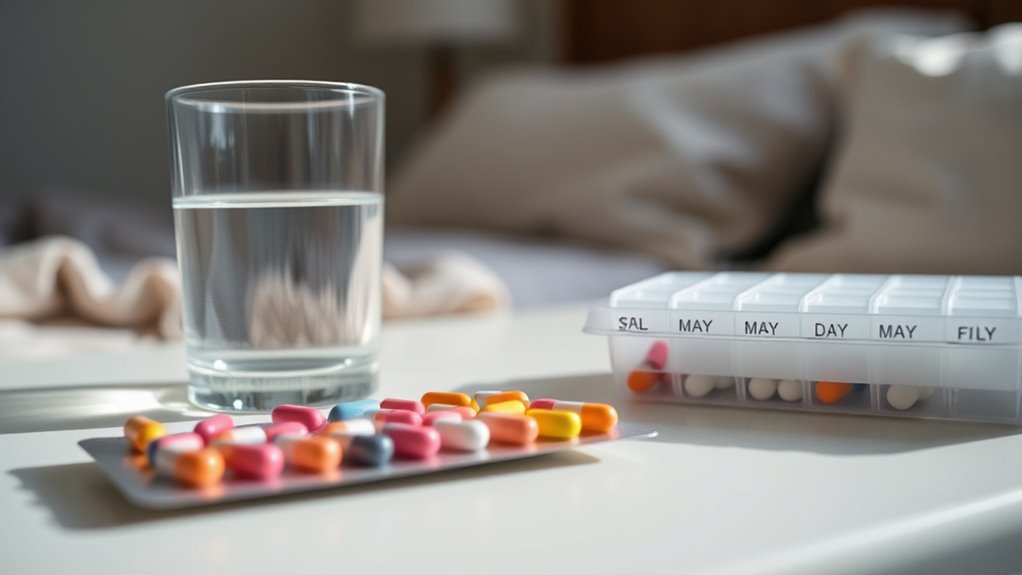

To take your prescribed medications properly, follow your healthcare provider’s instructions carefully, including dose, timing, and duration. Use tools like alarms or pill organizers to help remind you, and always read labels and ask questions if anything is unclear. Keep track of all medications you take, including OTC and supplements. Managing side effects and communicating openly with your provider can improve your treatment outcomes. Staying informed can make all the difference in your health journey—that’s why exploring more can be helpful.
Key Takeaways
- Follow your healthcare provider’s instructions exactly regarding dosage, timing, and duration of medication.
- Use reminders like alarms or pill organizers to ensure consistent medication intake.
- Keep a comprehensive list of all medications, including OTC drugs and supplements, and review it regularly with your doctor.
- Report any side effects or concerns promptly to your healthcare provider before making changes.
- Never stop or adjust medication without consulting your healthcare provider to ensure safety and effectiveness.

Taking prescribed medications properly is vital for guaranteeing their effectiveness and your safety. When you follow your healthcare provider’s instructions closely, you improve your chances of recovering or managing your condition effectively. Medication adherence is a key part of this process. It means taking your medicines exactly as prescribed—at the right times, in the correct doses, and for the duration your doctor recommends. Skipping doses or stopping early can reduce the medication’s effectiveness, potentially leading to worsening symptoms or resistance, especially with antibiotics. Consistency ensures the medication maintains the right level in your body, helping you achieve the best possible outcome while reducing risks like relapse or complications.
Taking medications as prescribed ensures effectiveness, safety, and better health outcomes.
Managing side effects is another essential aspect of taking medications properly. Many medicines can cause unwanted effects, but not everyone experiences them, and they can often be minimized or managed effectively. If you notice side effects, don’t ignore them; instead, report them to your healthcare provider. They can adjust your dose, suggest ways to lessen discomfort, or switch you to a different medication if necessary. It’s important to understand that some side effects are temporary and may improve over time, while others require prompt attention. Being proactive about side effect management helps you stay on track with your treatment plan and prevents unnecessary interruptions.
To support medication adherence, set reminders to take your medications. Use alarms, smartphone apps, or a pill organizer to keep track of your doses. Always read the label and instructions carefully, and don’t hesitate to ask questions if anything is unclear. Keep a list of all medications you’re taking, including over-the-counter drugs and supplements, to avoid harmful interactions. Regularly review your medication schedule with your healthcare provider to guarantee it still suits your needs and to address any concerns about side effects.
Additionally, understanding the importance of medication adherence can significantly improve treatment success and reduce the risk of complications. If you experience side effects, communicate openly with your provider. They can help you weigh the benefits of continuing your medication against the discomfort caused by side effects. Sometimes, simple adjustments can make a significant difference. Never stop or change your medication without professional guidance, as this can compromise your treatment. Remember that managing side effects is part of the process, and your healthcare team is there to support you. By adhering to your prescribed plan and actively managing side effects, you maximize your chances of a successful outcome and minimize potential health risks. Taking these steps helps you stay in control of your health and guarantees that your medication works as intended.
Frequently Asked Questions
How Can I Remember to Take My Medication Regularly?
You can remember to take your medication regularly by using pill organizers to keep track of your doses and setting medication alarms on your phone or clock. These tools serve as visual and auditory reminders, making it easier to stay consistent. Establish a routine—like taking your pills with breakfast or bedtime—and stick to it. Combining these methods helps make certain you never miss a dose and stay on top of your health.
What Should I Do if I Miss a Dose?
Missing a dose can feel like a disaster, but don’t panic. If you miss a dose, take it as soon as you remember unless it’s close to your next dose. Skip the missed one if it’s almost time for your next dose—don’t double up. Always stick to your medication schedule, and if you miss multiple doses, contact your healthcare provider for guidance. Staying consistent keeps your treatment effective.
Are There Any Foods or Drinks I Should Avoid?
You should avoid certain foods and drinks that may cause food interactions or interfere with your medication’s effectiveness. Common beverage restrictions include alcohol and grapefruit juice, which can alter how your medication works. Be mindful of foods high in vitamin K or those that can affect absorption. Always follow your healthcare provider’s advice, read medication labels carefully, and ask your pharmacist about specific food interactions or beverage restrictions to stay safe.
How Do I Handle Side Effects From My Medication?
If you experience side effects from your medication, don’t ignore them. Contact your healthcare provider promptly to discuss managing side effects and possible medication interactions. They may adjust your dosage, recommend additional treatments, or suggest lifestyle changes. Keep track of when side effects occur and any patterns. Staying informed and communicating openly with your provider helps make certain safe and effective medication use, minimizing discomfort and potential risks.
Can I Stop Taking Medication Once I Feel Better?
You shouldn’t stop taking your medication just because you feel better, as it could lead to medication dependency or symptom recurrence. Always talk to your healthcare provider before making any changes. They can guide you on how to taper off safely if needed. Stopping suddenly might cause your symptoms to return or worsen, so follow their instructions carefully to guarantee your health stays protected.
Conclusion
By taking your prescribed medications properly, you take control of your health and future. Neglecting them might seem harmless now, like skipping a dose, but it can lead to worsened health or complications later. Just as a single brick weakens a wall, one missed dose can undermine your treatment. Remember, your health is priceless—treat it with care and consistency. Proper medication use isn’t just a routine; it’s your best defense against preventable setbacks.