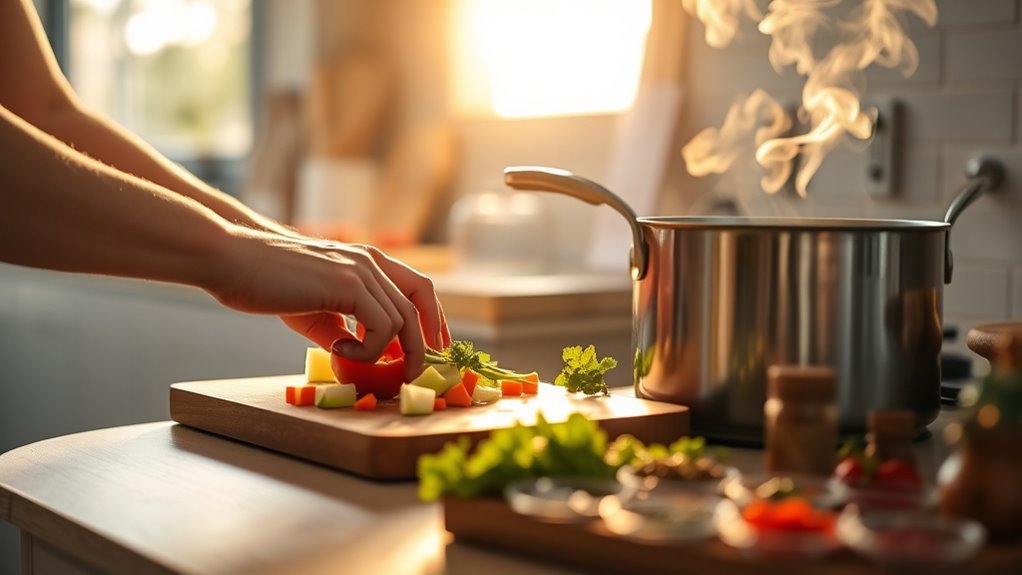

Practicing mindfulness while cooking means fully engaging your senses and paying attention to each step. Focus on the colors, textures, and smells of ingredients, and notice how they change as you prepare them. Slow down and be present in every movement — chopping, stirring, or tasting — turning cooking into a calming act of reflection. By staying mindful, you’ll enjoy each moment more and connect deeply with your food, uncovering even more ways to enhance your experience.
Open a free Amazon Business account
Business pricing, bulk buying and tax-exempt orders.
As an affiliate, we earn on qualifying purchases.
Key Takeaways
- Engage all senses by observing colors, textures, smells, and sounds during each cooking step.
- Practice intentional movements and slow down to savor the process, transforming cooking into meditation.
- Focus on the origin of ingredients, cultivating gratitude and respect for their journey to your plate.
- Incorporate deep breathing to enhance awareness of aromas and flavors, fostering relaxation and presence.
- Be mindful of waste and sustainability, appreciating the effort behind sourcing ingredients and reducing unnecessary disposal.
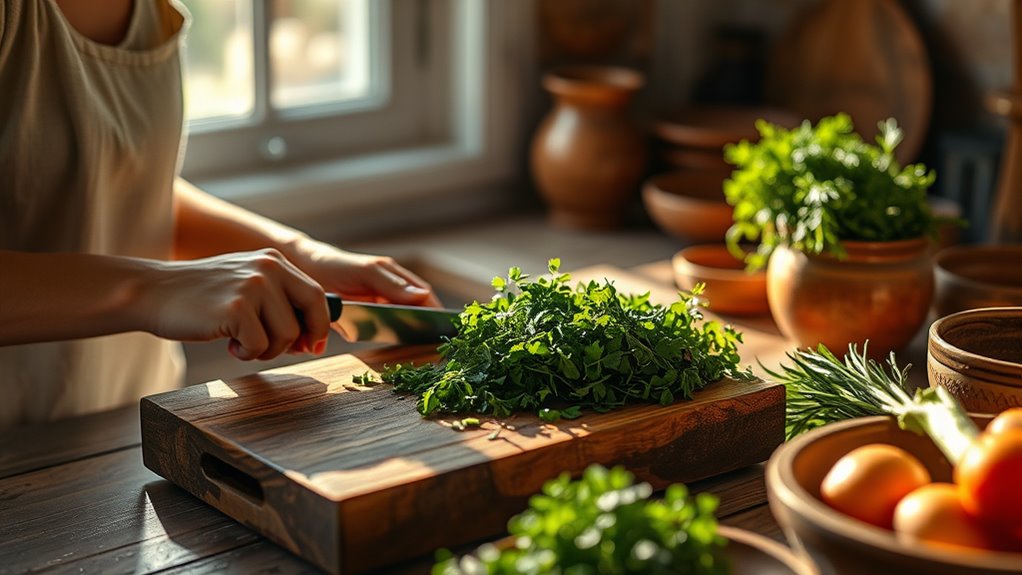
Cooking can become a powerful opportunity to practice mindfulness if you intentionally focus on each step. As you prepare your meal, take a moment to become aware of every ingredient you’re using. This isn’t just about following a recipe; it’s about connecting with the food and appreciating its journey from raw ingredient to finished dish. Bring your attention to the colors, textures, and smells of each component. Notice how the vegetables feel under your fingertips, how the herbs release their aroma as you chop them, and the sound of ingredients hitting the pan. This heightened ingredient awareness helps you stay present in the moment, transforming cooking from a routine task into a mindful experience.
Kitchen mindfulness involves engaging all your senses as you cook. Instead of rushing through the motions, slow down and pay attention to what you’re doing. Feel the weight of the utensils, listen to the sizzle of ingredients cooking, and observe the changes in texture and color. When you focus on these sensory details, your mind naturally shifts away from distractions and worries. It’s a simple but powerful way to anchor yourself in the here and now. As you stir or chop, acknowledge each movement intentionally, recognizing the skill involved and appreciating the process rather than just rushing to the end result. This practice encourages patience and gratitude, turning cooking into a form of meditation.
Incorporating ingredient awareness and kitchen mindfulness into your routine can also deepen your connection with the food you eat. Consider where your ingredients come from—imagine the journey they took to reach your kitchen. This awareness fosters gratitude and respect for the effort involved in food production. It reminds you to be mindful of waste, encouraging you to use ingredients thoughtfully and sustainably. Additionally, understanding the impact of sleep on cognitive function can help you plan your cooking sessions during times when your mind is most alert, enhancing your mindfulness practice. As you cook, take moments to breathe deeply and appreciate the aroma and flavor profiles of your ingredients. These small acts of mindfulness can enhance your overall well-being, reducing stress and making the entire process more enjoyable.
Top picks for "practic mindfulnes while"
As an affiliate, we earn on qualifying purchases.
Frequently Asked Questions
Can Mindfulness Improve Cooking Skills?
Yes, mindfulness can improve your cooking skills. When you practice mindful tasting and focus on sensory awareness, you become more attuned to flavors, textures, and aromas. This heightened awareness helps you make better decisions about seasoning and technique, enhancing the quality of your dishes. By staying present and fully engaged, you develop a deeper connection to your cooking process, ultimately leading to more flavorful, well-balanced meals.
How Long Should I Practice Mindfulness During Cooking?
You should practice mindfulness during cooking for as long as it takes to develop a calm, focused cooking focus—usually 10 to 15 minutes per session is effective. Remember, “A journey of a thousand miles begins with a single step,” so start small and gradually extend your mindful practice. Consistent, intentional moments help improve your skills and make cooking more enjoyable and mindful.
Is Mindfulness Suitable for Busy Cooks?
Yes, mindfulness suits busy cooks. You can practice it through simple steps like managing your time efficiently and keeping your kitchen organized. Focus on one task at a time, like chopping or stirring, to stay present. Even during short moments, you can breathe deeply and notice your senses. By integrating mindfulness into your routine, you’ll cook more intentionally and reduce stress despite a hectic schedule.
Can Children Practice Mindfulness While Cooking?
Absolutely, children can practice mindfulness while cooking, and it’s a game-changer! With child-friendly mindfulness techniques, you turn cooking into a fun, calming adventure. When you involve kids in cooking with kids, they learn to focus on smells, textures, and sounds, making the experience magical. Kids love this interactive way to stay present, and you’ll enjoy watching their curiosity grow as they develop mindful habits early on.
What Are Common Challenges When Practicing Mindfulness in the Kitchen?
You might find kitchen distractions and impatience are common challenges when practicing mindfulness. Distractions like noise or interruptions pull your attention away from the present moment, making it hard to stay focused. Impatience often arises when cooking takes longer than expected, causing frustration. To overcome these, try creating a calm environment, setting aside dedicated time, and reminding yourself to stay present, embracing each step without rushing.
Conclusion
As you practice mindfulness while cooking, you might find it transforms your entire experience. Some experts believe that staying present can boost your mood and even improve your health, making cooking not just a chore but a mindful ritual. Give it a try—you may discover that paying attention to each step helps you enjoy your meal more deeply. Who knows? This simple shift could turn everyday cooking into a powerful moment of calm and clarity.
Flea & tick season Picks
flea and tick prevention
As an affiliate, we earn on qualifying purchases.