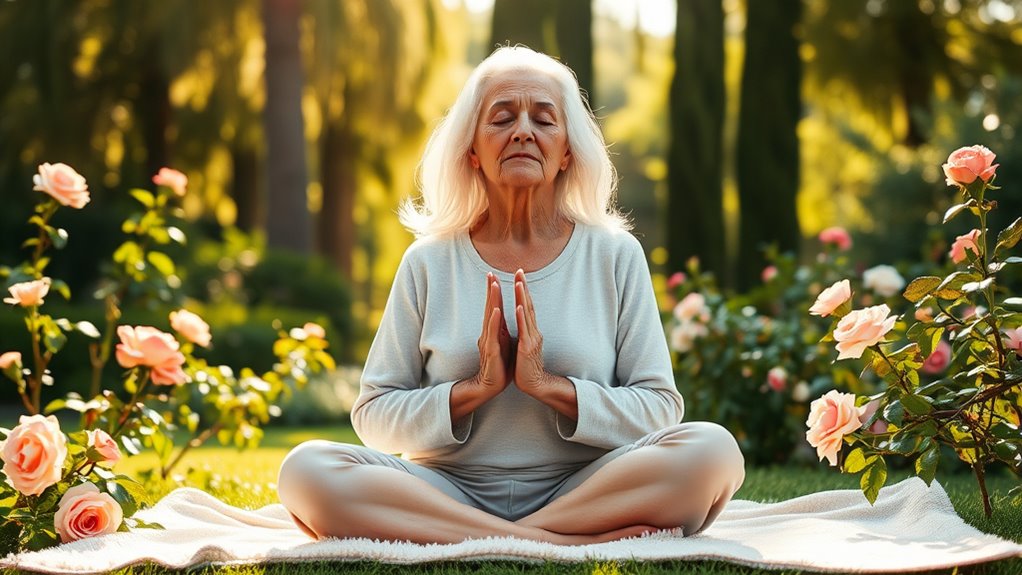

Mindfulness meditation helps seniors reduce stress, improve mental clarity, and boost emotional resilience. By focusing on your breath and staying present, you can lower cortisol levels and decrease feelings of anxiety or tension. Practicing regularly in a quiet space makes it easy to incorporate into daily life, supporting better decision-making and emotional balance. As you continue exploring, you’ll discover more simple ways to enjoy the many benefits this practice offers.
Key Takeaways
- Mindfulness meditation reduces stress, enhances emotional resilience, and supports overall health in seniors.
- It improves memory, focus, and mental clarity by strengthening hippocampal function.
- Practicing in a quiet space, focusing on breathing, helps seniors develop a calming routine.
- Regular mindfulness practice promotes emotional stability and better decision-making for aging individuals.
- No special equipment needed; short, consistent sessions foster mental well-being and emotional balance.
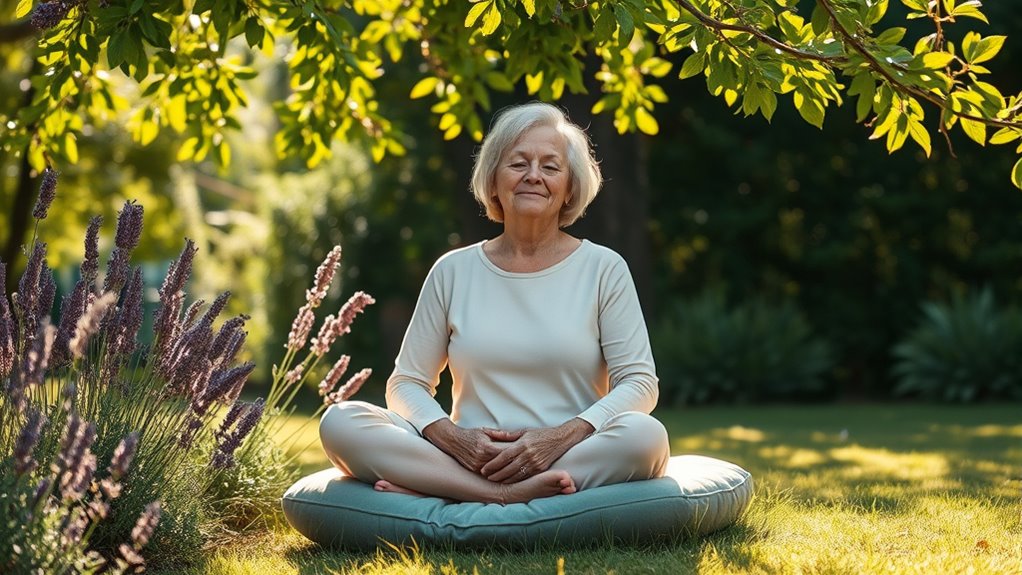
As you age, finding ways to enhance your overall well-being becomes increasingly important. One effective method you might consider is mindfulness meditation. This practice not only helps reduce stress but can also boost your memory, making daily life more manageable and enjoyable. Stress reduction is vital as you get older because it helps lower cortisol levels, which, if left unchecked, can impact your mental clarity and overall health. Mindfulness meditation encourages you to focus on the present moment, letting go of worries about the past or future. By doing so, you create a calm space within your mind, which can markedly decrease feelings of anxiety and tension that often accompany aging. When you regularly practice mindfulness, you begin to notice a sense of mental clarity emerging, which directly supports memory enhancement. As stress diminishes, your brain isn’t flooded with unnecessary cortisol, allowing your hippocampus—the area responsible for memory—to function more effectively. This means you’ll find it easier to recall names, details, and even everyday tasks. Incorporating evidence-based insights from research can help reinforce the benefits of your practice and guide you in making meaningful progress.
Getting started with mindfulness meditation doesn’t require much equipment or time. Find a quiet spot where you won’t be disturbed, sit comfortably, and focus on your breath. As you inhale, notice the sensation of air filling your lungs. When you exhale, pay attention to the release of tension. If your mind wanders, gently bring it back to your breath without judgment. With consistent practice, this simple routine can become a powerful tool for mental health. Over time, you’ll notice that you’re not only more relaxed but also more attentive and aware of your surroundings. This heightened awareness can lead to better decision-making and a greater sense of control over your mental and emotional states.
In addition to reducing stress and enhancing memory, mindfulness meditation can improve your overall emotional resilience. It helps you respond more thoughtfully to everyday challenges instead of reacting impulsively. This shift in perspective can foster a greater sense of peace and satisfaction, even when faced with life’s inevitable changes. The beauty of mindfulness is that it’s accessible—no special skills or expensive memberships are needed. You can incorporate short sessions into your daily routine, gradually experiencing the mental clarity and emotional stability that come with regular practice. As you develop this habit, you’ll find it easier to navigate the complexities of aging with a calmer, more focused mind.
Frequently Asked Questions
Can Mindfulness Meditation Improve Sleep Quality for Seniors?
Yes, mindfulness meditation can improve your sleep quality by helping you relax and reduce stress. When you practice regularly, it calms your mind, making it easier to fall asleep and stay asleep longer. By focusing on the present moment, you decrease worry and tension, leading to better sleep improvement overall. Incorporating mindfulness into your routine can be a simple and effective way to enjoy more restful nights.
Is Prior Meditation Experience Necessary to Start Mindfulness Practice?
You don’t need prior meditation experience or any meditation prerequisites to start mindfulness practice. Beginner-friendly practices are designed to be accessible, even if you’ve never tried meditation before. Simply focus on your breath, observe your thoughts without judgment, and start with short sessions. As you become more comfortable, you can gradually extend your practice. No special skills or background are necessary—just a willingness to try and stay present.
How Can Seniors Adapt Meditation Techniques for Physical Limitations?
Think of your body as a vintage car—sometimes it needs a little tuning. You can adapt meditation by using chair modifications, like supportive cushions or armrests, to stay comfortable. Seated stretches can help loosen stiff joints, making meditation easier. Focus on gentle breathing and mindfulness rather than perfect postures. This way, even with physical limitations, you can enjoy the calming benefits of meditation without risking a breakdown!
Are There Specific Mindfulness Exercises Beneficial for Memory Enhancement?
You can boost your memory by engaging in mindfulness exercises that incorporate memory games and cognitive exercises. Focus on activities like mindful recall, where you gently bring awareness to past experiences or details from your day. Using memory games, such as matching pairs or pattern recognition, helps strengthen your brain’s ability to retain information. Regular practice of these exercises keeps your mind sharp and improves overall cognitive function.
What Are Common Challenges Seniors Face When Beginning Meditation?
Imagine trying to navigate a dense forest with a flickering lantern; that’s how you might feel starting meditation. You face motivation barriers and need technique adaptation, as routines may seem overwhelming. Challenges include difficulty focusing, physical discomfort, or feeling too restless. To overcome these, simplify your practice, set gentle goals, and remind yourself that progress takes time. Stay patient and compassionate with yourself as you build your meditation skills.
Conclusion
Think of mindfulness meditation as planting a garden in your mind. With consistent care, patience, and attention, it blossoms into a peaceful, colorful oasis. As you nurture this garden, you’ll find it easier to stay present and calm amidst life’s changes. Remember, even small daily moments of mindfulness can grow into a beautiful sanctuary within you. Embrace this journey, and watch your inner garden flourish, providing comfort and clarity whenever you need it most.