

Creative journaling can profoundly boost your mental health by helping you process emotions, reduce stress, and stay grounded in the present moment. Through expressive writing and art like drawing or collaging, you can explore feelings beyond words and foster self-awareness. Establishing a routine for journaling creates a safe space for reflection and growth. Keep exploring how this simple habit can become an empowering tool for your emotional well-being and inner peace.
Key Takeaways
- Creative journaling enhances emotional processing, reduces stress, and promotes relaxation for better mental health.
- Practicing mindfulness during journaling helps calm anxious thoughts and keeps you grounded in the present moment.
- Using expressive art techniques like drawing and collaging allows emotional expression beyond words.
- Establishing a regular journaling routine fosters self-awareness, pattern recognition, and a sense of control over emotions.
- Overall, creative journaling supports emotional healing, self-discovery, and empowers individuals to nurture their mental well-being.
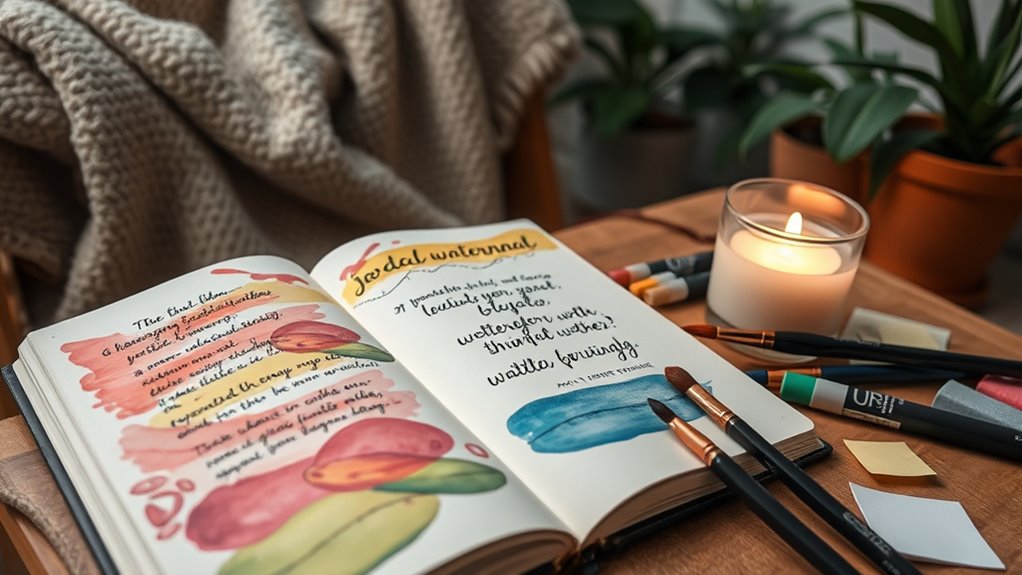
Have you ever considered how putting pen to paper can boost your mental well-being? Creative journaling offers a powerful way to process emotions, reduce stress, and gain clarity. When you sit down with your journal, you’re engaging in more than just writing; you’re participating in mindfulness exercises that help center your mind. Mindfulness exercises involve focusing your attention on the present moment, which can calm anxious thoughts and foster a sense of peace. As you write, try to stay fully immersed in the experience—notice the sensation of the pen gliding across paper, the colors on your mind, or the words that naturally come to you. This focused attention cultivates mindfulness, helping you stay grounded and present amidst life’s chaos. Passive voice can sometimes weaken your writing, so being mindful of it can enhance clarity and engagement.
Expressive art is another essential element of creative journaling. It allows you to communicate emotions that words might struggle to capture. You don’t need to be an artist to benefit from expressive art; simply drawing, doodling, or collaging in your journal can serve as a therapeutic outlet. When you incorporate expressive art into your journaling routine, you access a different form of self-expression that bypasses the inner critic. This process encourages vulnerability and honesty, which are crucial for emotional healing. You might find that a quick sketch or a series of colorful shapes helps you process feelings of anger, sadness, or joy more effectively than words alone. Furthermore, combining expressive art with mindfulness exercises deepens your emotional awareness and provides a creative way to explore what’s happening inside.
Making creative journaling a regular practice is straightforward. Set aside a few minutes each day or a few times a week to write, draw, or collage. Don’t worry about perfection or the right way to express yourself; the goal is to create a safe space for your thoughts and feelings. As you develop this habit, you’ll notice how it becomes an integral part of your self-care routine. Over time, your journal will serve as a mirror reflecting your internal landscape, helping you recognize patterns and triggers while celebrating progress. The act of creating, whether through words or expressive art, reinforces a sense of agency and self-awareness. It’s a gentle reminder that you hold the power to nurture your mental health, one page at a time. So, grab your journal and start exploring the healing potential of your own creative expression.
Frequently Asked Questions
Can Creative Journaling Replace Professional Therapy?
Creative journaling can’t replace professional therapy, but it can complement it. While journaling offers therapeutic effectiveness by helping you process emotions and reduce stress, it lacks the professional guidance needed for complex mental health issues. If you’re struggling or facing serious concerns, it is crucial to seek therapy. Journaling is a valuable tool, but it shouldn’t be relied on solely for mental health treatment.
What Are the Best Materials for Creative Journaling?
You should choose art supplies like notebooks, colored pens, markers, or even collage materials for creative journaling. These tools enhance your journaling techniques, allowing you to express emotions visually and creatively. Use thick paper for drawing or painting, and consider incorporating stickers or washi tape for variety. The key is selecting materials that inspire you, making your journaling sessions enjoyable and meaningful, ultimately supporting your mental health journey.
How Often Should I Journal for Mental Health Benefits?
For mental health benefits, aim for daily consistency, journaling at least once a day. This ideal frequency helps you build a routine, allowing you to process emotions and reflect effectively. If daily journaling feels overwhelming, start with three to four times a week and gradually increase. The key is to find a rhythm that fits your lifestyle, making journaling a sustainable and comforting part of your mental health care.
Is Creative Journaling Suitable for Children and Teens?
Absolutely, creative journaling is perfect for children and teens. Think of it as a colorful bridge to their inner worlds, encouraging children’s expression and fostering teen self-discovery. This activity helps young minds process emotions, build confidence, and explore their identities in a fun, safe space. By engaging in creative journaling, you support their mental health while nurturing their creativity and emotional resilience—it’s a powerful tool for growth.
Can Creative Journaling Help With Severe Mental Health Issues?
Yes, creative journaling can help with severe mental health issues by fostering emotional expression and reducing stress. When you put your feelings on paper, you gain clarity and release built-up tension. This active process encourages self-awareness, making it easier to manage difficult emotions. While it’s not a substitute for professional treatment, regular journaling provides a supportive tool to complement therapy and promote emotional resilience.
Conclusion
By embracing creative journaling, you’re planting seeds of self-awareness that can blossom into healing. Each page becomes a garden where your thoughts and emotions grow wild and free, nurturing your mental health. Remember, this process isn’t about perfection but about tending to your inner landscape with patience and kindness. With time, your journal transforms into a sanctuary—a vibrant, resilient forest where your true self can thrive amidst life’s storms.