To create accessible pathways in outdoor gardens, use smooth, slip-resistant surfaces like concrete or paved stones that can accommodate wheelchairs and walkers. Keep pathways at least 36 inches wide with gentle curves and ramps for elevation changes, and install good lighting for visibility. Incorporate low-growing plants and tactile cues to guide visitors, while ensuring the layout avoids obstacles. If you continue, you’ll discover more tips to enhance safety and comfort for all visitors.
Key Takeaways
- Use smooth, slip-resistant paving materials like concrete or paved stones for safe, stable pathways.
- Design pathways at least 36 inches wide with gentle curves and ramps for easy wheelchair access.
- Incorporate tactile cues, contrasting colors, and good lighting to assist visually impaired visitors.
- Place accessible, raised planting beds and containers at reachable heights to enhance engagement.
- Ensure pathways are clear, free of obstacles, and include safety features like handrails and adequate illumination.
Have you ever wondered how outdoor gardens can be welcoming to everyone, regardless of mobility? One of the key elements in creating an inclusive space is designing accessible pathways. When you focus on thoughtful garden design, you guarantee that visitors of all abilities can enjoy the beauty and tranquility of your outdoor area. The way you plan and construct these pathways directly influences how easily people can navigate the garden, so it’s vital to contemplate both form and function from the outset.
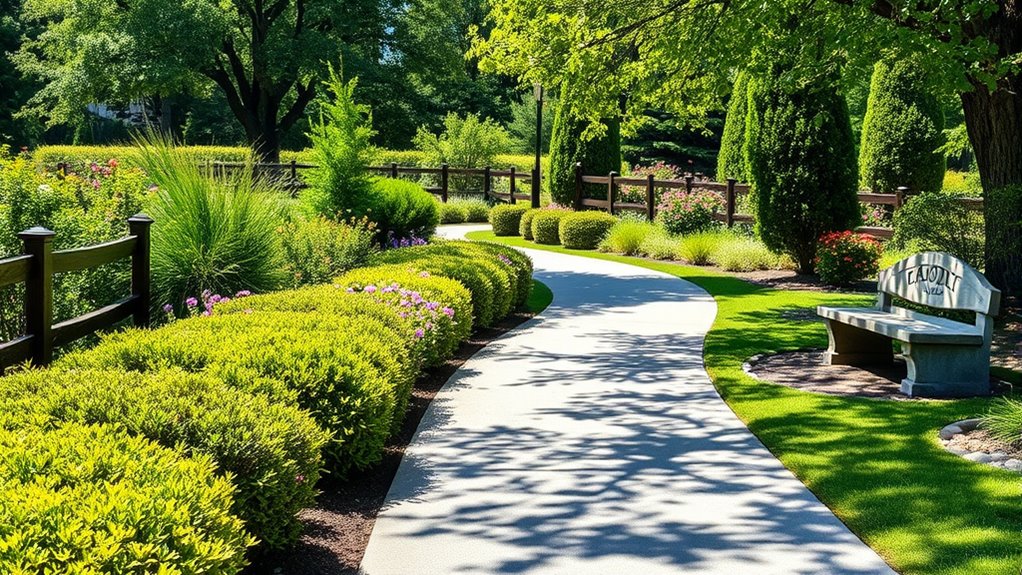
Start by choosing the right materials for your pathways. You want surfaces that are smooth, stable, and slip-resistant to accommodate wheelchairs, walkers, and those with limited mobility. Concrete, compacted gravel, and paved stones are popular options because they provide a firm footing and minimal bumps. Avoid loose or uneven surfaces like loose gravel or mulch, which can pose tripping hazards or cause wheels to get stuck. When designing the layout, keep pathways wide enough—at least 36 inches—to allow comfortable movement for wheelchairs and walkers. Curved pathways add visual interest but ensure they aren’t too tight; gentle curves work better than sharp turns, making navigation easier.
Choose smooth, stable, slip-resistant materials like concrete or paved stones for accessible garden pathways.
Plant selection also plays a vital role in garden design aimed at accessibility. Incorporate low-growing, non-spreading plants along the edges of pathways to prevent overgrowth that could obstruct the path. Select plants with non-irritating, soft foliage to avoid accidental scratches or discomfort. Use raised beds or container gardens at accessible heights, allowing visitors to enjoy the plants without bending or stooping excessively. When choosing plants, consider their placement to avoid obstructing walkways and to guarantee easy maintenance. Bright, colorful blooms can serve as visual guides, helping visitors navigate the space intuitively, while fragrant plants can enhance sensory experience for everyone. Additionally, understanding the role of color contrast in garden design can further improve pathway visibility and accessibility for visitors with visual impairments.
In addition to the physical aspects, think about how the garden design encourages exploration. Incorporate clear sightlines and signage to guide visitors naturally along accessible routes. Avoid steep slopes; if elevation changes are necessary, add gentle ramps with handrails to guarantee safety and ease of access. Good lighting along pathways is essential for visibility, especially during evening hours, making the garden safer and more inviting.
Frequently Asked Questions
How Do I Maintain Accessible Pathways During Winter?
During winter, you maintain accessible pathways by regularly performing snow removal and winter maintenance. Use a sturdy snow shovel or a snow blower to clear snow promptly, ensuring the pathways stay safe and navigable. Apply salt or sand to prevent ice formation and improve traction. Keep a close eye on weather forecasts to anticipate snowfalls and stay proactive, ensuring your pathways remain accessible and safe throughout the winter months.
What Materials Are Best for Slip-Resistant Pathways?
You should choose materials with non-slip coatings or textured surfaces to guarantee safety on pathways. Concrete treated with non-slip sealants, textured asphalt, or stamped pavers with grip-enhancing finishes work well. These materials provide traction and reduce slips, especially in wet or icy conditions. Regular maintenance and reapplication of non-slip coatings help keep pathways safe year-round. Prioritize these options for reliable, slip-resistant outdoor pathways.
Are There Eco-Friendly Options for Pathway Construction?
Imagine you’re designing a garden pathway and want it eco-friendly. You can choose permeable materials like recycled concrete or gravel, which reduce runoff and support sustainability. Incorporating solar lighting is another eco-friendly touch, providing illumination without energy costs. These options create a sustainable, accessible pathway that benefits the environment and enhances your garden’s beauty, making it a perfect blend of practicality and eco-conscious design.
How Can I Incorporate Sensory Elements Into Pathways?
You can incorporate sensory elements into pathways by designing a sensory garden that appeals to touch, sight, and sound. Use tactile paving to provide varied textures for tactile exploration, guiding visitors through different garden areas. Incorporate fragrant plants, colorful visuals, and sound-producing features like water or wind chimes along the path. These elements create an engaging experience for all visitors, especially those with visual or mobility impairments, making your garden more inclusive and stimulating.
What Signage Is Recommended for Accessible Garden Routes?
Imagine yourself as a modern explorer in a lush garden. You should install braille signage and tactile indicators along accessible routes, guiding visitors with visual impairments. Clear, large-font signs with contrasting colors also help everyone navigate easily. Guarantee signage is placed at key points, like entrances and intersections, and is durable for outdoor conditions. This thoughtful approach creates an inclusive, welcoming environment where all visitors can enjoy the beauty around them.
Conclusion
By prioritizing accessible pathways, you create a welcoming space where everyone can enjoy the beauty of your garden. Remember, a garden that’s open to all is a garden that truly thrives. As the saying goes, “The best time to plant a tree was 20 years ago; the second best time is now.” So, start making your outdoor space inclusive today, and watch it flourish as a place of joy and connection for everyone.