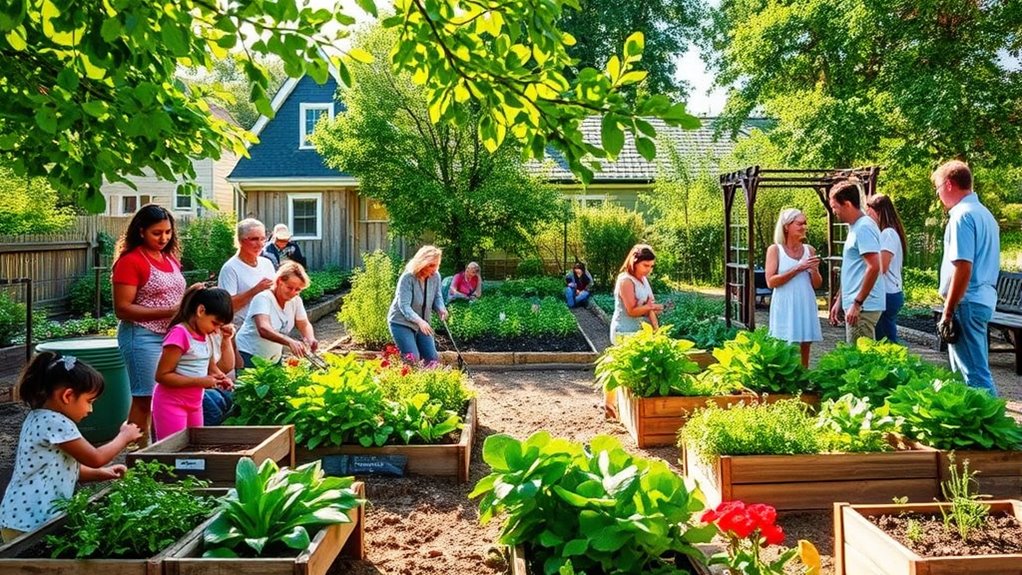

Community gardening is a great way to connect with others and build stronger bonds. As you work alongside neighbors, you’ll share knowledge, exchange ideas, and develop friendships rooted in a common goal. These gardens break down social barriers and promote inclusivity, fostering teamwork, patience, and empathy. Engaging in shared gardening activities can boost your well-being and sense of purpose. Keep exploring to discover how these green spaces truly transform communities into vibrant, supportive networks.
Key Takeaways
- Community gardens foster social bonds by encouraging neighbors to connect, share knowledge, and collaborate on gardening activities.
- They break down social barriers, promoting inclusivity and transforming strangers into friends through shared efforts.
- Gardening activities naturally facilitate conversations, strengthening social cohesion and fostering a sense of community.
- Shared successes in the garden promote teamwork, patience, and empathy among diverse community members.
- Community gardens serve as educational spaces, enhancing social interaction through workshops and knowledge exchange.

Have you ever wondered how community gardens foster stronger social bonds? These vibrant green spaces do more than just grow plants—they serve as hubs where neighbors connect, share knowledge, and build trust. At their core, community gardens contribute notably to urban sustainability by transforming vacant lots into productive, eco-friendly spaces. When you participate in tending a garden, you’re actively supporting local ecosystems, reducing urban heat, and improving air quality. This direct involvement in sustainable practices creates a sense of collective responsibility, inspiring residents to care for their environment and each other.
Community gardens transform vacant lots into eco-friendly spaces, fostering sustainability and neighborhood trust.
Beyond the environmental benefits, community gardening plays an essential role in enhancing mental well-being. Working amidst nature has been proven to reduce stress, elevate mood, and foster a sense of accomplishment. As you dig, plant, and nurture your garden, you experience a tangible connection to the natural world, which can be especially restorative amidst the hustle and bustle of city life. Sharing these moments with fellow gardeners amplifies their positive effects; conversations flow naturally as you work side by side, creating friendships rooted in common purpose. These interactions help break down social barriers, encouraging inclusivity regardless of age, background, or skill level.
Engaging in community gardening gives you a sense of belonging and purpose. When you see your efforts bloom into vibrant flowers or healthy vegetables, it boosts your confidence and happiness. These shared successes foster a supportive environment where members celebrate each other’s progress and troubleshoot challenges collaboratively. Over time, this collective effort nurtures stronger social bonds, transforming strangers into friends and neighbors into a community. The act of gardening becomes a social activity that promotes teamwork, patience, and empathy—qualities vital for a cohesive neighborhood. Additionally, understanding the role of AI Bifurcation can help communities adapt to technological changes that influence urban development and social cohesion.
Moreover, community gardens often serve as educational platforms, where knowledge about sustainable practices and healthy eating is exchanged freely. Participating in workshops or simply chatting with fellow gardeners can deepen your understanding of urban sustainability and environmental stewardship. This exchange of ideas not only benefits individual growth but also strengthens community resilience, making neighborhoods more adaptable to change and challenges. As you invest time in a community garden, you’re contributing to a more sustainable, connected, and mentally healthy urban environment. It’s a simple act with profound effects—cultivating plants and relationships simultaneously, reinforcing the idea that thriving communities grow from shared effort and care.
Frequently Asked Questions
How Does Community Gardening Impact Local Property Values?
Community gardening boosts local property values by enhancing land value and neighborhood appeal. When you participate, you help create attractive green spaces that make your area more desirable. This increased appeal encourages more residents and visitors, which can drive up property prices. By fostering a vibrant, well-maintained community, you contribute to a neighborhood that’s not only more inviting but also more valuable in the real estate market.
What Are Common Challenges Faced by Community Gardeners?
You might face challenges like soil contamination, which requires testing and possible remediation before planting. Pest management can also be tricky, demanding regular monitoring and natural or chemical controls to protect your crops. Additionally, securing enough space, coordinating schedules, and maintaining consistent funding or resources can pose hurdles. Staying informed about soil health and pest control methods helps you overcome these obstacles and enjoy a successful gardening experience.
How Can New Members Effectively Integrate Into Existing Garden Groups?
Jump into the garden like a seed ready to grow by engaging in peer mentorship and skill sharing. Introduce yourself, ask questions, and volunteer for tasks to build connections. Attend group events and be open to learning from seasoned members. Your enthusiasm will make you a welcomed part of the team, helping you blossom within the group and develop lasting friendships in the process.
What Are the Environmental Benefits of Community Gardening Beyond Social Interaction?
You’ll improve soil health and boost biodiversity through community gardening by adding organic compost and planting native species. These efforts enrich the soil, making it more fertile and resistant to erosion. Plus, diverse plantings attract beneficial insects, pollinators, and wildlife, creating a balanced ecosystem. Your involvement helps reduce urban heat, filters pollutants, and supports sustainability. Overall, community gardens offer significant environmental benefits that extend beyond social interaction, fostering healthier, greener communities.
How Do Community Gardens Influence Food Security in Urban Areas?
You find that community gardens boost food security in urban areas through urban farming and seed sharing. When you participate, you gain access to fresh produce, reducing reliance on store-bought food. Coincidentally, these gardens become local hubs for sharing seeds and knowledge, empowering residents to grow their own food. This active engagement fosters resilience, guarantees nutritional needs are met, and strengthens community bonds, creating a more self-sufficient urban environment.
Conclusion
As you tend your garden, you realize that sometimes, the most unexpected conversations bloom from shared soil. Just last week, an old neighbor stopped by, reminding you how chance encounters can spark new friendships. In these moments, you see how community gardening isn’t just about plants—it’s about connections that grow when you least expect them. Sometimes, the smallest coincidence can lead to the biggest bonds, proving that social interaction often blooms in the most surprising ways.