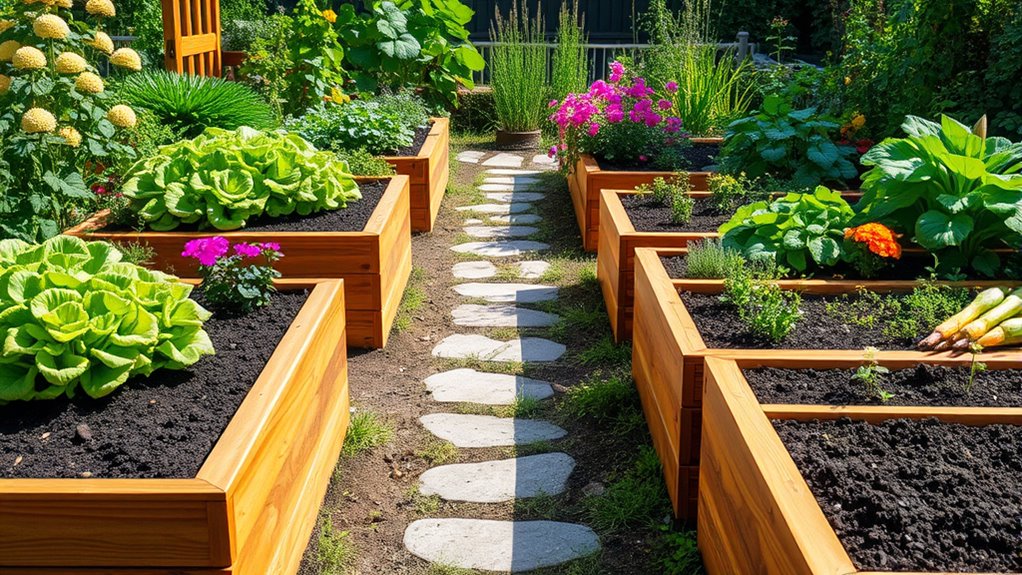

To garden comfortably all season, consider building raised beds at an ideal height of 24-36 inches. This reduces back strain, minimizes bending, and allows you to work from a standing or seated position. Make sure your beds are sturdy, accessible from all sides, and include ergonomic tools and seating options. Organizing your garden layout thoughtfully helps prevent unnecessary movement. Keep exploring to discover more tips that will make gardening easier and more enjoyable year-round.
Key Takeaways
- Build raised beds between 24-36 inches high to reduce bending and strain during gardening sessions.
- Design beds with a width of 3-4 feet for easy access from either side without overextension.
- Use ergonomic tools and seating options to minimize back fatigue and promote comfortable gardening.
- Organize plants and supplies efficiently to avoid unnecessary reaching and bending.
- Ensure sturdy construction and proper height customization for long-lasting, back-friendly gardening.
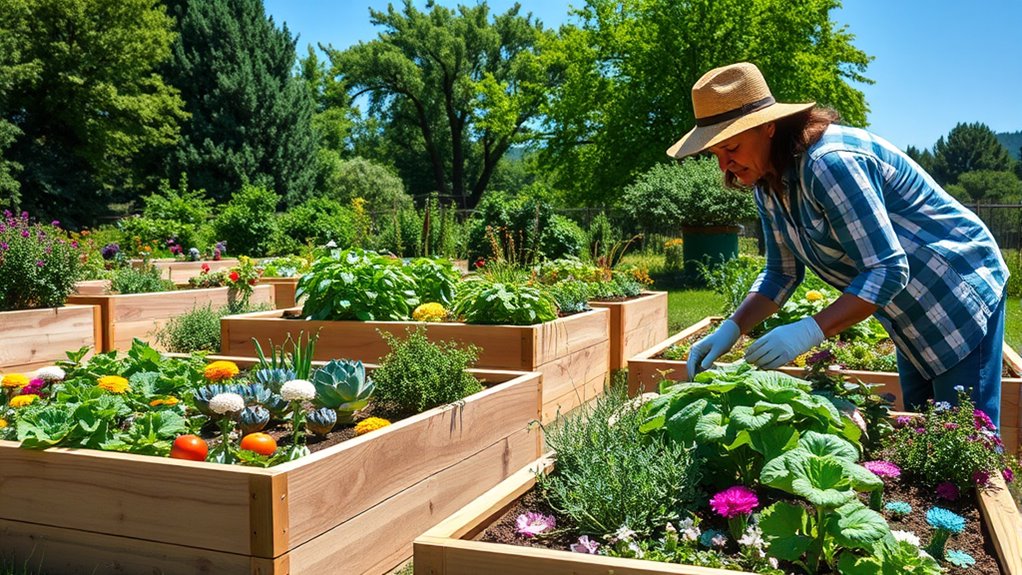
If you’re tired of back pain after gardening, raised beds can be a game-changer. They allow you to enjoy gardening without bending over or kneeling on hard surfaces, reducing strain on your back and joints. When you install a raised bed at the right height, you can work comfortably while standing or sitting on a stool, making the entire gardening process more accessible and enjoyable. Plus, you gain better control over soil quality and drainage, which means healthier plants and less frustration.
Choosing the correct height for your raised bed is essential. If you’re dealing with back issues, aim for a height between 24 and 36 inches. This height allows you to work comfortably without stooping, reducing the risk of strain. If you’re taller or have specific needs, you might opt for even higher beds. The key is to customize the height so you can tend to your garden without repeatedly bending or twisting your torso. When constructing or purchasing your raised bed, confirm that it’s sturdy and stable. A well-built bed will support your gardening activities and last for years.
Design matters, too. A wider bed—around 3 to 4 feet across—gives you easy access from either side, so you don’t have to step into the bed or stretch awkwardly. This width allows you to reach the center from a comfortable position, minimizing unnecessary movement that could hurt your back. Similarly, depth plays a role; a depth of about 12 to 24 inches provides enough soil volume for most vegetables and flowers, while still keeping your work within a comfortable reach.
To make the most of your raised bed, consider adding a comfortable, sturdy seat or a kneeling pad. A stool or a small bench nearby gives you a rest spot when you need a break or want to switch from standing to sitting. Using ergonomic tools with longer handles can also help you reach into the bed without overextending or leaning forward excessively. These small adjustments can greatly reduce fatigue and prevent discomfort. Additionally, using raised beds with proper height can help prevent common back strains associated with traditional gardening methods.
Finally, plan your planting layout thoughtfully. Group plants with similar watering and sunlight needs together to avoid unnecessary movement. Keep tools within easy reach, and organize your supplies so you won’t have to stretch or bend repeatedly. With proper planning and the right setup, you can enjoy gardening all season long—without the back pain. By making these adjustments, you’ll find gardening becomes more satisfying and less physically demanding, allowing you to spend more time cultivating your garden and less time recovering from discomfort.
Frequently Asked Questions
What Are the Best Materials for Back-Friendly Raised Beds?
You should choose materials like cedar, composite, or vinyl for back-friendly raised beds. These materials are lightweight yet durable, making them easier to assemble and access without straining your back. Cedar is naturally rot-resistant, while composites and vinyl require less maintenance. Avoid heavy stone or concrete, as they can be tough to lift and install. Opt for these options to create a comfortable gardening experience all season long.
How High Should Raised Beds Be to Prevent Back Strain?
You should build your raised beds to be about 24 to 30 inches high to prevent back strain. This height allows you to work comfortably without bending over too much, reducing stress on your back. If you’re shorter or have mobility issues, opt for even higher beds, around 36 inches. Make sure the sides are sturdy and easy to access, so gardening stays enjoyable and pain-free all season long.
Can Adjusting Bed Height Reduce Overall Gardening Time?
Adjusting bed height can definitely reduce your overall gardening time. When you raise your beds, you spend less time bending and stooping, making planting, weeding, and harvesting quicker and easier. Higher beds keep tools within reach and minimize cleanup, letting you focus on your garden tasks rather than back pain or fatigue. By customizing your bed height, you streamline your gardening process, saving time and effort with every season.
What Ergonomic Tools Can Improve Gardening Comfort?
You can improve gardening comfort by using ergonomic tools like long-handled pruners, weeders, and trowels, which reduce bending and strain. Ergonomic gloves with cushioned grips also help prevent hand fatigue. Consider kneeling pads or garden stools to support your knees and lower back. These tools and accessories make gardening easier, minimize discomfort, and allow you to enjoy your garden longer without pain or fatigue.
Are There Specific Planting Techniques to Minimize Bending?
Think of your garden as a dance floor—smooth moves make everything easier. To minimize bending, use raised beds at waist height, so you’re not stooping like a wilted flower. Incorporate tools with long handles, like trowels and cultivators, to keep your back straight. Plan your planting layout for easy access, and work in sections. These techniques keep your back happy and your gardening more enjoyable.
Conclusion
Now that you know how to build and maintain raised beds without back pain, imagine yourself effortlessly tending your garden all season long. With these simple tips, gardening becomes as natural as breathing—no more aches, just beauty and bounty. Think of your garden as a symphony, where each plant plays its part in harmony. So, roll up your sleeves and enjoy the rhythm of gardening, pain-free, and with pure delight.