
To adapt raised beds for wheelchairs, design beds at heights of 24-36 inches with rectangular shapes for easy access from multiple sides. Make sure pathways are wide (at least 36 inches), smooth, and level to allow smooth movement. Incorporate thoughtful storage solutions and ergonomic tools within arm’s reach. Adding a small, flat work surface on the side can boost convenience. Exploring more tips can help you create an inclusive, accessible garden space tailored to your needs.
Key Takeaways
- Design raised beds with heights between 24-36 inches for easy wheelchair access and comfortable reaching.
- Use rectangular shapes and wide, level pathways (≥36 inches) around beds for smooth wheelchair navigation.
- Incorporate flat, accessible work surfaces on the side of beds for planting, potting, or sorting tasks.
- Position tools and supplies within arm’s reach using accessible storage solutions at appropriate heights.
- Ensure proper lighting and avoid barriers to enhance safety and visibility for wheelchair users.

Have you ever wondered how to make gardening more accessible for wheelchair users? One of the most effective ways is by adapting raised beds to suit different mobility needs. When you focus on thoughtful garden design, you create a space that’s welcoming and functional. Using accessible tools is essential, but the foundation lies in planning a layout that minimizes barriers. Start by selecting the right location for your raised beds—place them where you can comfortably reach all sides without overextending. This might mean positioning them closer to your seating area or pathways that are wide enough for wheelchair navigation.
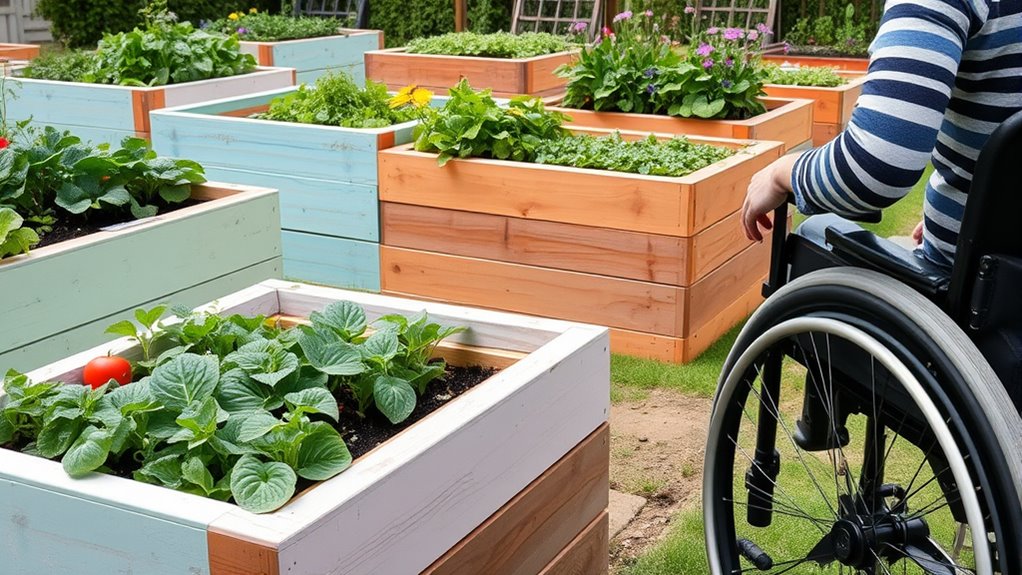
The height of your beds plays a pivotal role in accessibility. Aim for a height between 24 and 36 inches, which allows wheelchair users to work comfortably without straining or needing to lean excessively. To optimize garden design, consider making the beds rectangular rather than square, as this shape provides easier access from multiple sides. Keep pathways around the beds smooth, level, and wide enough—at least 36 inches—to ensure easy maneuvering. This helps prevent accidental bumps and makes it easier to reach tools and plants from various angles.
Using accessible tools can transform your gardening experience. Look for ergonomic handles, long-reach tools, and lightweight equipment designed specifically for ease of use. These tools reduce physical strain and improve safety, especially when working from a seated position. Keep your gardening tools within arm’s reach by installing storage solutions at an accessible height or using hanging containers placed near the beds. Incorporating raised beds into your garden design isn’t just about height; it’s about creating a space where every element is thoughtful and intentional. You might add a small, flat work surface on the side of the bed for potting or sorting, which helps keep everything within reach. Additionally, considering garden bed materials that are durable and easy to maintain can further improve accessibility and longevity.
Lighting is another important aspect of garden design for accessibility. Ensure pathways and beds are well-lit, especially if you or your helpers garden during twilight hours. Consider installing motion-sensor lights or solar-powered lamps to improve visibility and safety. By carefully planning your garden’s layout and choosing accessible tools, you make it easier for wheelchair users to participate fully in gardening activities. This not only promotes independence but also enhances the overall enjoyment of your outdoor space. Remember, a well-designed, accessible garden isn’t just functional; it’s a space where every element is thoughtful and intentional.
Frequently Asked Questions
What Is the Optimal Height for Wheelchair-Accessible Raised Beds?
The ideal height for wheelchair-accessible raised beds is typically between 28 and 34 inches. This bed height allows for comfortable, ergonomic design, making it easy for you to reach and tend to your plants without strain. Adjust the height based on your wheelchair’s seat height and personal comfort. Ensuring proper height promotes better accessibility and reduces the risk of discomfort or injury while gardening.
How Can I Ensure Safety Around the Edges of the Bed?
To guarantee safety around your raised bed edges, install edge protection like cushioned guards or smooth, rounded trims to prevent injury. Use slip prevention measures such as textured surfaces or non-slip mats on the surrounding ground. Regularly check for sharp edges or loose parts, and keep the area clear of debris. These steps help create a safer environment, reducing the risk of slips or falls and making your garden more accessible.
Are There Specific Materials Best Suited for Durability and Safety?
Like a knight choosing armor, you should select materials that prioritize durability considerations and safety materials. Opt for rot-resistant cedar or composite decking, which resist weather and wear. These materials guarantee your raised bed remains sturdy and safe, reducing splinters or breaks. Use smooth-edged, non-toxic finishes to prevent injuries. By choosing the right materials, you create a resilient, safe environment that lasts and keeps your wheelchair accessible and secure.
How Do I Modify Existing Raised Beds for Wheelchair Access?
You can modify your raised beds for wheelchair access by adding a wheelchair-friendly design, such as lowering the height or creating a wide, unobstructed pathway. Use raised bed modifications like removable sides or adjustable height supports for easier access. Confirm the surface is smooth and stable, and incorporate ramps if necessary. These adjustments make gardening comfortable and accessible, allowing you to tend your plants with ease.
What Tools Are Needed for Easy Adaptation and Installation?
You’ll need basic tools like a saw, drill, measuring tape, and level for easy adaptation and installation. To guarantee wheelchair accessibility and successful garden bed customization, start by measuring the bed’s dimensions and cutting any necessary supports or ramps. A screwdriver, screws, and possibly a wrench will help secure everything firmly. These tools make it straightforward to modify your garden bed, creating a more inclusive outdoor space.
Conclusion
By adapting your raised beds for wheelchairs, you’re not just making gardening accessible—you’re opening a portal to a universe where everyone can nurture life, feel the earth beneath their fingertips, and reclaim their independence. Imagine transforming your garden into a sanctuary so inclusive, even the tallest giants would envy it. This isn’t just about gardening; it’s about breaking barriers and creating a world where everyone’s dreams of growing flourish wildly. Your garden becomes a symbol of limitless possibilities.