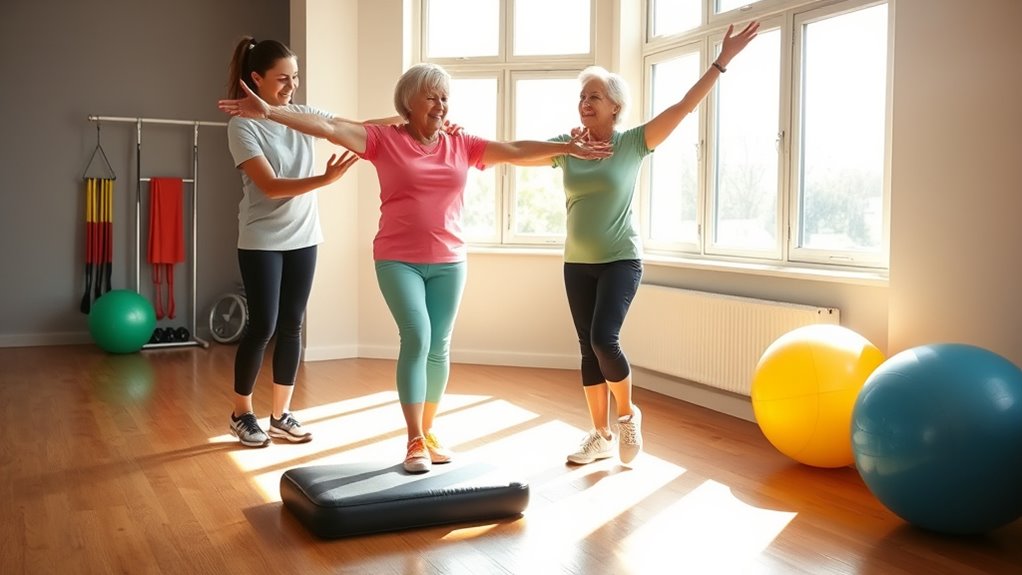

To lower your fall risk through exercise, focus on activities that strengthen your legs, hips, and core muscles, such as squats, lunges, and leg lifts. Incorporate balance training like standing on one foot, heel-to-toe walking, or gentle yoga to improve stability and coordination. Aim for these exercises two to three times a week, gradually increasing difficulty. Keep safety in mind, and you’ll discover more tips to stay steady and secure.
Key Takeaways
- Incorporate regular balance exercises like standing on one foot and heel-to-toe walking to enhance stability.
- Strengthen leg, hip, and core muscles through targeted exercises such as squats and lunges.
- Perform balance and strength routines 2-3 times weekly to build resilience and coordination.
- Gradually increase exercise difficulty, including challenging surfaces, to improve adaptability and prevent falls.
- Ensure a safe environment and consult healthcare professionals for personalized fall prevention exercise plans.
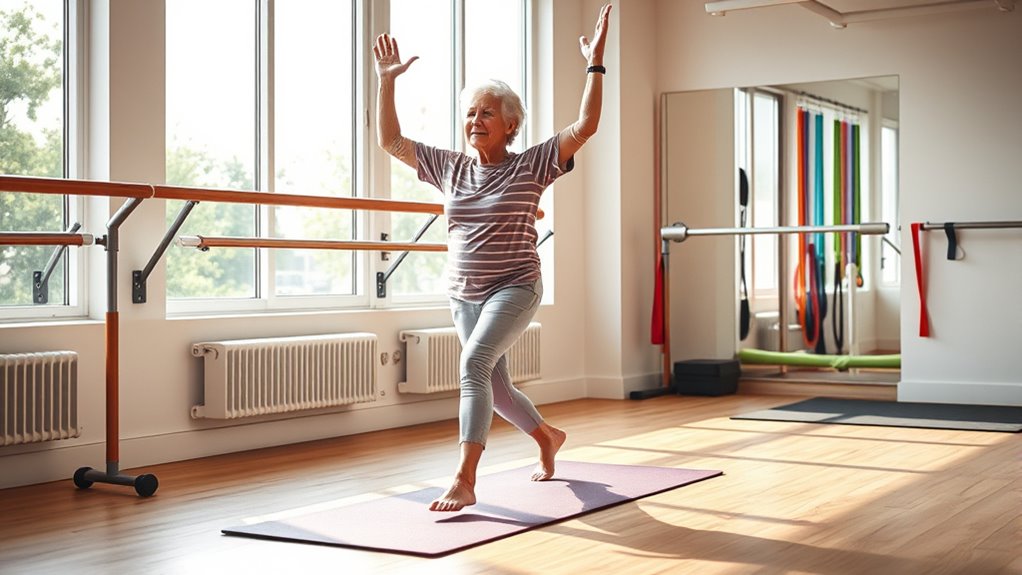
Falls are a common concern as you age, but regular exercise can substantially reduce your risk. Engaging in activities that improve your balance and strength helps you stay steady on your feet and prevents dangerous tumbles. The key is to incorporate specific exercises that target these areas regularly, making your muscles more resilient and your coordination sharper.
Balance training is especially effective because it trains your body to maintain stability during daily movements. You might try simple exercises like standing on one foot, walking heel-to-toe along a straight line, or practicing gentle yoga poses. These activities challenge your body’s ability to keep upright, strengthening the muscles involved in maintaining your posture. Over time, these exercises help improve your proprioception—the sense of where your body is in space—which is essential for preventing falls. As you become more confident with your balance, you’ll find it easier to navigate uneven surfaces, stairs, or crowded environments without feeling unsteady.
Balance exercises like standing on one foot and yoga improve stability and prevent falls.
In addition to balance training, incorporating strength exercises is imperative. Strong muscles support your joints and bones, giving you better control and reducing the likelihood of losing balance. Focus on exercises that work your legs, hips, and core—areas most involved in maintaining stability. Bodyweight moves like squats, lunges, and standing leg lifts are effective options you can do at home. Resistance training with light weights or resistance bands also helps build muscle strength, which is especially important if you’ve experienced muscle loss with age. Strengthening your core, including your abdominal and back muscles, enhances your overall posture and balance, making falls less likely during sudden movements or slips. Additionally, incorporating simple balance exercises into your routine can further enhance your stability and confidence.
Consistency is key. Aim to perform balance training and strength exercises at least two to three times a week. Even short sessions can have a significant impact over time. As you progress, increase the difficulty gradually—try standing on uneven surfaces or adding more repetitions—to challenge your body further. Remember, safety comes first: always exercise in a safe environment, and consider consulting a healthcare professional or physical therapist to develop a personalized plan suited to your abilities.
Frequently Asked Questions
Are Specific Exercises Better for Preventing Falls?
Yes, specific exercises like balance training and strength exercises are more effective for preventing falls. You should focus on activities that improve your stability, such as standing on one foot or practicing tai chi. Strengthening your leg muscles helps you recover from slips or trips. Incorporate these targeted exercises into your routine regularly, and you’ll enhance your coordination and confidence, substantially reducing your fall risk.
How Often Should I Do Fall-Prevention Exercises?
You should do fall-prevention exercises at least three times a week to see benefits. Incorporate muscle strengthening activities and balance exercises into your routine, and make sure your home safety is optimized to prevent falls. Consistency is key; by regularly practicing these exercises, you build strength and stability, reducing your risk of falls. Remember, pairing your workouts with home safety measures makes your environment safer and more supportive.
Can Exercise Improve Balance and Coordination?
Yes, exercise can improve your balance and coordination. Engaging in balance training and coordination exercises helps strengthen the muscles and neural pathways that control movement. Regular practice enhances your stability and awareness, making you less likely to fall. Incorporate activities like standing on one leg, tai chi, or agility drills into your routine. Over time, you’ll notice better coordination and steadiness, reducing your fall risk markedly.
Are There Age-Specific Exercise Recommendations?
You should follow age-specific exercise recommendations because falls cause 95% of hip fractures in seniors. Addressing age-related concerns, you may need exercise modifications like gentle balance drills for older adults or strength training for middle-aged individuals. These tailored approaches help you stay safe while improving stability and reducing fall risk. Consulting a healthcare provider guarantees your exercises match your age and physical condition, making workouts effective and safe.
What Precautions Should I Take When Exercising to Prevent Falls?
When exercising, you should wear proper footwear to prevent slips and guarantee stability. Always check your environment for safety hazards like loose rugs or clutter that could cause falls. Use handrails when available, and exercise on even, non-slip surfaces. Avoid sudden movements or overexertion, and stay aware of your surroundings. Taking these precautions helps you stay safe and reduces your risk of falling during exercise.
Conclusion
By embracing exercise, you plant seeds of strength and balance in your life’s garden. With each step, you nurture resilience, turning fragile branches into sturdy limbs. Remember, every effort is a shield against the storms of falls, symbolizing your commitment to safeguarding your independence. Stay active, and watch as your confidence blossoms, anchoring you firmly in safety’s embrace. Your dedication today sows the stability you’ll cherish tomorrow.