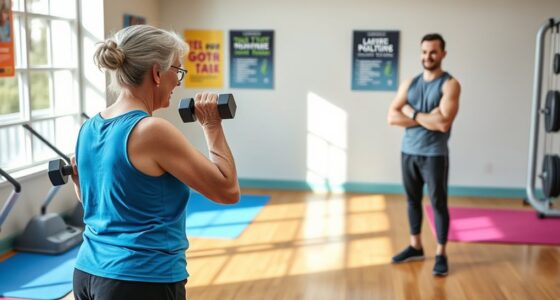
If you’re interested in interval training for seniors, it’s a great way to boost your cardiovascular health, strength, and endurance with short, manageable bursts of activity followed by rest or lower-intensity periods. Adding balance exercises helps prevent falls and improves stability for daily tasks. To stay safe, listen to your body and gradually increase intensity. Keep going, and you’ll discover how to incorporate these practices for lasting benefits and better overall well-being.
Key Takeaways
- Incorporate short bursts of moderate to high-intensity activity with rest periods to improve cardiovascular health safely.
- Combine interval training with balance exercises like standing on one leg to enhance stability and reduce fall risk.
- Prioritize proper nutrition and hydration to support energy levels and aid recovery during and after workouts.
- Gradually increase intensity and duration to build endurance while listening to body signals to prevent injury.
- Maintain consistency, include recovery time, and focus on sustainable routines for long-term health benefits.

Have you considered how interval training can benefit seniors looking to improve their fitness? This dynamic workout method involves alternating short bursts of higher-intensity activity with periods of rest or lower-intensity movement. It’s an effective way to boost cardiovascular health, increase strength, and enhance overall stamina. But to maximize these benefits safely, you should also incorporate balance exercises into your routine. These exercises strengthen the muscles that support your joints and improve coordination, helping you stay steady on your feet and reducing the risk of falls. Simple balance exercises like standing on one leg, heel-to-toe walks, or gentle yoga poses can be easily integrated into your interval sessions. By focusing on stability, you’ll find it easier to perform daily tasks and enjoy your activities with confidence.
When starting interval training, it’s essential to pay attention to your nutrition. Proper nutrition provides the energy needed to perform these workouts and aids in recovery afterward. Eating a balanced diet rich in lean proteins, whole grains, healthy fats, and plenty of fruits and vegetables can make a significant difference. For example, consuming a small snack with protein and carbohydrates about an hour before exercising can boost your stamina. Hydration is equally important—drink water regularly before, during, and after your sessions to stay well-hydrated and prevent fatigue. Incorporating foods rich in antioxidants, such as berries and leafy greens, can help reduce inflammation and promote joint health, supporting your overall fitness journey. Additionally, understanding exercise safety can help prevent injuries and ensure you exercise effectively.
As you progress with interval training, listen to your body and adjust the intensity accordingly. You don’t have to push yourself to the limit; the goal is consistent, safe improvement. Incorporate balance exercises into your routine to enhance stability and prevent falls, which are common concerns for seniors. Pairing this with sound nutrition tips ensures you’re fueling your body properly and recovering adequately. Remember, consistency is key, and a gradual increase in intensity will help you build endurance without risking injury. By combining interval workouts with balance exercises and good nutrition, you set yourself up for a sustainable fitness routine that can improve your quality of life, boost your confidence, and keep you active for years to come.

Hanorld Toilet Bidet Seat Water Filter Replacement for LUXE Bidet NEO 120 320 Electronic Bidet Seats Filtration Threads Lasts Up to 6 Months, White
- Hygienic Water Filtration: Ensures clean, proper water for bidet use
- Heavy Sediment Removal: Filters out sand, rust, and particulates
- Easy DIY Installation: Attaches directly to 1/2'' bidet connector
As an affiliate, we earn on qualifying purchases.
Frequently Asked Questions
Can Seniors Safely Begin Interval Training Without Medical Clearance?
You shouldn’t start interval training without medical clearance, especially if you have existing health issues. It’s essential to discuss your plans with your healthcare provider first to guarantee safety. Follow safety precautions, such as starting slowly and listening to your body. Doing so helps prevent injuries and complications. Always prioritize your health and get professional advice before jumping into any new, vigorous exercise routine.
How Often Should Seniors Do Interval Training Each Week?
You should aim for exercise frequency of about two to three times weekly, allowing your body adequate recovery between sessions. Consistent training helps improve your fitness safely and effectively. Listen to your body, start slowly, and gradually increase intensity and duration. Maintaining training consistency is key, so choose days that fit your schedule and stick with them. Always consult your healthcare provider before increasing your exercise frequency to make certain of safety.
What Are the Best Types of Exercises for Senior Interval Training?
Your best bet for senior interval training is to focus on low impact exercises like brisk walking, cycling, or swimming, which are gentle yet effective. Incorporate strength-building routines such as chair squats or resistance band exercises to boost muscle health. These workouts are powerful enough to transform your fitness and keep you energized, all while protecting your joints. You’ll feel unstoppable and healthier than ever!
How Can Seniors Modify Intervals for Limited Mobility?
You can modify intervals for limited mobility by incorporating chair exercises and seated interval training. Instead of standing exercises, do seated marches, leg lifts, or arm circles in short bursts, followed by gentle rest. This approach helps maintain activity levels safely, improves endurance, and reduces strain. Keep the intervals brief, around 15-20 seconds, and gradually increase as your strength and mobility improve. Always listen to your body and consult your healthcare provider.
Are There Any Specific Signs to Stop Interval Training Immediately?
Stopping immediately is essential if you notice signs of overexertion, like extreme fatigue or dizziness, or if you feel a sudden chest pain—think of it as a warning light on your dashboard. Your body’s signals are your guide; don’t ignore them. If you experience these signs, pause your activity and seek medical advice. Listening to your body helps prevent injury and keeps your exercise safe and effective.
Conclusion
As a senior, you might think rest is the only way forward, but interval training proves otherwise. It’s a quick burst of effort paired with recovery—like pushing your limits only to gently step back. This balance keeps your body strong and your mind sharp, showing that aging isn’t about slowing down, but about finding new ways to stay active. Embrace the challenge, and discover that even small intervals can lead to big improvements.