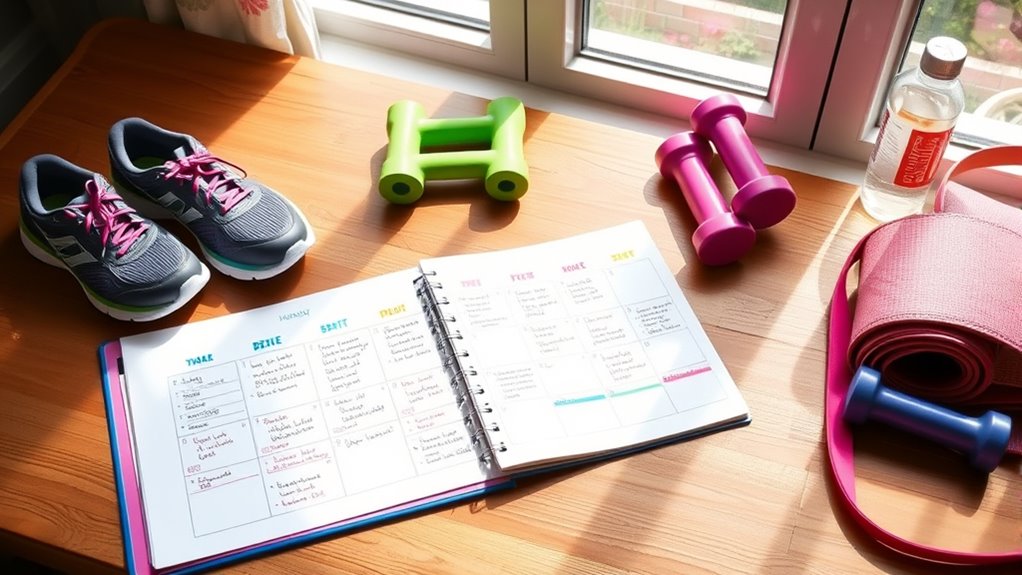

To develop a balanced weekly exercise plan, you should combine cardio, strength, and flexibility workouts while scheduling proper recovery days. Vary your activities to stay motivated and prevent overtraining. Adjust intensity based on how your body feels, including stretching and foam rolling to aid recovery. Maintaining consistency and listening to your body’s signals help prevent injuries and build long-term habits. Keep exploring these strategies to create a sustainable plan tailored to your goals.
Key Takeaways
- Incorporate a mix of cardio, strength, and flexibility exercises to ensure comprehensive fitness development.
- Schedule rest and active recovery days to promote muscle repair and prevent overtraining.
- Plan workouts in advance to maintain consistency and adapt intensity based on fatigue levels.
- Vary workout types and intensities to reduce boredom, boost motivation, and minimize injury risk.
- Prioritize recovery strategies like stretching, proper nutrition, and sleep for optimal performance and progress.
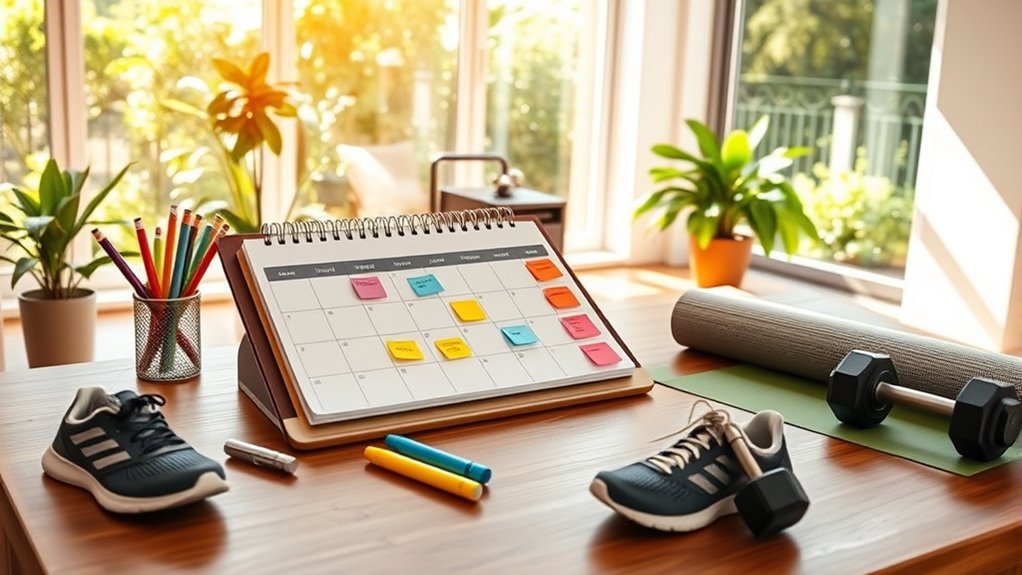
Creating a weekly exercise plan is fundamental for staying consistent and achieving your fitness goals. When you establish a clear schedule, you’re more likely to stick with your workouts and see progress over time. One of the key factors that influence your success is exercise consistency. By planning your workouts in advance, you remove the guesswork and reduce the chances of skipping sessions. This consistency helps your body adapt, build strength, and improve endurance. But to maintain this momentum, you also need to incorporate effective recovery strategies into your plan. Recovery isn’t just about resting; it’s about giving your muscles time to repair and your mind a chance to reset, which ultimately boosts your overall performance.
When developing your weekly plan, consider balancing different types of workouts. Include cardiovascular exercises like running, cycling, or swimming to increase stamina, along with strength training to build muscle. Flexibility and mobility exercises, such as yoga or stretching, are equally important and should be woven into your routine. A well-rounded plan ensures you don’t overtrain specific muscle groups, reducing injury risk and promoting long-term exercise consistency. It’s also wise to schedule lighter days or active recovery days where you engage in low-intensity activities. These help your body recover while keeping you active, preventing burnout or fatigue.
Your recovery strategies should be deliberate and tailored to your activity level. For example, if you push yourself hard during weightlifting or intense cardio sessions, plan for rest days or lighter workouts afterward. Incorporate techniques like stretching, foam rolling, or even massages to support muscle recovery. Proper nutrition and hydration are indispensable components as well; fuel your body with nutrient-dense foods and stay hydrated to facilitate healing and energy replenishment. Sleep plays a critical role, too—aim for quality rest to allow your body to repair tissues and consolidate gains from your workouts. Additionally, ensuring your exercise plan includes variety in workouts can prevent boredom and promote sustained motivation.
Finally, listen to your body. If you feel persistent soreness or fatigue, it’s a sign you need more recovery time. Adjust your plan as you go, making sure it remains sustainable and enjoyable. When your routine is well-balanced with varied workouts and thoughtful recovery strategies, you’re more likely to stay consistent. Over time, this disciplined approach not only helps you reach your fitness milestones but also fosters a healthy, lifelong exercise habit that keeps you motivated and injury-free.

Amazon Basics High-Density Foam Roller for Exercise and Recovery, 18 Inches, Black
- Color: Black
- Usage: Exercise and Recovery
- Length: 18 Inches
As an affiliate, we earn on qualifying purchases.
As an affiliate, we earn on qualifying purchases.
Frequently Asked Questions
How Can I Stay Motivated Throughout the Week?
To stay motivated throughout the week, use motivation techniques like rewarding yourself for small achievements and tracking your progress. Incorporate goal setting strategies by setting clear, achievable targets and reviewing them regularly. Keep your workouts enjoyable and varied to prevent boredom. Surround yourself with supportive friends or join fitness communities. Reminding yourself of your “why” helps maintain focus and enthusiasm, making it easier to stay committed daily.
What Should I Do on Rest Days?
Treat your rest days like a gentle Zen garden—focus on recovery and renewal. Do light stretching routines to keep your muscles supple and avoid stiffness. Incorporate nutrition tips like balanced meals rich in protein, healthy fats, and carbs to fuel your body. Rest days aren’t passive; they’re essential for growth. Use this time for mindfulness or gentle walks, helping you recharge both physically and mentally.
How Do I Adjust My Plan for Injuries?
When adjusting your plan for injuries, prioritize injury prevention and recovery strategies. You should modify exercises to avoid aggravating the injury, incorporating gentle stretches and low-impact activities like swimming or cycling. Rest days become more critical, and consult a healthcare professional for personalized advice. Listen to your body, gradually reintroduce activity, and focus on proper form to prevent future injuries. Always prioritize healing to guarantee a safe return to your routine.
Can I Incorporate Flexibility Exercises Daily?
You absolutely can incorporate flexibility exercises daily, and it might even boost your overall well-being. Regular stretching routines and yoga practices help improve your flexibility, reduce stress, and prevent injuries. Many experts believe daily movement keeps your muscles supple and your joints healthy. Just listen to your body—start slow, and gradually increase intensity. Consistency is key, so make flexibility exercises a daily habit and enjoy the long-term benefits they bring.
How Do I Track My Progress Effectively?
You can track your progress effectively by using exercise journaling, where you record workouts, durations, and how you feel each day. Focus on progress metrics like increased strength, endurance, or flexibility. Regularly review your journal to see improvements and identify areas needing adjustment. This keeps you motivated, helps set realistic goals, and guarantees you’re staying consistent with your exercise routine.
Conclusion
Creating a balanced weekly exercise plan is like tending a garden—you need variety, consistency, and care. By mixing cardio, strength, and rest days, you’ll nurture your body and see steady progress. Remember, it’s not about perfection but persistence. Stay committed, listen to your body, and adjust as needed. With patience and effort, your fitness journey will flourish like a vibrant, blooming flower. Keep moving forward—you’re capable of achieving your best!