
Many people overestimate the lifespan of appliances like refrigerators, dishwashers, and washing machines, expecting them to last 10 or more years. This often happens because of neglecting regular maintenance tasks like cleaning filters, inspecting hoses, or clearing vents. Modern appliances’ complex features and rapid tech changes also make you think they’ll last longer, but they usually don’t. If you want to avoid unnecessary replacements, understanding the true expected lifespan can help you plan better.
Key Takeaways
- People often expect refrigerators to last over 15 years, but many fail after 10 without proper maintenance.
- Dishwashers are believed to last a decade, yet they commonly need replacement after 7-8 years.
- Washing machines are frequently expected to endure 12+ years, despite an average lifespan of 8-10 years.
- Consumers overestimate the durability of microwaves, which typically last around 5-7 years.
- Expectations for older models’ longevity ignore the impact of technological obsolescence and lack of routine upkeep.
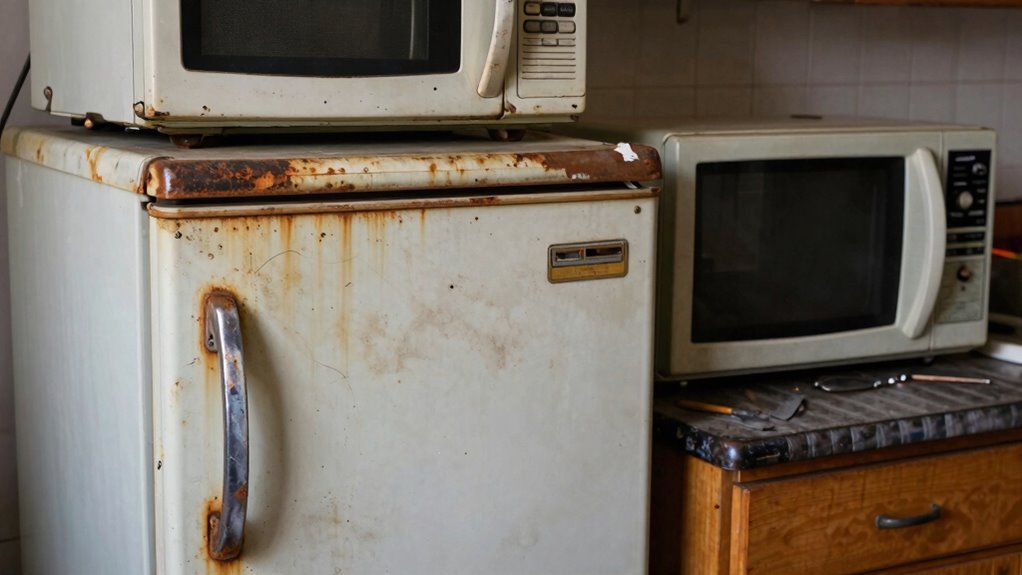
Many people assume that appliances last much longer than they actually do, leading to unexpected breakdowns and costly replacements. You might think your refrigerator or dishwasher will serve for a decade or more, but the truth is, their actual lifespan often falls short of those expectations. One key reason for this disconnect is that many overlook the importance of proper maintenance routines. Regularly cleaning filters, inspecting hoses, and ensuring vents are clear can markedly extend your appliances’ life. Yet, it’s easy to forget these small tasks, especially when your busy schedule takes priority. Neglecting routine maintenance speeds up wear and tear, making appliances more prone to failure long before their expected lifespan. Additionally, the rapid pace of technological advancements means newer models often incorporate more complex components that may not last as long if not properly maintained. Another factor that influences how long your appliances last is the rapid pace of technological advancements. Manufacturers continually introduce new features and smarter designs, which often lead to a shorter lifecycle for older models. As appliances become more sophisticated, they also tend to require more specialized repairs. What once might have lasted 10 to 15 years can now be expected to last around 8 to 12 years, partly because newer models incorporate more complex components that are sensitive to issues if not properly maintained. The push for innovation sometimes means that manufacturers design appliances with shorter lifespans to encourage quicker upgrades, a trend that catches many consumers off guard. You might also underestimate how quickly technology evolves and how that impacts your appliances. When you buy a new washing machine or oven, you might expect it to last for many years, but within a few years, newer, more efficient models with advanced features hit the market. This influx of smart appliance technology can make your current appliance feel outdated, even if it’s still functional. Sometimes, the cost of repairing a slightly outdated machine isn’t worth it compared to upgrading to a model with the latest technology. Being aware of appliance lifespan estimates can help you make informed decisions about repairs and replacements. Understanding these realities can help you set more accurate expectations and plan better for maintenance and replacements. Keeping up with regular maintenance routines can delay the need for a full replacement, saving you money in the long run. Meanwhile, staying informed about technological advancements allows you to recognize when a repair might be a temporary fix versus a sign it’s time for an upgrade. By balancing proper care with awareness of how innovation affects appliance longevity, you can avoid the frustration of unexpected breakdowns and better manage your household budget. It’s also beneficial to consult reliable appliance lifespan data to set realistic expectations based on the specific models you own.
refrigerator filter cleaning kit
As an affiliate, we earn on qualifying purchases.
As an affiliate, we earn on qualifying purchases.
Frequently Asked Questions
How Can I Extend My Appliance’s Lifespan Effectively?
To extend your appliance’s lifespan effectively, prioritize regular maintenance and keep them clean. Use energy-efficient settings to reduce wear and tear while saving on energy costs. Avoid overloading or misusing appliances, and promptly fix minor issues before they escalate. By caring for your appliances this way, you’ll improve their durability, maximize energy efficiency, and achieve significant cost savings over time. Proper upkeep truly makes a difference.
Are There Specific Brands Known for Longer-Lasting Appliances?
A wise person once said, “You get what you pay for.” When it comes to longer-lasting appliances, you should look for brands known for reliability and durability. Brands like Whirlpool, Bosch, and Miele consistently rank high for product longevity and quality. These companies invest in better materials and craftsmanship, so choosing their appliances can considerably extend their lifespan and reduce your replacement costs over time.
When Is the Right Time to Replace an Appliance?
You should replace an appliance when it becomes inefficient or costly to repair. Consider its energy efficiency—older models often consume more power, raising your bills. Conduct a cost analysis comparing repair costs to replacement expenses. If your appliance’s performance declines or repairs exceed half the cost of a new one, it’s time to upgrade. Doing so guarantees you save money long-term and preserve the best energy efficiency in your home.
Do Maintenance Habits Significantly Impact Appliance Longevity?
Think of your appliances as delicate plants; proper maintenance helps them thrive longer. Your habits considerably impact appliance efficiency and energy savings, which in turn extend their lifespan. Regular cleaning, timely repairs, and following usage guidelines prevent unnecessary wear and tear. By caring for your appliances, you not only boost their longevity but also save money on energy bills, ensuring they serve you well for years to come.
What Are Common Signs an Appliance Is Nearing Failure?
You’ll notice your appliance’s energy efficiency declines, which often signals it’s nearing failure. Signs include unusual noises, longer cycle times, or inconsistent performance, leading to higher energy bills and a poor cost comparison over time. If your appliance struggles to operate smoothly or shows frequent breakdowns, it’s a clear sign it’s reaching the end of its lifespan. Addressing these issues early can save you money and extend its usefulness.
Conclusion
So, next time your fridge outlives its welcome by years or your phone seems to defy aging, remember: appliances are like wise old trees—sometimes they stand longer than expected, but don’t plant your hopes too high. By understanding their true lifespans, you can avoid the disappointment of premature breakdowns. Embrace the natural cycle, and treat your appliances like cherished books—appreciate their chapters without expecting them to last forever.