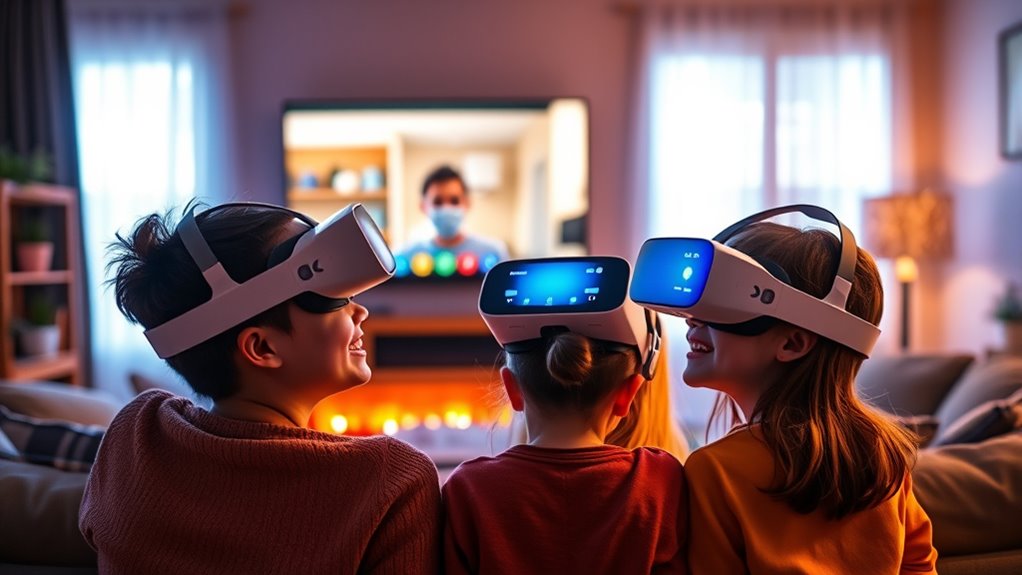

Video calls and VR are transforming the way you connect with family, making distant bonds feel closer than ever. High-quality video platforms allow real-time interaction, while features like virtual backgrounds and shared activities boost engagement. VR adds an immersive layer, letting you enter digital spaces with avatars that enhance expressiveness and fun. As these technologies become more affordable and user-friendly, you’ll find new ways to create meaningful memories together—discover how these innovations can strengthen your family ties.
Key Takeaways
- High-quality video calls enable real-time, immersive family interactions that mimic in-person gatherings across distances.
- Virtual platforms offer features like screen sharing and breakout rooms to enhance engagement during family reunions.
- VR headsets create realistic digital environments where family members can interact as avatars, strengthening emotional bonds.
- Virtual reunions can be held regularly for birthdays, holidays, or casual catch-ups, maintaining strong family connections.
- Combining video calls and VR technology fosters meaningful, shared experiences that keep families emotionally close regardless of location.

In today’s world, staying connected with family members across distances has become easier than ever thanks to advances in technology. Virtual reunions have transformed the way families celebrate milestones, holidays, or just catch up. Instead of relying solely on phone calls or static video chats, you can now create immersive experiences that make everyone feel closer. These virtual reunions often involve high-quality video calls, where multiple family members can interact in real time, sharing stories, laughter, and even virtual meals. The key is that these experiences go beyond simple video chatting; they’re designed to foster meaningful connections despite physical separation.
By using modern platforms, you can host large family gatherings that feel almost like being in the same room. Features like screen sharing, virtual backgrounds, and breakout rooms allow family members to participate in different activities simultaneously, mimicking the dynamics of in-person reunions. For example, you could organize a virtual game night or a group cooking session, where everyone follows the same recipe and shares their progress. These immersive experiences make everyone feel involved, regardless of their location. It’s a powerful way to bridge gaps created by geography, age differences, or busy schedules.
Virtual reunions aren’t just about seeing each other’s faces—they’re about creating shared moments. With the help of VR technology, you can take this a step further. Virtual reality headsets enable you to enter a digital space that feels remarkably real. Imagine putting on your VR headset and finding yourself in a cozy living room with your loved ones, all avatars representing each family member. You can look around, gesture, and even feel more present than a typical video call allows. This level of immersion makes conversations more natural and expressive, helping to strengthen bonds that might otherwise feel distant or superficial. As VR hardware becomes more affordable and user-friendly, these experiences are becoming accessible to more families.
These immersive experiences aren’t limited to special occasions. They can become a regular part of your family’s life, making it easier to stay connected with relatives who live far away or are unable to travel. As technology becomes more accessible and user-friendly, you’ll find that virtual reunions and VR interactions can be tailored to fit your family’s needs. Whether it’s celebrating birthdays, sharing holidays, or simply catching up, these tools help you create meaningful memories, no matter the physical distance. The combination of virtual reunions and immersive experiences is reshaping how families stay close, emphasizing connection, engagement, and shared moments that transcend borders.

Stroller Organizer with Cup Holder, Non-Slip Stroller Caddy Baby Essentials
- Large Capacity Storage: Holds bottles, diapers, toys, snacks
- Ideal Baby Shower Gift: Perfect for new moms and dads
- Universal Compatibility: Fits Uppababy, Baby Jogger, more
As an affiliate, we earn on qualifying purchases.
Frequently Asked Questions
How Do VR Family Apps Ensure User Privacy and Data Security?
VR family apps protect your privacy by implementing strict privacy protocols and using data encryption to secure your information. They often require secure login methods and limit data sharing, ensuring your personal details stay private. Developers regularly update security features to guard against threats. By prioritizing these measures, they help you feel safe while connecting with loved ones in virtual environments.
What Are the Best VR Headsets for Family Use?
Imagine slipping into a cozy, secure cocoon—choose a VR headset that’s lightweight and comfortable, like Oculus Quest 2, perfect for family use. It offers excellent comfort and built-in parental controls, ensuring safe experiences for kids. Meta’s headset is user-friendly, making it ideal for family bonding. Prioritize comfort and safety features to keep everyone engaged and secure while exploring virtual worlds together.
How Affordable Are VR Setups for Regular Families?
VR setups can be quite affordable for regular families, especially if you compare costs carefully. There are budget options like Oculus Quest 2 or other standalone headsets that cost less than high-end models, making them accessible. By doing a cost comparison, you’ll see that you don’t need to spend a fortune to enjoy immersive experiences. With some research, you can find a VR system that fits your family’s budget and provides great value.
Can VR Help Strengthen Relationships Across Long Distances?
Sure, virtual bonding in VR can actually make you feel closer than a regular call—who knew? By immersing yourself in shared experiences, you strengthen emotional connections across long distances. VR creates a space where you can laugh, play, and interact more naturally, bridging the gap that video calls often leave. So, yes, VR helps you build genuine relationships, even if you’re miles apart. It’s like hugging, but with a headset.
What Are the Common Technical Issues With Video Call Platforms?
You often face technical issues with video call platforms, like connection stability and audio quality disruptions. These problems can cause lag, frozen screens, or muffled sound, making conversations frustrating. To improve your experience, guarantee a strong internet connection, use updated devices, and select platforms known for reliable performance. Troubleshooting your network and closing background apps can also help maintain smooth, clear communication during calls.
Conclusion
As much as video calls and VR promise to bridge the distance, they can’t quite replace the warmth of a real hug or the spontaneous laughter in person. You might find yourself marveling at how technology keeps you connected, yet feeling oddly more alone. Ironically, these tools can remind you that no matter how advanced, they still can’t fully replicate the simple joy of being truly present with loved ones. Sometimes, the best connection remains just out of reach.