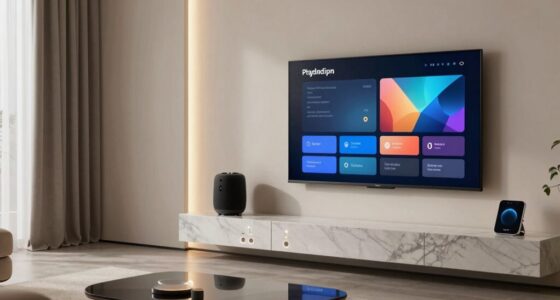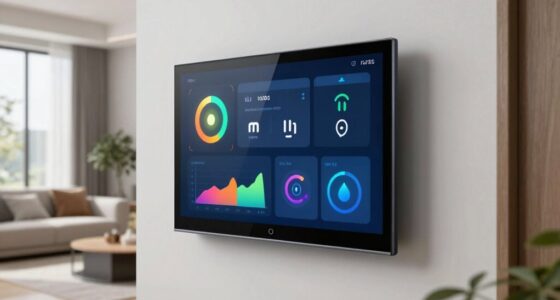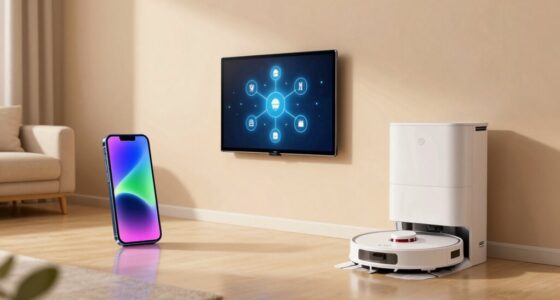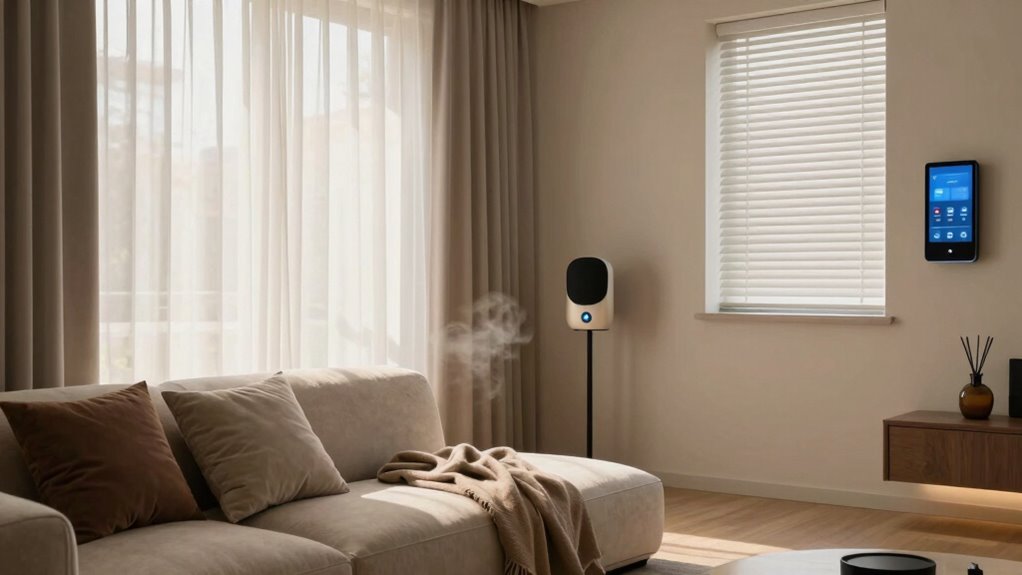

To build a calm smart home, focus on seamless device integration using a single app or voice command to reduce clutter and mental distraction. Optimize device placement away from noisy areas, and incorporate acoustic treatments like rugs, curtains, or panels to absorb sound. Regular updates and maintenance keep everything running smoothly, while combining thoughtful placement with soundproofing ensures tranquility. If you want to learn more about creating a serene, smart space, keep exploring these key strategies.

Turn the school run and nap time into listening time
- Thousands of audiobooks, podcasts and originals
- Listen on your phone, tablet or Echo — also offline
- Cancel anytime
Key Takeaways
- Integrate smart devices within a unified ecosystem for seamless control and reduced clutter.
- Incorporate acoustic treatments like rugs, curtains, and panels to absorb noise and improve tranquility.
- Position devices and speakers thoughtfully to minimize sound transmission and interference.
- Regularly maintain and update devices and acoustic solutions for optimal performance and calmness.
- Balance device placement with soundproofing techniques to create a peaceful, harmonious environment.
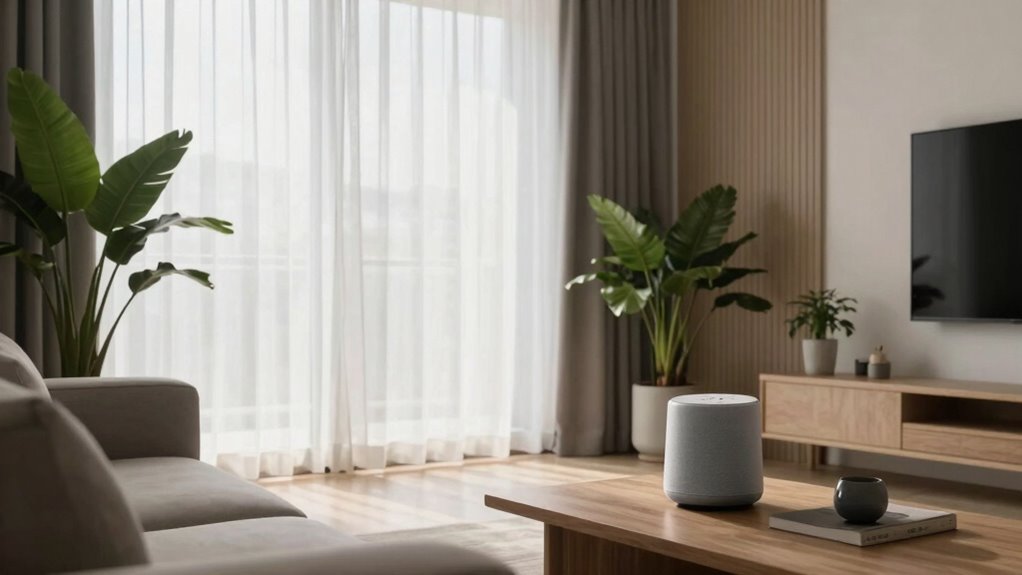
Creating a calm smart home starts with thoughtful planning and intentional choices. The way you integrate your devices can make all the difference in creating a peaceful environment. When considering smart device integration, focus on systems that work seamlessly together, allowing you to control everything from a single app or voice command. Avoid cluttered setups with incompatible gadgets, as disjointed technology can lead to frustration and noise. Opt for a unified ecosystem that prioritizes simplicity and ease of use, giving you quick access to lighting, climate control, security, and entertainment. This streamlined approach reduces the mental clutter that often comes with managing multiple devices, helping you maintain a calm atmosphere. Ensuring your smart home components are easy to control can significantly enhance your overall sense of tranquility.
Alongside smart device integration, paying attention to acoustic treatment options is vital for creating a tranquil space. Noise can easily disrupt the serenity you’re trying to cultivate, so choose acoustic solutions that absorb or diffuse sound effectively. Soft furnishings like thick rugs, upholstered furniture, and heavy curtains can markedly reduce echo and background noise. Installing acoustic panels or wall treatments designed for sound absorption can make a noticeable difference, especially in open-plan areas or rooms with hard surfaces. These treatments don’t have to be intrusive; many sleek, modern options blend seamlessly into your decor while dampening unwanted sound. By controlling the acoustics, you create a space where sounds are more balanced and less jarring, fostering a sense of calm. Incorporating soundproofing techniques can further enhance the peaceful environment you desire. Additionally, selecting sound-absorbing materials that complement your decor can help maintain aesthetic appeal without sacrificing function. Being mindful of device placement also contributes to reducing noise transmission and maintaining a peaceful atmosphere.
In addition to integrating your devices thoughtfully and managing acoustics, consider the placement of your smart home components. Keep speakers, sensors, and other gadgets in locations that minimize noise transmission and avoid cluttering your living space. Smart devices should serve to enhance your environment, not add to the chaos. For instance, placing voice assistants away from noisy appliances or high-traffic areas ensures clear communication and reduces frustration.
Finally, don’t overlook the importance of routine. Regularly review and update your smart device setup to guarantee it remains simple and unobtrusive. Regularly maintaining acoustic treatments by cleaning or replacing panels helps sustain their effectiveness. When you combine careful device integration with effective acoustic treatment options, you create a home that’s not only smart but also peacefully quiet. This balance allows you to enjoy the benefits of modern technology without sacrificing the tranquility you seek, making your home a true sanctuary.
smart home hub with unified app control
As an affiliate, we earn on qualifying purchases.
As an affiliate, we earn on qualifying purchases.
Frequently Asked Questions
How Can I Reduce Background Noise From Smart Devices?
To reduce background noise from smart devices, carefully consider smart device placement, avoiding areas where sound easily travels or amplifies. Use sound masking techniques, like white noise machines or soft background music, to blend device sounds into your environment. Additionally, adjust device settings to minimize alerts and notifications. Regularly update firmware to guarantee peak performance and quieter operation, creating a more peaceful, calm smart home atmosphere.
What Are the Best Soundproofing Options for a Smart Home?
To soundproof your smart home, start with acoustic panels on walls and ceilings to absorb noise. Incorporate sound masking systems to create a consistent, soothing background sound that minimizes device noise distractions. Seal gaps around doors and windows with weatherstripping to block external sounds. These strategies work together to reduce noise, making your smart home calmer and more peaceful while enhancing your overall comfort.
How Do I Control Smart Device Alerts to Minimize Noise?
Think of your smart home as a symphony—you control the volume and tone. You can manage device sound settings and alert customization to minimize noise. Adjust notification sounds, mute or disable alerts during certain hours, and prioritize critical notifications. By doing so, you create a peaceful environment where alerts serve you, not overwhelm you. Your home becomes a haven of calm, with every alert harmonizing seamlessly into your daily life.
Can Smart Home Technology Help Improve Sleep Quality?
Yes, smart home technology can help improve your sleep quality. You can use smart sleep tracking devices to monitor your sleep patterns and identify disruptions. Pair these with noise-canceling devices to block out disturbances, creating a peaceful environment. Automate your smart home to dim lights, adjust temperature, and turn off alerts at bedtime, ensuring a calm atmosphere that promotes restful sleep and overall well-being.
What Privacy Measures Are Recommended for a Quiet Smart Home?
You should prioritize adjusting privacy settings on all your smart devices to control data sharing and access. Enable data encryption wherever possible to protect your personal information from unauthorized access. Regularly review app permissions and disable features that aren’t necessary for your routine. Using a dedicated network for your smart home devices also adds an extra layer of security, ensuring your quiet, calm environment stays private and secure.
Conclusion
A calm smart home is like a peaceful garden, where every element harmonizes to create serenity. By choosing quiet devices, gentle lighting, and mindful automation, you plant seeds of tranquility that grow into a sanctuary of calm. Remember, your home’s atmosphere reflects your inner peace—nurture it with intention. With each deliberate choice, you cultivate a space where noise fades, and true calm blossoms, turning your house into a sanctuary of serenity.
Fall Picks
fall essentials
As an affiliate, we earn on qualifying purchases.