
A good smart camera placement plan involves carefully choosing locations that maximize coverage while ensuring reliable Wi-Fi signals. Position cameras high enough to prevent tampering and at key entry points or large areas for thorough security. Avoid obstacles and interference, and consider environmental factors like weather or lighting. Regularly check and adjust angles for optimal coverage. If you want to learn more about creating an effective layout, keep exploring these essential strategies.
Key Takeaways
- Position cameras near Wi-Fi sources, minimizing obstacles to ensure reliable wireless connectivity.
- Place cameras at strategic high points to prevent tampering while capturing detailed footage.
- Use wide-angle or multiple cameras to cover large areas without redundancy.
- Install outdoor cameras with weatherproof features and concealment for durability and vandal resistance.
- Regularly inspect, adjust angles, and troubleshoot to maintain optimal coverage and performance.
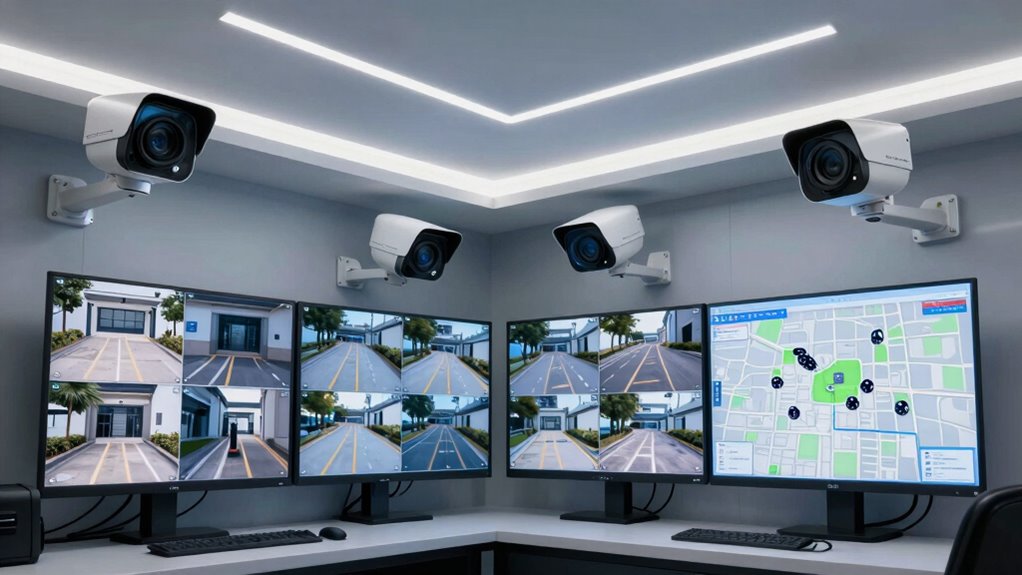
Have you ever wondered how to enhance your security camera setup for maximum coverage and effectiveness? The key lies in a well-thought-out placement plan that considers both technical and environmental factors. First, focus on guaranteeing your cameras have reliable wireless connectivity. A strong Wi-Fi signal is essential; otherwise, you risk lagging footage or lost connections. Position your cameras close enough to your router or consider installing Wi-Fi extenders if needed. This way, your cameras can transmit footage smoothly without interruptions, providing you with real-time updates and clear recordings.
Lighting considerations also play a vital role in smart camera placement. You want your cameras to perform well both day and night, which means avoiding areas with direct glare or overly bright lights that can wash out the image. Aim for locations that have consistent lighting or, better yet, install infrared or low-light cameras in darker spots. Proper lighting ensures your footage remains clear, making it easier to identify faces or details in case of an incident. If your property has areas prone to shadows or uneven lighting, consider adding external lighting fixtures to enhance visibility without disturbing the camera’s field of view.
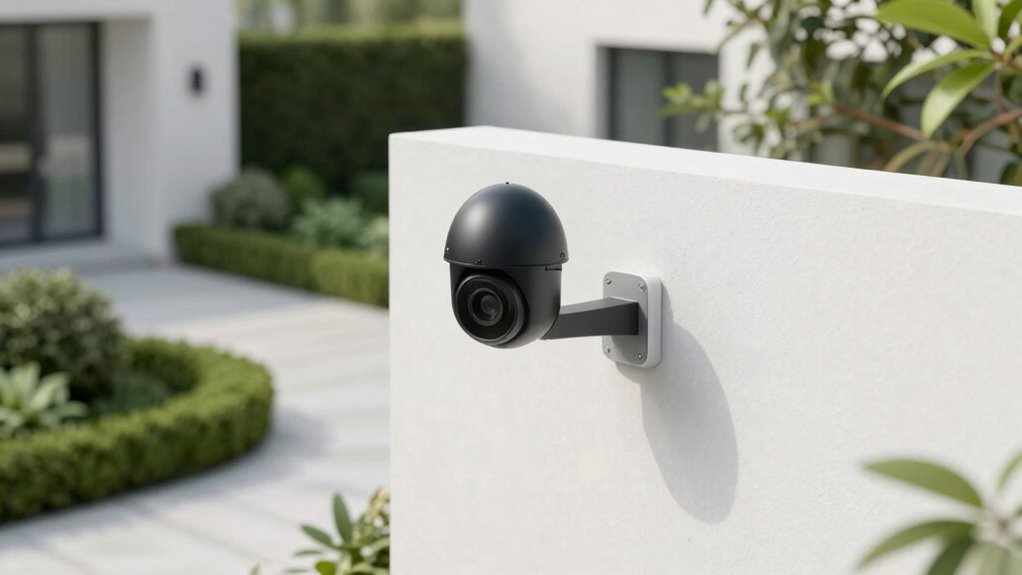
When planning your camera positions, think about coverage angles. Place cameras high enough to avoid tampering but not so high that they diminish image detail. Wide-angle cameras are excellent for covering large areas like driveways or yards, but don’t forget to account for blind spots. Position cameras at intersections or entry points where movement is most likely. Secure mounting points that allow for easy adjustments so you can fine-tune angles after installation. Remember, a good placement plan minimizes overlaps while maximizing coverage, reducing the number of cameras needed while maintaining thorough surveillance.
Additionally, consider the environment surrounding your cameras. Weatherproofing is essential if you’re placing cameras outdoors, so choose models rated for outdoor use and ensure they’re protected from elements like rain, snow, or extreme temperatures. Concealment can be beneficial, too; hiding cameras behind foliage or fixtures can prevent vandalism or tampering. Regularly inspect your setup to confirm all cameras are functioning properly and maintain ideal positions. Incorporating environmental factors into your planning helps ensure long-term reliability and effectiveness of your security system. Moreover, understanding wireless connectivity issues can help you troubleshoot and optimize your setup for consistent performance. It’s also helpful to consider camera maintenance to keep your system operating at peak performance over time. Additionally, ensuring your cameras are positioned to avoid interference from obstacles can significantly improve signal strength and image clarity.
In essence, a good smart camera placement plan balances technical reliability, environmental factors, and strategic positioning. By paying attention to wireless connectivity and lighting considerations, you’ll create an effective security system that provides peace of mind and reliable protection. Proper placement ensures your cameras do their job well, capturing clear footage and covering the critical areas of your property.
outdoor weatherproof security camera
As an affiliate, we earn on qualifying purchases.
As an affiliate, we earn on qualifying purchases.
Frequently Asked Questions
How Often Should Camera Placements Be Reviewed and Adjusted?
You should review and adjust camera placements regularly, especially when you notice changes in camera height or lighting conditions. Typically, check every few months or after significant environmental changes to guarantee ideal coverage. Adjust angles or positions if lighting creates glare or shadows, and ensure cameras remain secure. Staying proactive helps maintain clear, effective monitoring, preventing blind spots and ensuring your security system adapts to evolving conditions.
What Are the Legal Considerations for Smart Camera Placement?
You should prioritize legal regulations and privacy concerns when placing smart cameras. Make sure your camera placement complies with local laws, avoiding private areas like bathrooms or bedrooms without consent. Respect neighbors’ privacy by avoiding intrusive angles. Stay informed about regulations on recording audio or footage, and display clear signage if necessary. Regularly review your camera setup to ensure ongoing compliance, and consult legal guidance to prevent privacy violations.
How Do Weather Conditions Affect Camera Performance?
Weather impact can substantially affect your camera’s performance, especially in harsh conditions. Rain, snow, and extreme temperatures can impair image quality and cause malfunctions. To guarantee camera durability, you should choose models rated for outdoor use, with weather-resistant features like waterproof and dustproof casings. Regular maintenance and protective covers also help your cameras withstand the elements, maintaining clear footage and extending their lifespan in varying weather conditions.
Can Smart Cameras Be Integrated With Existing Security Systems?
Your smart cameras can absolutely be integrated with existing security systems, transforming your setup into an unstoppable fortress. However, you should stay vigilant about privacy concerns, ensuring your data is protected. Look for cameras with strong data encryption and compatibility features. By doing so, you seamlessly enhance your security network without compromising your privacy, making your home safer than ever while keeping your personal information secure.
What Is the Typical Cost of Implementing a Smart Camera Placement Plan?
Implementing a smart camera placement plan typically costs between $500 and $2,000, depending on the number of cameras and features you choose. Remember, regular camera maintenance is essential to keep your system functioning properly. Address privacy concerns by positioning cameras thoughtfully and ensuring secure data storage. Investing in quality equipment and professional installation can prevent costly repairs later, providing you peace of mind and effective security coverage.
Conclusion
By following this smart camera placement plan, you’ll transform your space into an impenetrable fortress—so secure, even Houdini would be stumped. With strategic positioning, you’ll see intruders surrender before they even step foot inside, while your peace of mind soars to new heights. Remember, a well-placed camera isn’t just security; it’s your personal guardian angel, watching over everything with unwavering vigilance. Get it right, and you’ll have peace of mind so solid, it’s practically unbreakable.