
To avoid costly dead ends, start with a clear, manageable plan focusing on energy-efficient and compatible devices. Prioritize easy upgrades like smart lighting and voice control first, then expand gradually with security and automation features. Choose products that support open standards and integrate seamlessly through a central hub or app. This approach guarantees future compatibility and flexibility. Keep security in mind early on, and you’ll build a reliable, cost-effective smart home. If you keep exploring, you’ll discover more essential tips.
Key Takeaways
- Develop a clear, phased plan focusing on scalable, compatible devices to prevent costly upgrades later.
- Prioritize universal standards and open platforms to ensure future device interoperability.
- Start with core systems like voice control and energy management for immediate benefits and flexibility.
- Research and select brands supporting popular voice assistants and hubs for seamless expansion.
- Incorporate security measures early to avoid costly retrofits and ensure system reliability.
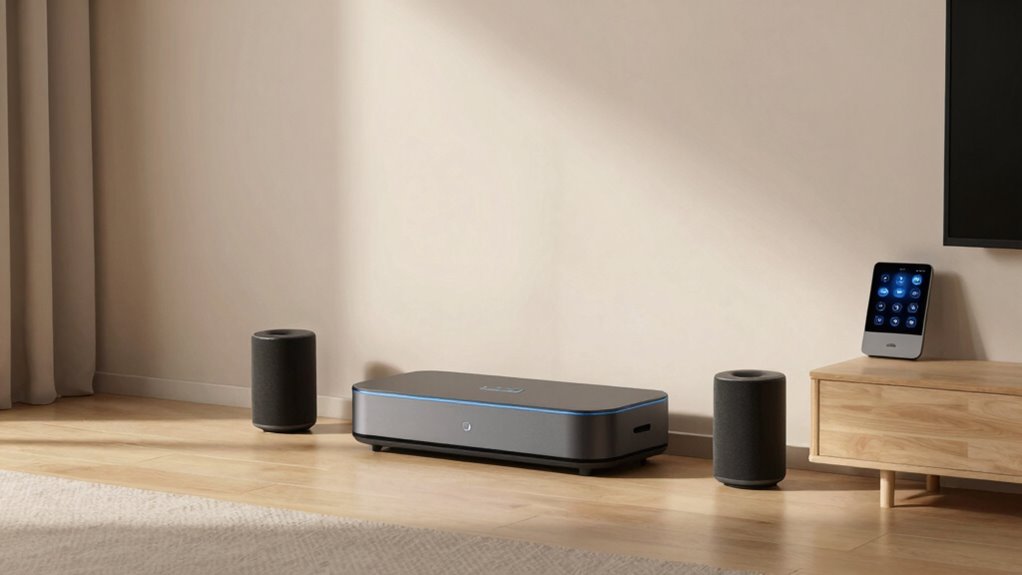
Upgrading your home to a smart home can seem overwhelming at first, but with a clear plan, the process becomes manageable. The key is to start with a solid foundation that aligns with your daily routines and future goals. The initial setup is crucial because it sets the tone for all subsequent upgrades, ensuring compatibility and ease of use. Begin by identifying the areas where smart technology can make the most impact—whether it’s convenience, security, or energy savings. Voice control is a great starting point because it offers an intuitive way to manage your devices without fumbling for switches or apps. With voice-activated assistants, you can turn on lights, adjust thermostats, or even lock doors simply by speaking commands. This not only boosts convenience but also helps streamline your daily activities.
Energy management is another essential element to consider early on. Smart thermostats, for example, allow you to optimize heating and cooling, reducing unnecessary energy consumption and lowering utility bills. When integrated properly, these devices can learn your schedule and preferences, automatically adjusting settings to maximize efficiency. As you expand your smart home, make sure that your devices are compatible and can communicate seamlessly. Avoid the trap of buying isolated gadgets that don’t integrate well, which can lead to frustration and costly dead ends. A unified ecosystem, often managed through a central hub or app, keeps things simple and reliable. A comprehensive approach to system design can prevent compatibility issues down the line and ensure your smart home functions smoothly as you add more devices.
Planning your upgrade path involves prioritizing devices that deliver the most value first. For example, smart lighting and voice control are relatively inexpensive and straightforward to install, yet they greatly enhance comfort and accessibility. Once those are in place, you can move on to more complex systems like security cameras or automated blinds. Taking the time to research brands and platforms that support open standards or offer compatibility with popular voice assistants and smart hubs can help prevent future roadblocks and ensure your system remains flexible as new devices emerge. Additionally, considering smart home security systems early on can provide peace of mind and integrate smoothly with other devices. Being aware of protocols and standards can also help you make informed choices and avoid compatibility issues as your system grows.
As an affiliate, we earn on qualifying purchases.
Frequently Asked Questions
How Do I Assess My Current Home Technology Compatibility?
To assess your current home technology compatibility, start by listing all your devices and noting their brands and models. Check if they support common standards like Zigbee or Z-Wave, which ease device integration. Look for compatibility challenges, such as proprietary systems or outdated hardware. Visit manufacturer websites or use compatibility apps to verify if your devices work seamlessly together, preventing costly upgrades and ensuring a smooth smart home upgrade.
What’s the Typical Cost Range for a Smart Home Upgrade?
Think of your upgrade as building a bridge; costs can vary. Typically, a smart home upgrade ranges from $1,000 to $5,000, depending on devices and complexity. To avoid surprises, prioritize smart device compatibility and set a realistic upgrade budgeting plan. This way, you guarantee your smart home evolves smoothly, avoiding costly dead ends, and creating a seamless, connected living environment tailored to your needs.
How Can I Ensure Future-Proofing During Upgrades?
To guarantee future-proofing during your smart home upgrades, prioritize devices with voice control compatibility and energy monitoring features. Choose widely supported platforms like Zigbee or Z-Wave, which offer better device integration and updates. Avoid proprietary systems that might limit expansion. Regularly update your firmware, and plan for scalable infrastructure, so you can easily add new devices without needing costly replacements, keeping your smart home flexible and up-to-date.
Are There Any Security Risks With Smart Home Devices?
Think of your smart home as a castle—its walls need guarding. Yes, there are security risks like hacking vulnerabilities and privacy concerns, but you can defend yourself. Use strong passwords, keep firmware updated, and choose trusted brands. Being proactive is like sharpening your sword before battle. Staying vigilant guarantees your devices serve you safely, not threats. With careful steps, you protect your digital fortress from potential breaches.
What Brands Offer the Most Reliable Smart Home Products?
You should look into brands like Amazon, Google, and Apple for reliable smart home products. They offer voice assistants that integrate seamlessly with various devices, making control easy. These brands also excel in energy management features, helping you save on electricity bills. Their products are generally secure and well-supported, reducing the risk of security issues. Choosing these brands guarantees a smooth, dependable smart home experience without costly dead ends.
Conclusion
Think of your smart home journey as a carefully navigated river cruise. With a clear map in hand, you avoid the hidden rocks and whirlpools that could sink your plans. By choosing your devices wisely and planning ahead, you stay afloat, enjoying a smooth voyage through the waters of automation. Soon, you’ll reach the peaceful harbor of a truly upgraded home—without the costly detours or dead ends. Bon voyage to your smart home adventure!