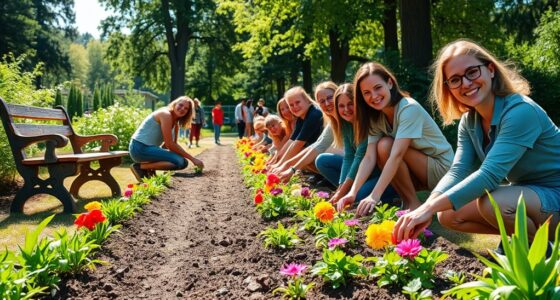
To stay socially engaged with healthy hobbies, try gardening or cooking, as they promote interaction, teamwork, and shared experiences. Gardening reduces stress, boosts physical activity, and fosters community bonds through neighborhood or group projects. Cooking encourages creativity, improves relationships, and turns solitary tasks into social occasions when shared. These activities support your mental and physical health simultaneously. If you’re interested, you’ll discover more ways to enjoy and integrate these fulfilling hobbies into your routine.
Key Takeaways
- Engage in community gardening to foster social bonds and participate in neighborhood activities.
- Join cooking classes or meal-sharing groups to build connections through shared culinary experiences.
- Participate in local hobby clubs or workshops focused on gardening, cooking, or other creative activities.
- Volunteer for community projects that involve physical activity and social interaction.
- Incorporate hobbies into daily routines to promote ongoing social engagement and mental well-being.

Have you ever considered how hobbies can boost your physical and mental well-being? Engaging in activities that bring you joy doesn’t just fill your free time—it also nurtures your mind and body. Healthy hobbies like mindful gardening and creative cooking are excellent ways to stay socially engaged while promoting your overall health. These pursuits encourage you to connect with others, share your passions, and develop new skills, all while maintaining a sense of purpose and community. Incorporating supportive activities into your routine can further enhance your social connections and emotional resilience.
Hobbies like gardening and cooking boost health, foster connections, and bring joy through shared passions.
Mindful gardening is more than just planting flowers or vegetables; it’s a practice that grounds you in the present moment. As you tend to your garden, you focus on each task—whether it’s planting, watering, or weeding—with full attention. This intentional awareness reduces stress and cultivates patience. Plus, gardening creates opportunities to meet neighbors or join community gardening groups, fostering social bonds. Whether you’re swapping tips or simply sharing the beauty of your blooms, mindful gardening keeps you connected with others who share your interests. It also provides a gentle form of physical activity, improving your flexibility and strength, all while giving you a sense of accomplishment when your plants thrive.
Creative cooking is another rewarding hobby that keeps you socially engaged and enhances your well-being. When you experiment with new recipes or cuisines, you not only nourish your body but also stimulate your mind. Cooking with others—whether friends, family, or in a cooking class—turns a solitary task into a social event. Sharing your culinary creations or learning new techniques fosters conversation and strengthens relationships. Creative cooking pushes you to think outside the box, encouraging innovation and problem-solving. Plus, it offers a sense of pride and satisfaction when you serve a delicious meal you’ve crafted yourself. The act of preparing food together also promotes teamwork and communication, helping you build deeper connections.
Both mindful gardening and creative cooking serve as gateways to a more active social life. They’re hobbies that invite collaboration, conversation, and shared experiences, making them ideal for staying socially engaged. These activities not only improve your physical health through movement but also boost mental health by reducing stress, increasing feelings of accomplishment, and fostering community. When you incorporate such hobbies into your routine, you’re investing in yourself—your health, happiness, and social well-being. They remind you that taking care of yourself can be enjoyable and fulfilling, especially when shared with others who appreciate the same passions. So, pick up a trowel or a spatula today—your mind and body will thank you.
Frequently Asked Questions
How Can Hobbies Improve Mental Health?
Hobbies can boost your mental health by reducing stress and increasing happiness. When you practice mindfulness techniques through hobbies like creative journaling, you stay present and calm. Engaging regularly helps you process emotions, improve focus, and build resilience. By dedicating time to these activities, you create a positive routine that nurtures your mind, making it easier to navigate life’s challenges with a clearer, more relaxed mindset.
What Hobbies Are Best for Beginners?
Starting something new can feel overwhelming, but simple hobby ideas make it easier to begin. For beginners, beginner-friendly activities like easy cooking, walking, or beginner yoga are perfect. These hobbies are accessible, require minimal skills, and help you build confidence. Engaging in simple hobby ideas allows you to enjoy progress without frustration, turning small steps into meaningful habits that boost your mental health and social connections.
How Do Hobbies Help Reduce Loneliness?
Hobbies help reduce loneliness by fostering community involvement and skill development, which connect you with others who share your interests. When you participate actively, you create opportunities for meaningful conversations and friendships. As you develop new skills, your confidence grows, making it easier to engage socially. These activities provide a sense of belonging and purpose, effectively diminishing feelings of isolation and helping you build a supportive social network.
Can Hobbies Be Adapted for Physical Disabilities?
Yes, you can adapt hobbies for physical disabilities by exploring adaptive sports and accessible arts. You might try wheelchair basketball or seated yoga, which cater to your abilities. You can paint with adaptive tools or join online art classes designed for accessibility. These activities promote social engagement, boost confidence, and keep you active. Embracing adaptive sports and accessible arts guarantees your hobbies are inclusive, enjoyable, and tailored to your needs.
What Are Some Inexpensive Social Hobbies?
You can enjoy budget-friendly activities like joining local book clubs, community gardening, or attending free classes at your local library. These community-based interests help you stay socially engaged without spending much. Consider volunteering or participating in neighborhood events, which foster connections and support. These inexpensive hobbies provide meaningful social interaction, allowing you to meet new people and build relationships while keeping your costs low.
Conclusion
Incorporating healthy hobbies into your routine gently nurtures your social life, helping you stay connected without feeling overwhelmed. These activities softly weave joy and companionship into your days, creating a warm rhythm that supports your well-being. As you explore new interests, you’ll find your social garden blooming quietly and beautifully. Embrace these hobbies as tender opportunities to enrich your life, and watch as your connections flourish naturally, adding a gentle glow to your everyday experience.