
To create calm spaces with soft blues, choose gentle shades like powder or sky blue paired with neutrals like white or beige. Incorporate natural textures such as linen, wood, and houseplants to add warmth and depth. Use soft, warm lighting and keep clutter minimal to foster relaxation. Focus on balance and harmony in your décor, subtly enhancing your environment’s tranquility. If you explore further, you’ll discover more ways to transform your space into a soothing retreat.
Key Takeaways
- Choose soft blue shades like powder or pastel teal to promote tranquility and mental clarity.
- Pair light blues with neutral tones such as white or beige for an open, calming environment.
- Incorporate natural textures like linen, wood, and houseplants to deepen relaxation.
- Use soft, warm lighting and minimize clutter to enhance the soothing atmosphere.
- Add subtle decorative accents that echo blue themes to create harmony and visual interest.

Soft blues have the power to transform any space into a calming retreat. When you choose this hue, you’re tapping into the principles of color psychology, which reveals that blue tones promote tranquility and reduce stress. This isn’t just about aesthetics; it’s about creating an environment that supports relaxation and mental clarity. Whether you’re designing a bedroom, living room, or home office, incorporating soft blues can help you establish a peaceful atmosphere. To maximize this effect, consider interior design tips that enhance the soothing qualities of blue.
Soft blue hues promote tranquility and reduce stress, creating peaceful, calming spaces for relaxation and mental clarity.
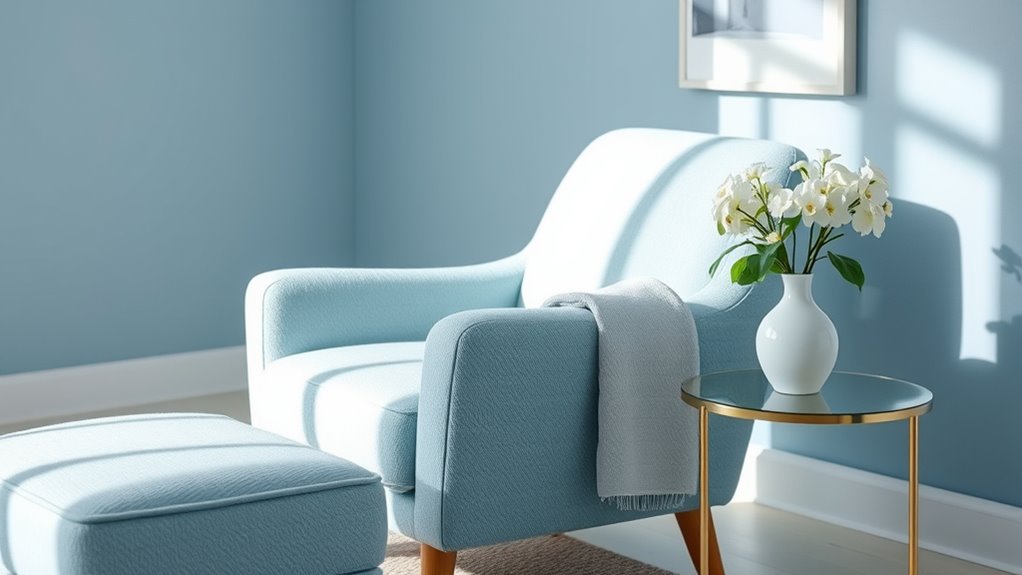
Start by selecting shades like powder blue, sky blue, or pastel teal. These softer tones are less stimulating than brighter blues, making them ideal for spaces meant for unwinding or focus. When using color psychology to your advantage, keep in mind that lighter shades tend to reflect more natural light, making your room feel more open and airy. Combine your soft blue walls with neutral colors like white, beige, or gray to create a balanced, harmonious look. This pairing amplifies the calming effect and keeps the space feeling cohesive.
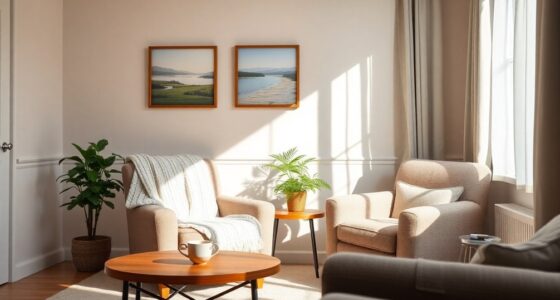
Incorporate natural materials and textures to complement your blue palette. Think linen curtains, woven rugs, or wooden furniture. These textures add warmth and depth, preventing the room from feeling cold or sterile. When it comes to interior design tips, consider adding elements of nature, such as houseplants or artwork inspired by water scenes. These touches reinforce the tranquil vibe and deepen your sense of serenity. Lighting is also vital—soft, warm lights work well to create a cozy ambiance, especially in the evenings. Avoid harsh overhead lighting that can disrupt the calming atmosphere you’re aiming for.
Another effective tip is to keep clutter to a minimum. A clean, organized space allows the soothing qualities of soft blue to shine and prevents visual chaos. Use storage solutions that hide away unnecessary items, and choose furniture with sleek, simple lines. The goal is to foster a sense of order, which directly contributes to mental calmness. When designing with soft blues, remember that balance is key. Don’t overpower the room with too many bold accents; instead, use subtle decorative pieces like throw pillows, art prints, or vases that echo your blue theme. This creates visual interest without compromising the tranquil vibe.
In the end, creating calm spaces with soft blues is about appreciating the power of color psychology and applying practical interior design tips. By thoughtfully selecting shades, textures, and accessories, you craft an environment that invites relaxation and peace. Your space becomes more than just a room—it becomes a sanctuary where you can breathe easily and find your center. Additionally, understanding the implications for physical and mental health of color choices can help you make more informed decisions to enhance your wellbeing.
Frequently Asked Questions
How Can I Incorporate Soft Blue Into Small Rooms Effectively?
You can incorporate soft blue into small rooms by using soothing accents like throw pillows or curtains to add calming touches. Opt for color blocking by painting one wall in a soft blue to create depth without overwhelming the space. Keep the rest of the room neutral, which enhances the tranquil vibe. This approach makes the room feel more open and serene, perfect for creating a peaceful environment.
What Lighting Options Enhance Soft Blue Decor?
Think of lighting as the gentle brushstrokes on your calm blue canvas. You should use warm lighting accents and mood-enhancing fixtures like dimmable LED bulbs or soft-glow lamps to highlight the soothing tones. These options create a cozy, inviting atmosphere, making your space feel like a peaceful retreat. Opt for indirect lighting or fixtures with diffusers to maintain the tranquil vibe and beautifully complement your soft blue decor.
Are There Color Combinations That Complement Soft Blue?
Yes, you can enhance soft blue by pairing it with complementary hues from the color wheel, like warm oranges or coral tones. These combinations create vibrant contrasts that make your space lively yet balanced. You might also consider neutral shades such as beige or soft gray to maintain calmness. Always test your chosen hues together first, ensuring they harmonize well and reflect the tranquil atmosphere you want to achieve.
How Does Soft Blue Affect Mood Over Time?
Think of soft blue as a gentle tide that gradually calms your emotional responses. Over time, its psychological effects foster relaxation, reduce stress, and promote a peaceful mood. You might notice that after spending days in a soft blue environment, your overall mood feels lighter, and anxiety diminishes. Soft blue’s soothing nature helps stabilize emotions, making it an ideal choice for creating spaces that encourage calmness and mental clarity.
Can Soft Blue Be Used in Outdoor Calming Spaces?
Yes, soft blue paint can be used in outdoor serenity spaces. It creates a calming effect that helps you relax and feel peaceful amid nature. Incorporate blue paint into furniture, fences, or decorative elements to enhance tranquility. Soft blues blend beautifully with natural surroundings, making your outdoor space more inviting and soothing. Use these shades strategically to foster a serene environment where you can unwind and enjoy outdoor serenity daily.
Conclusion
Remember, creating a calm space with soft blues isn’t just about looks—it’s about nurturing your well-being. Even if you think it’s too simple or doesn’t make a difference, try it. The gentle hue can transform your mood, reduce stress, and bring peace to your daily life. You deserve a sanctuary where you feel safe and relaxed. So, embrace the calming power of soft blues—you might just discover your new favorite refuge.