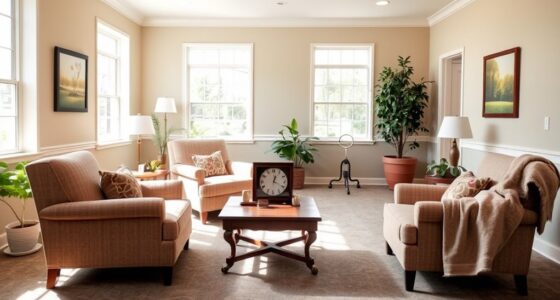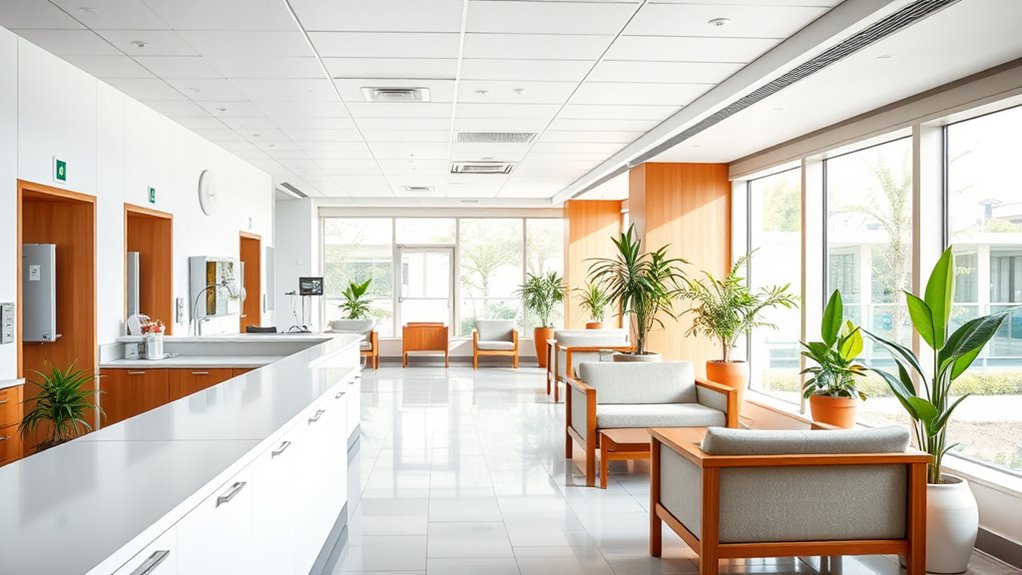

To balance clinical and home-like design, focus on creating a space that feels inviting yet maintains safety and infection control standards. Use smooth, non-porous materials that are easy to disinfect, and incorporate comfortable furnishings that support patient well-being. Clear layouts, natural light, and soft colors help foster a welcoming atmosphere. Making certain these elements harmonize with infection prevention measures ensures a healing environment. Explore how to achieve this balance for enhanced patient care in the sections ahead.
Key Takeaways
- Incorporate warm, inviting materials and furnishings that promote comfort while using non-porous, easy-to-clean surfaces for infection control.
- Design open, uncluttered spaces with natural light and soft acoustics to create a welcoming, home-like atmosphere.
- Use subtle partitions and privacy features that support both patient security and easy disinfection.
- Engage staff and patients in the design process to balance safety, functionality, and comfort perceptions.
- Prioritize flexible layouts and furnishings that adapt to individual needs, fostering a healing environment that blends clinical safety with homely warmth.
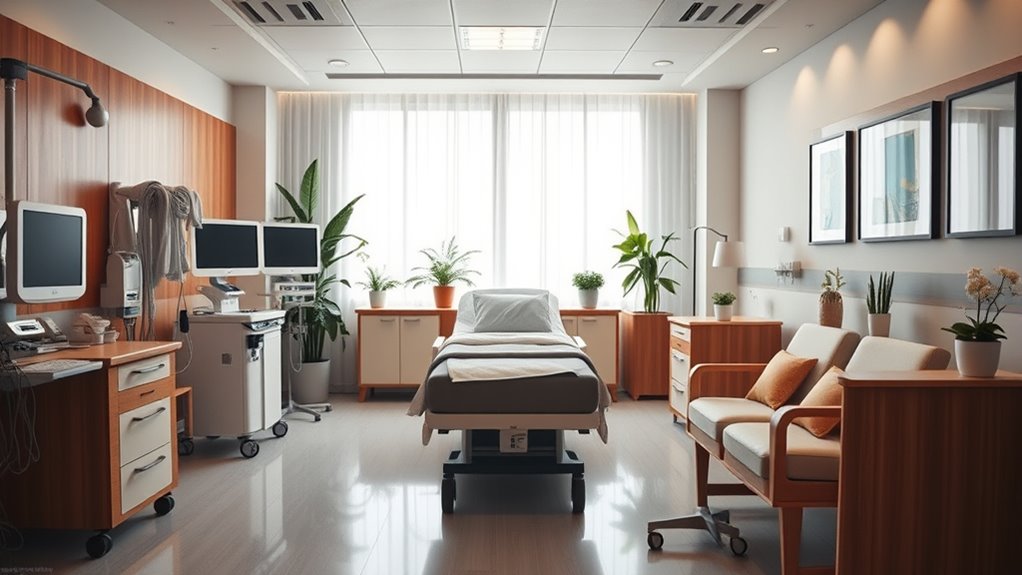
Creating healthcare environments that are both efficient and comforting can be a delicate balancing act. When designing spaces that foster patient comfort, you need to contemplate how the environment influences healing and overall well-being. At the same time, infection control must remain a top priority to prevent the spread of germs and ensure safety for everyone. Striking this balance isn’t easy, but it’s essential for delivering quality care that feels welcoming without compromising safety standards.
Start by selecting materials and furnishings that promote comfort but are also easy to clean and disinfect. Soft lighting and warm color schemes can make a space feel more inviting, helping patients feel relaxed and less anxious. However, these choices shouldn’t come at the expense of infection control; smooth, non-porous surfaces are preferable because they resist bacteria buildup and are simple to sanitize. Incorporate furniture that is durable and easy to wipe down, avoiding items with intricate designs or fabric that can harbor germs. This way, you create an environment where patient comfort is prioritized without creating hidden risks for infection.
Choose durable, easy-to-clean furnishings that enhance comfort without risking infection control.
Another key aspect is layout and spatial planning. Design patient rooms and common areas to feel open and inviting while allowing staff to move efficiently and maintain infection control protocols. Clear pathways and uncluttered spaces help prevent accidents and make cleaning routines more effective. Use barriers or partitions thoughtfully — they can provide privacy and a sense of home but should be easy to disinfect. When patients feel comfortable and secure, they’re more likely to engage actively in their care, which can also aid in infection prevention by reducing stress-related immune responses.
Lighting and acoustics also play crucial roles in creating a welcoming environment. Natural light and soft, adjustable fixtures can improve patient mood and comfort, but they shouldn’t compromise infection control measures. For example, windows should be easy to clean and free of drafts that could carry airborne contaminants. Similarly, sound-absorbing materials can reduce noise, making the space more peaceful, yet they need to be made of materials that can be sanitized thoroughly to avoid dirt and germs accumulating. Incorporating infection control considerations into design choices helps ensure a safe healing environment.
Finally, involve staff and patients in the design process whenever possible. Their insights can help identify what makes a space feel more like home and what protocols are necessary for infection control. Achieving this balance requires ongoing evaluation and flexibility, adapting the environment as new challenges or innovations in healthcare emerge. When you pay attention to these details, you’ll create spaces that support healing through comfort, while maintaining the rigorous standards needed to control infection and protect everyone.
Frequently Asked Questions
How Do Staff Adapt to Both Clinical and Home-Like Environments?
You adapt to both clinical and home-like environments through staff training that emphasizes environmental adaptability. By learning to switch between structured, medical settings and comfortable, homely spaces, you become more flexible and responsive to residents’ needs. This training helps you understand how to maintain professionalism while creating a warm, welcoming atmosphere, ensuring residents feel safe and cared for regardless of the environment’s design.
What Materials Are Best for Maintaining Hygiene in Home-Like Spaces?
Ever wondered which materials keep hygiene high and environments safe? For home-like spaces, opt for furniture with durability and easy-to-clean surfaces like sealed wood, laminate, or vinyl. These materials resist stains and bacteria, supporting sanitation. Prioritize sustainable options that withstand frequent cleaning. Are you choosing the right materials to guarantee both hygiene and comfort? By selecting durable, eco-friendly materials, you create a space that’s both inviting and easy to maintain.
How Is Patient Privacy Preserved in Open, Home-Inspired Designs?
You preserve patient privacy in open, home-inspired designs by implementing strategic zoning and soundproofing measures. Using virtual consultations allows sensitive conversations to happen privately, even in open spaces. Staff training is essential to guarantee staff understand confidentiality protocols and respect patient boundaries. By combining thoughtful space planning with technology and proper training, you create an environment that feels welcoming while maintaining the privacy patients need.
What Funding Options Support Balanced Clinical and Home-Like Environments?
You’ll find that funding mechanisms and grant opportunities are like treasure chests for creating spaces that blend clinical efficiency with cozy home-like comfort. Think big with government grants, private foundations, and specialized healthcare grants that support innovative designs. These resources can turn your vision into reality, helping you fund projects that prioritize patient privacy, comfort, and safety while maintaining the perfect balance between professionalism and homeliness.
How Do Design Choices Impact Patient Recovery and Satisfaction?
Your design choices directly influence patient recovery and satisfaction. Incorporate decorative elements that create a welcoming atmosphere and make spaces feel less clinical. Use lighting strategies that enhance comfort and promote positive mood, such as natural light or warm tones. These elements help patients feel more at ease, encouraging faster recovery and higher satisfaction. Thoughtful design fosters a healing environment where patients feel cared for and relaxed.
Conclusion
By balancing clinical precision with home-like warmth, you create spaces that heal and comfort, that support and inspire. You foster environments where safety meets familiarity, professionalism meets compassion, and function meets coziness. You design not just for efficiency, but for connection. In doing so, you craft a place where healing happens naturally, where care feels genuine, and where every detail invites trust, understanding, and well-being—because a balanced environment nurtures body, mind, and spirit alike.