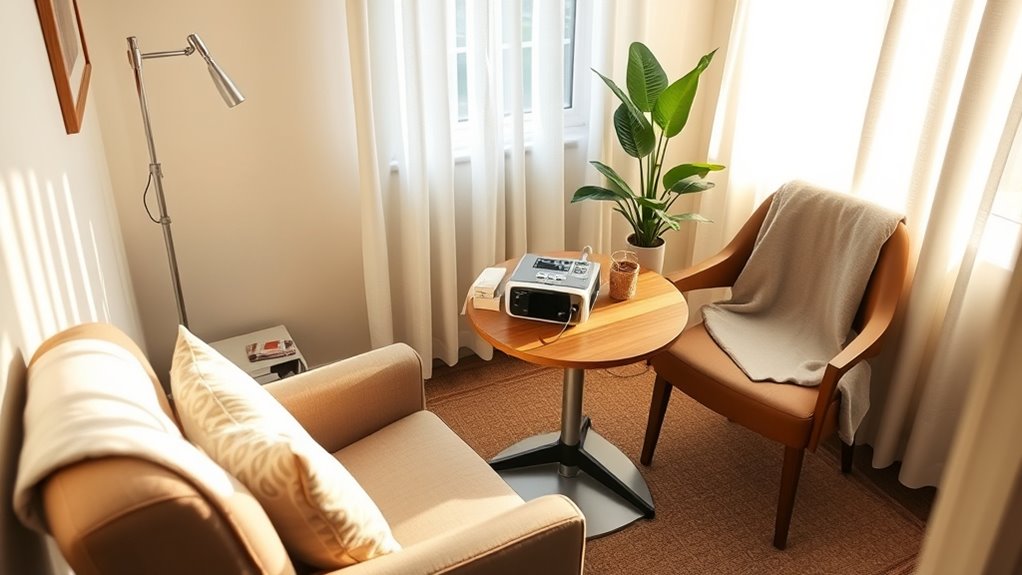

To set up a temporary care suite at home within 48 hours, choose a quiet, accessible room and clear clutter to create a calm, organized environment. Prepare safety features like grab bars and remove hazards. Stock essential supplies such as medications, wound care, and comfort items, labeling everything for easy access. Arrange familiar objects and routines to promote comfort. Focusing on these key steps quickly can make your space safe and welcoming—discover more tips to streamline this process effectively.
Key Takeaways
- Select a quiet, accessible room nearby amenities, clear clutter, and add soft lighting to create a calming environment.
- Implement safety measures like removing hazards, installing grab bars, and keeping emergency contacts and supplies within reach.
- Organize and label essential supplies, including medications and hygiene products, for quick access and efficient use.
- Incorporate familiar items, entertainment, and routines to promote comfort, normalcy, and mental stimulation for the loved one.
- Complete setup within 48 hours by planning ahead, preparing supplies, and utilizing technology for safety and monitoring.
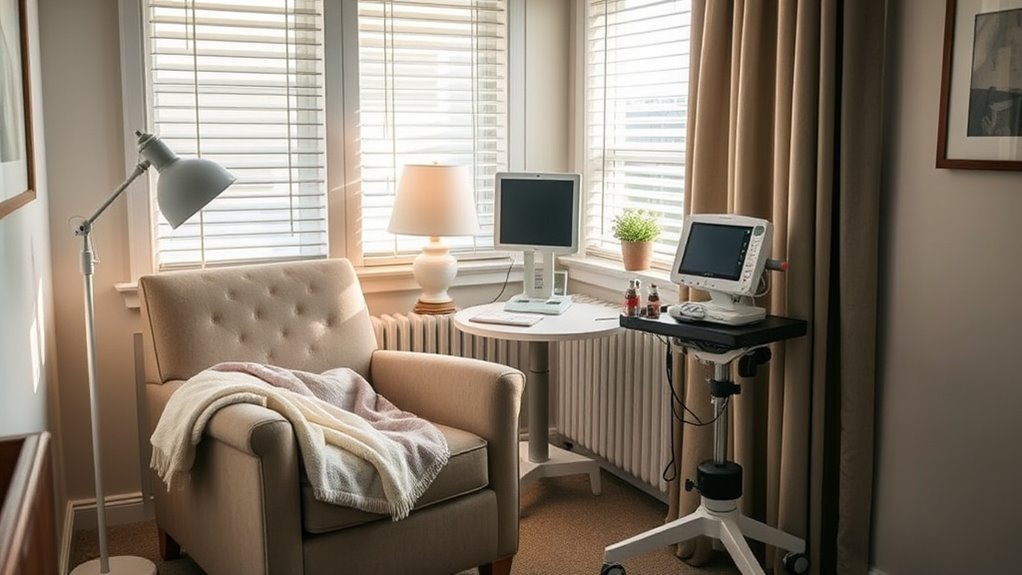
Caring for a loved one can be both rewarding and exhausting, especially when you need a break to recharge. If you’re feeling overwhelmed, setting up a temporary care suite at home can be a practical way to give yourself some relief without pulling your loved one out of their familiar environment. You can establish a comfortable, functional space in just 48 hours, allowing your loved one to receive attentive care while you get the rest you need.
Start by choosing a quiet, accessible room that’s close to essential amenities. Clear out clutter and create a calm atmosphere with soft lighting and familiar items like their favorite blanket or photos. This helps your loved one feel safe and at ease in the new space. Make sure the room is equipped with a comfortable bed or recliner, and ensure that there’s enough space for any mobility aids or medical equipment they might need. If necessary, arrange for portable devices like oxygen tanks or infusion pumps to be easily accessible.
Next, focus on safety and accessibility. Remove tripping hazards, add non-slip rugs, and install grab bars if needed. You’ll also want to keep emergency contact information, medications, and a phone within reach. If your loved one needs assistance with mobility, consider adding a transfer chair or a walker nearby. Having everything within arm’s reach minimizes stress during emergencies and makes caregiving more manageable.
Stock the room with essential supplies before you start, including medications, wound care supplies, hygiene products, and snacks or hydration options. Label everything clearly and keep a checklist handy to ensure nothing gets overlooked. If your loved one requires specific medical treatments or therapies, set up those supplies as well, so they’re ready to go at a moment’s notice. This preparation not only makes caregiving smoother but also reassures your loved one that they’re in capable hands.
Finally, think about comfort and entertainment. Bring in books, music, or other familiar items that can provide mental stimulation or relaxation. If your loved one uses a TV or tablet, ensure they’re set up with easy access and necessary apps. Establish routines that mirror their daily schedule, so they feel secure and maintain a sense of normalcy. Communicating clearly about what they can expect helps reduce anxiety and makes the transition to the care suite easier.
Creating a temporary care space at home doesn’t have to be complicated or time-consuming. With a little planning, you can set up a safe, comfortable environment in just 48 hours, giving both you and your loved one the support you need during challenging times. Incorporating appropriate technology such as simple monitoring devices can further enhance safety and peace of mind for caregivers and loved ones alike.
Frequently Asked Questions
What Legal Considerations Are Involved in Setting up a Home Care Suite?
You need to guarantee your home care suite complies with local health and safety regulations, including proper licensing and insurance. Check zoning laws and building codes to confirm the space is suitable for care activities. Obtain any necessary permits and consents, especially if renovations are involved. Also, understand privacy laws and confidentiality requirements to protect your loved one’s rights, and establish clear legal agreements with caregivers to define responsibilities.
How Can I Ensure Privacy and Security for the Care Recipient?
Sure, because everyone loves feeling like a secret agent, right? To guarantee privacy and security for your care recipient, install sturdy locks on doors, use privacy curtains, and set clear boundaries. Keep personal belongings secure, and limit access to sensitive areas. Regularly check security systems, and have a plan for emergencies. After all, protecting their privacy isn’t just smart; it’s like giving them a VIP pass to peace of mind.
What Are the Costs Associated With Creating a Temporary Care Space?
Creating a temporary care space costs vary based on your needs, space, and equipment. Expect to spend on essentials like a bed or recliner, medical supplies, and safety features, which can range from a few hundred to a few thousand dollars. You might also consider rentals or secondhand items to reduce costs. Budget for ongoing expenses such as cleaning supplies and additional healthcare tools to maintain a comfortable, functional environment.
How Do I Coordinate With Healthcare Professionals During Setup?
Did you know nearly 60% of caregivers feel overwhelmed? To coordinate with healthcare professionals during setup, start by reaching out early to discuss your loved one’s needs. Keep a detailed list of questions and necessary supplies. Schedule a quick call or visit to clarify medical requirements. Communicate regularly, and don’t hesitate to ask for advice or adjustments along the way. This guarantees the space meets safety and care standards effectively.
What Emergency Protocols Should Be Established in the Care Suite?
You should establish clear emergency protocols, including immediate steps for medical emergencies, fire safety, and power outages. Make sure you have quick access to emergency contacts, medical supplies, and first aid kits. Train everyone involved on these procedures, conduct regular drills, and ensure emergency numbers are visible. Keep essential medications and equipment handy, and establish a plan for quick evacuation if needed to guarantee everyone’s safety.
Conclusion
Setting up a temporary care suite at home can be a gentle way to provide support without disrupting daily life. With a little planning, you can create a welcoming space that offers peace and comfort for your loved ones. Remember, sometimes a quiet corner or a cozy nook can become a sanctuary when care needs arise unexpectedly. By preparing ahead, you’re softly ensuring their well-being, giving everyone a bit more room to breathe and feel cared for.