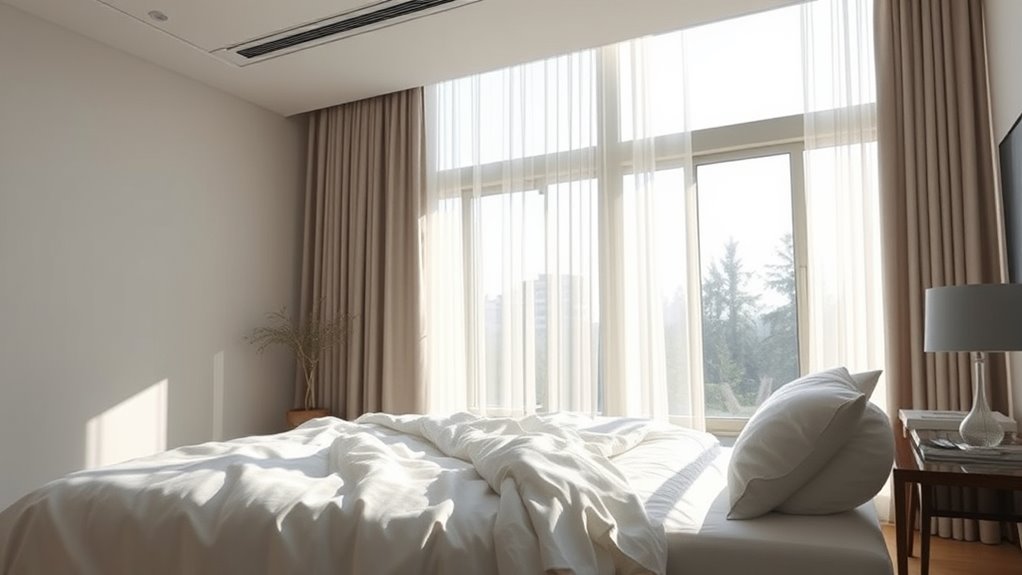

Smart curtains combined with daylight sensors automatically adjust your home’s lighting throughout the day, helping you sleep better without lifting a finger. They open or close based on sunlight levels, controlling glare and maintaining a comfortable environment. This setup supports your body’s natural circadian rhythm, promoting quality sleep and waking naturally. Plus, it reduces energy use and creates a personalized, peaceful space. If you want to discover how this seamless system works, keep exploring for more insights.
Key Takeaways
- Automate curtain adjustments to block early morning light, promoting better sleep without manual effort.
- Use daylight sensors to regulate natural light levels, creating a consistent, sleep-friendly environment.
- Gradually open curtains in the morning for a natural wake-up, enhancing circadian rhythm support.
- Limit evening light exposure by closing curtains automatically, improving sleep quality.
- Customize settings for individual routines, ensuring optimal light control without manual intervention.
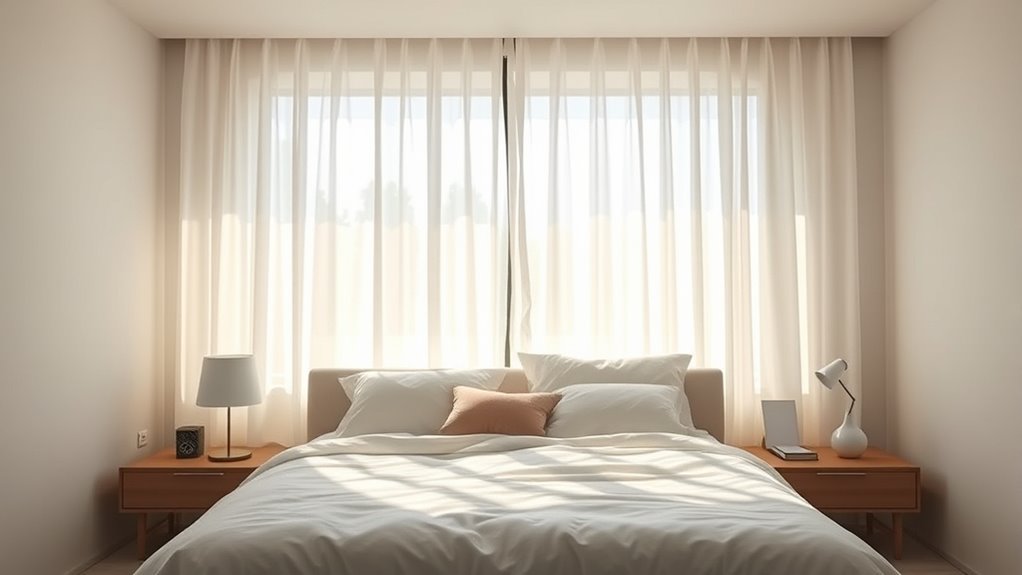
Smart curtains and daylight sensors are revolutionizing how you manage natural light in your home or office. Imagine waking up refreshed, with your room perfectly lit without lifting a finger. These innovative devices work together to optimize sunlight exposure, helping you establish a healthier sleep cycle and create a more comfortable environment. With smart curtains, you can program your window coverings to open or close automatically at specific times of the day or in response to real-time sunlight levels. No more fumbling with cords or manually adjusting drapes; your curtains adapt seamlessly to your routine and the natural rhythm outside. Daylight sensors complement this by measuring the intensity of sunlight entering your space. They send data to a connected system that determines the ideal curtain position, preventing glare during the day or darkness at night, which is essential for your sleep quality.
By integrating smart curtains with daylight sensors, you’re effectively controlling the amount of natural light that reaches your eyes, especially during early mornings and late evenings. This control is indispensable for maintaining your circadian rhythm, the internal clock that influences sleep and wakefulness. When your room receives too much early morning light, it can disrupt your sleep; smart curtains can close automatically to block out that light, allowing you to wake gradually and more naturally. Conversely, during the day, they can open to let in just the right amount of sunlight, boosting your mood and energy levels without causing discomfort or glare. This automation reduces the need for you to think about adjusting blinds or curtains manually, giving you more time to focus on what matters.
Furthermore, these systems can be programmed to operate based on your habits and preferences, ensuring your environment is always optimized without your intervention. You can set schedules or let the sensors adapt dynamically, depending on weather conditions or seasonal changes. This intelligent management of light not only enhances your comfort but also contributes to energy savings by reducing reliance on artificial lighting and climate control. You’ll find that your room remains consistently comfortable, with natural light enhancing the ambiance and supporting better sleep patterns. Additionally, understanding gliding and soaring skills can inspire new ways to think about navigating and controlling your environment with precision and confidence.
Ultimately, smart curtains and daylight sensors empower you to create a living space that aligns with your natural rhythms. They make managing light effortless, turning your environment into a personalized sanctuary for rest and relaxation. With these devices working silently in the background, you can enjoy a better night’s sleep and wake up feeling more refreshed—without ever having to lift a finger.
Frequently Asked Questions
How Do Smart Curtains Improve Sleep Quality?
Smart curtains improve your sleep quality by automatically adjusting to block out early morning light and evening noise, creating a dark, quiet environment ideal for rest. They can sync with your sleep schedule, closing at night and opening in the morning, reducing disruptions. With easy automation, you don’t have to lift a finger, ensuring consistent sleep conditions that help you fall asleep faster and wake up feeling more refreshed.
Are Daylight Sensors Energy-Efficient?
Yes, daylight sensors are energy-efficient because they automatically adjust your lighting based on natural sunlight, reducing unnecessary energy use. By dimming or turning off lights when there’s enough daylight, you save electricity and lower your bills. You don’t have to manually control your lights, which also prolongs their lifespan. Overall, daylight sensors help you conserve energy effortlessly while maintaining a comfortable environment.
Can Smart Curtains Be Controlled Remotely?
Yes, smart curtains can be controlled remotely, so you don’t have to get up to adjust them. You can use your smartphone, tablet, or even voice commands through smart home assistants like Alexa or Google Home. This means you can open or close your curtains from anywhere, whether you’re relaxing on the couch or away from home. It’s a convenient way to enhance your comfort and security effortlessly.
What Is the Installation Process Like?
The installation process is straightforward and typically takes about 30 minutes. You start by attaching the mounting brackets to your window frame or wall, then connect the smart curtains to the power source. Next, you sync them with your smartphone or home automation system via Bluetooth or Wi-Fi. Follow the app instructions for calibration and setup, and you’re all set to control your curtains remotely for better sleep and convenience.
Are These Devices Compatible With All Home Systems?
Think of these devices as the universal remote for your smart home. They’re compatible with most major home automation systems like Alexa, Google Home, and Apple HomeKit. You may need to install a compatible hub or app, but overall, setup is straightforward. Just make certain your system supports these integrations beforehand. With a little configuration, you’ll enjoy seamless control over your curtains and lighting, making your sleep environment effortlessly perfect.
Conclusion
Imagine waking up refreshed, thanks to smart curtains and daylight sensors that automatically adjust to your ideal sleep environment. Studies show that 60% of people sleeping in smart homes report better rest and increased energy levels. By integrating these technologies, you don’t have to lift a finger—your room adapts seamlessly to your needs. Embrace this innovation for a healthier, more restful sleep, and enjoy the benefits of a smarter, more comfortable home.